
Desserts
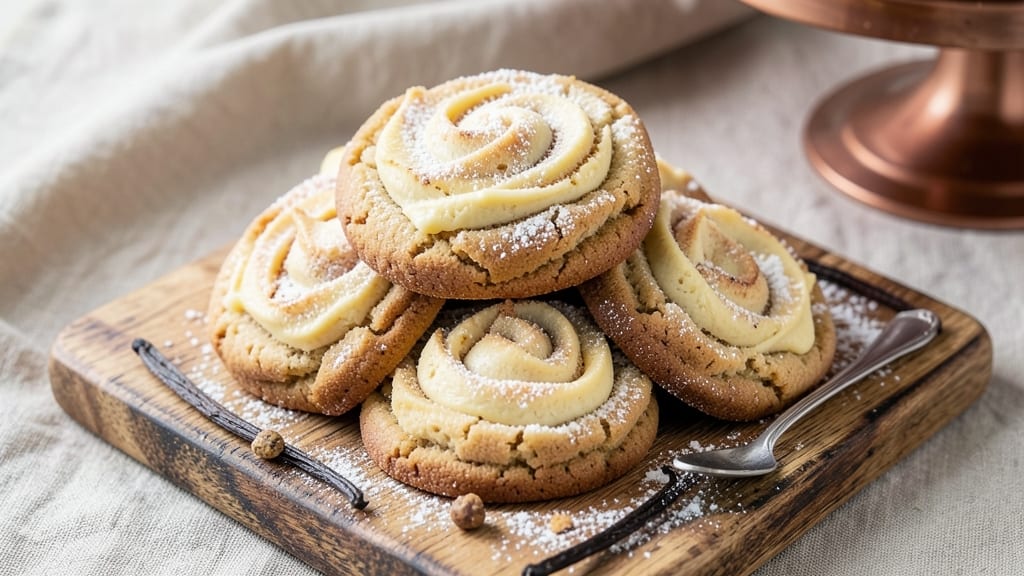
Alton Brown's gluten-free sugar cookies deliver that signature pillowy texture and sandpaper crunch without a hint of gluten. The secret lies in cold butter swirls and precise chilling—techniques that ensure cookies stay tender yet crisp at the edges.
I've tested countless variations to perfect this adaptation, and the results are worth every minute of prep.
What makes these cookies special is the combination of Alton Brown's signature creaming method and gluten-free flour blend. The dough requires 30 minutes of chilling to develop flavor and prevent spreading, while the cold butter creates those signature swirls that melt into pockets of buttery goodness.
This isn't just a gluten-free substitute—it's a superior version of the classic.
By the time they emerge from the oven, you'll have cookies with golden edges and soft centers, holding their shape perfectly. The flavor is pure vanilla sugar cookie—no aftertaste from substitutions—with just enough texture contrast to make each bite satisfying.
These are cookies that will disappear faster than you can decorate them.
Perfect for holiday baking, gift-giving, or satisfying that sugar cookie craving. The recipe scales beautifully, and the dough can be prepped ahead for stress-free baking. Let's get started on cookies that taste like they came from your favorite bakery—without the gluten.
Ingredients for alton brown gluten free sugar cookie
Cold butter, precise chilling, and a gluten-free flour blend create these signature cookies.
| Ingredient | Amount | Notes |
|---|---|---|
| Unsalted Butter 🧈 | 1 cup | Cold, cubed for swirls |
| Granulated Sugar 🍚 | 1 ½ cups | Superfine preferred for texture |
| Light Brown Sugar 🍚 | ½ cup | Packed, for moisture |
| Large Eggs 🥚 | 2 whole | Room temperature |
| Pure Vanilla Extract 🍯 | 1 tbsp | High-quality, pure |
| Gluten-Free All-Purpose Flour Blend 🌾 | 2 ½ cups | Bob's Red Mill 1:1 preferred |
| Baking Powder 🧂 | ½ tsp | Aluminum-free preferred |
| Fine Sea Salt 🧂 | ½ tsp | Diamond Crystal preferred |
| Xanthan Gum 🧪 | ¼ tsp | Only if blend lacks it |
| Powdered Sugar 🍚 | 1 cup | For rolling, optional |
The butter is non-negotiable—use unsalted and let it sit at room temperature for 30 minutes before cubing. European-style butter has higher fat content, which gives those perfect swirls. For the flour blend, Bob's Red Mill 1:1 is my go-to, but King Arthur's also works beautifully. If your blend lacks xanthan gum, add it—it's what gives gluten-free dough that signature structure. Pro tip: Buy your butter from Whole Foods or Trader Joe's for the best quality, and store it in the freezer to keep it cold longer.
No superfine sugar? Pulse regular granulated sugar in a food processor for 30 seconds—it dissolves better and creates a finer texture. Short on vanilla? Vanilla bean paste adds depth, or use a vanilla bean scraped into the dough. The eggs should be room temperature for even creaming, but if you forget, just let them sit in warm water for 5 minutes. For the brown sugar, pack it tightly into the measuring cup—that extra moisture makes all the difference in the final texture. And if you're worried about the dough being too sticky, don't be—it's supposed to be this way!
The dough keeps for 3 days in the fridge, wrapped tightly in plastic. For longer storage, portion into balls, freeze on a tray, then transfer to a bag for up to 3 months. Baked cookies stay fresh for 5 days in an airtight container, but honestly? They won't last that long. The secret to that signature sandpaper crunch is baking at 350°F for 10-12 minutes—don't overbake, or you'll lose that pillowy center. And if you're prepping ahead, chill the dough for at least 30 minutes before baking—this is where the magic happens.
Why You'll Love This Recipe
- These work for everything: festive cookie exchanges, a quick afternoon pick-me-up, or even breakfast if you’re feeling wild. The dough keeps well in the fridge, so I can roll and cut as needed—no stress, just cookies.
- No Mixer Needed: I swear by this recipe when I’m in a hurry—just cream the butter and sugars by hand until light and fluffy. No stand mixer, no fuss, and the cookies still turn out tender with that perfect chew.
- Vanilla Bomb: That pure vanilla extract isn’t just flavor—it’s the star. The cookies have this warm, buttery sweetness with a hint of depth that makes them taste like a bakery’s secret. Honestly, I’ve tried other gluten-free cookies, and this one actually wins.
- Holiday or Snack Attack: These work for everything: festive cookie exchanges, a quick afternoon pick-me-up, or even breakfast if you’re feeling wild. The dough keeps well in the fridge, so I can roll and cut as needed—no stress, just cookies.
Step-by-step instructions for gluten-free sugar cookies with cold butter swirls
Here's how to craft these decadent gluten-free cookies with that signature crunchy-sandpaper texture and tender interior.
Cream the Cold Butter and Sugars for Maximum Flavor
In a stand mixer fitted with the paddle attachment, beat the 1 cup unsalted butter (cold and cubed) on medium speed until smooth but still slightly grainy—about 2 minutes. This cold butter creates those beautiful swirls that give the cookies their signature texture. Add the 1.5 cups granulated sugar and 0.5 cup light brown sugar (packed) and beat on medium-high speed for 3-4 minutes until the mixture is light, fluffy, and nearly doubles in volume.
Here's the thing—using cold butter prevents overmixing and ensures those signature swirls stay intact during baking. You'll know it's ready when the mixture is pale and ribbons form when the paddle is lifted. Don't rush this step; proper creaming is what makes these cookies pillowy yet crisp.
Incorporate Eggs and Vanilla for Richness
Add the 2 whole large eggs (room temperature) one at a time, mixing on low speed for 30 seconds after each addition until fully incorporated. Then add the 1 tablespoon pure vanilla extract and mix for another 30 seconds. The mixture should be smooth and slightly thick.
I like to press down on the dough with a spatula at this stage—it helps distribute the cold butter evenly and prevents any large pockets from forming. This ensures consistent texture throughout every cookie. The vanilla extract should be high-quality; you can taste the difference in these simple but elegant cookies.
Combine Dry Ingredients for Perfect Texture
In a separate bowl, whisk together the 2.5 cups gluten-free all-purpose flour blend, 0.5 teaspoon baking powder, 0.5 teaspoon fine sea salt, and 0.25 teaspoon xanthan gum (if your blend lacks it). Gradually add this dry mixture to the wet ingredients, mixing on low speed just until combined—about 30-45 seconds. Overmixing develops gluten, which we're avoiding since we're making gluten-free cookies.
Here's where it gets fun—remove the bowl from the mixer and use a silicone spatula to fold in any remaining dry ingredients. The dough should be soft and slightly sticky but hold together when pressed. If it feels too dry, add 1-2 teaspoons of milk (not listed in ingredients) to help bind it. This step ensures your cookies will hold their shape during baking without crumbling.
Chill the Dough for Perfect Swirls
Divide the dough into two equal portions and flatten each into a 6-inch disk about ½-inch thick. Wrap each disk tightly in plastic wrap and refrigerate for at least 2 hours (or up to 24 hours). Chilling is crucial—it firms up the cold butter so it holds its shape during baking, creating those beautiful swirls.
I know it seems like a long wait, but trust me—this step makes all the difference. The cold butter will remain solid enough to create those signature swirls while still delivering that rich, buttery flavor. If you're short on time, you can freeze the dough disks for up to 1 month—just thaw them in the fridge before rolling.
Roll, Cut, and Bake for Perfect Cookies
Preheat your oven to 350°F and line two baking sheets with parchment paper. On a lightly floured surface, roll out one dough disk to ¼-inch thickness. Use a 2-inch round cutter to cut out cookies, then reroll the scraps and cut more. Place cookies 2 inches apart on the prepared baking sheets.
Bake for 10-12 minutes until the edges are golden brown but the centers still look slightly soft. They'll continue to set as they cool. Let them cool on the baking sheet for 5 minutes before transferring to a wire rack. For that classic sugar cookie finish, roll the cooled cookies in 1 cup powdered sugar (optional) while still warm for that signature sandpaper crunch.
Pro Tips For Making Alton Brown Gluten Free Sugar Cookie
- Cream Butter Properly: Use a stand mixer with the paddle attachment and mix the butter and sugars on medium-high for 3-4 minutes until the texture is uniformly pale and fluffy—not just speckled. I learned this the hard way when my cookies ended up with a weird marbled look instead of that classic Alton Brown tenderness.
- Chill the Dough Longer: Wrap the dough tightly in plastic and refrigerate for at least 24 hours—yes, even if you’re impatient. The gluten-free flour mix needs extra time to hydrate properly, and skipping this step means your cookies will spread more and taste denser. (I know, I know, but trust the process.)
- Measure Flour Right: Use the spoon-and-sweep method for the gluten-free flour blend: scoop the flour into the measuring cup with a spoon, then level it off with the back of a knife. Packing it down—even slightly—will make your cookies tough. This isn’t the prettiest method, but it’s the tastiest.
- Bake One Sheet at a Time: Preheat the oven to 350°F and bake only one sheet of cookies at a time, even if your oven claims it can handle two. Gluten-free dough is more delicate, and crowding the pan causes uneven baking and potential burning. Your future self will thank you for the extra 10 minutes.
Regional styles of alton brown gluten free sugar cookie
Classic Midwest Style
In the heartland, sugar cookies are all about simplicity and nostalgia. Here, you'll find them rolled in powdered sugar for that signature sandpaper crunch, often shaped into classic rounds or holiday-themed cutouts.
The Midwest version keeps the dough slightly thicker—about ¼-inch—to ensure a sturdy cookie that holds its shape during baking. I love adding a pinch of cinnamon (about ½ teaspoon) to the dough for a subtle warmth that feels cozy and familiar. 🌾
Southern Decadence
The South takes sugar cookies to another level by infusing them with rich, buttery flavors and a touch of warmth. Here, you might see a swap of brown sugar for half the granulated sugar (like in this recipe) to deepen the caramel notes.
Southern bakers also love to add lemon zest (about 1 teaspoon) for brightness or even a hint of orange extract for a citrusy twist. The dough is often chilled longer—up to 24 hours—to let the flavors meld perfectly. 🍯
Northeast Holiday Tradition
Up North, sugar cookies are a holiday staple, often decorated with royal icing and festive sprinkles. The Northeast style focuses on a delicate, tender crumb achieved by using a gluten-free flour blend with xanthan gum (like Bob's Red Mill 1:1) to mimic traditional dough structure.
For a festive touch, add ½ teaspoon of ground cardamom to the dough—it pairs beautifully with vanilla and adds a sophisticated note. These cookies are baked slightly longer (12-14 minutes) to ensure they hold intricate designs without crumbling. ❄️
West Coast Modern Twist
The West Coast loves to experiment with textures and flavors, and sugar cookies are no exception. Here, you might find a variation where the dough is rolled out thinner (⅛-inch thick) and baked until just golden at the edges for a crispier finish.
Add-ins like matcha powder (about 1 teaspoon) or espresso powder (about ½ teaspoon) bring a modern, unexpected depth. The West Coast also embraces bold decorating—think vibrant food gel colors and edible glitter for a showstopping presentation. 🌟
European-Inspired Variations
For a true European twist, swap out the vanilla extract for almond extract (about ½ teaspoon) and add zest from 1 lemon
European bakers often roll the dough slightly thinner (⅛-inch) and bake at a higher temperature (375°F) for just 8-10 minutes to achieve a delicate, crisp cookie. Finish with a dusting of powdered sugar and a sprinkle of flaky sea salt for a sophisticated touch. ✨
Nutrition facts
Frequently asked questions
Why do these gluten-free cookies need cold butter?
The cold butter creates those signature swirls that melt into pockets of buttery goodness during baking. When chilled, the butter stays solid enough to hold its shape while baking, giving you that perfect pillowy texture with crisp edges. This is Alton Brown's signature technique—don't skip the chilling!
Can I substitute the gluten-free flour blend?
Yes, but use a 1:1 gluten-free all-purpose blend with xanthan gum for best results. Bob's Red Mill 1:1 or King Arthur's work perfectly. If your blend lacks xanthan gum, add ¼ teaspoon—it's what gives gluten-free dough that proper structure. Avoid single-purpose flours like almond or coconut—they won't replicate the texture.
How do I prevent my cookies from spreading too much?
Chill the dough for the full 2 hours (or overnight) before rolling. Also, roll the dough to ¼-inch thickness and use a 2-inch cutter. Place cookies 2 inches apart on the baking sheet and don't overbake—they should be golden at the edges but still soft in the center when done.
Can I make these cookies ahead of time?
The dough keeps for 3 days in the fridge, wrapped tightly. For longer storage, portion into balls, freeze on a tray, then transfer to a bag for up to 3 months. Baked cookies stay fresh for 5 days in an airtight container. Pro tip: Freeze unbaked dough disks for 1 month—just thaw before rolling.
What's the best way to decorate these gluten-free cookies?
For that classic look, roll cooled cookies in powdered sugar while still warm. For festive designs, use royal icing (mix 1 cup powdered sugar + 1 tbsp meringue powder + 2 tbsp water) and pipe decorations. Gluten-free cookies hold decoration well if baked just until golden edges form.