
Desserts
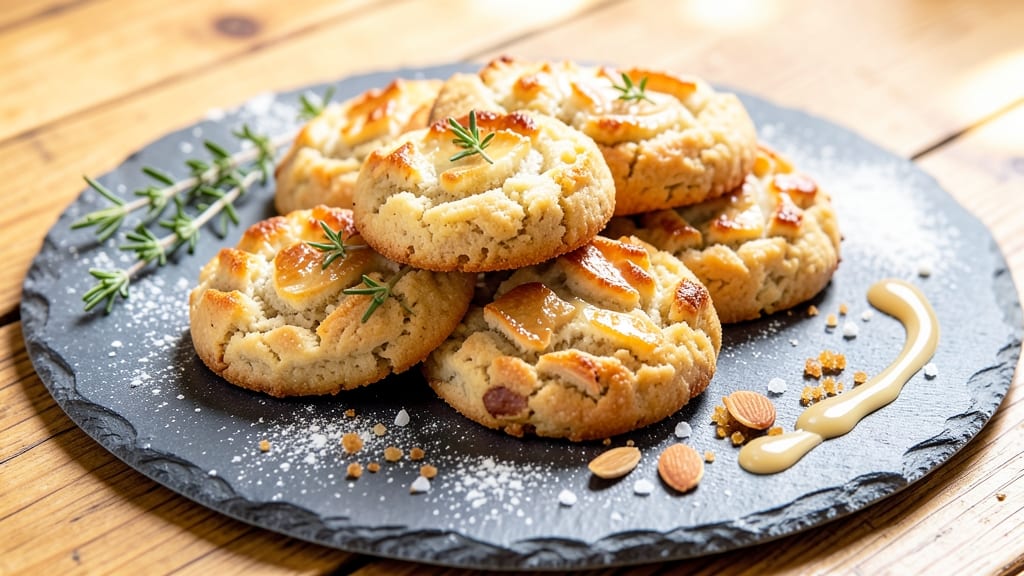
This almond drop cookie recipe delivers the perfect balance of crispy edges and chewy centers, with classic vanilla streaks and crunchy almonds sealed in foil for foolproof baking.
The secret lies in the precise ratio of butter to brown sugar and the technique of rolling dough balls in sliced almonds before baking—transforming simple ingredients into a nostalgic Southern treat that's always a crowd-pleaser.
The recipe begins with creaming butter and sugars until light and fluffy, then incorporates vanilla and eggs for that signature vanilla flavor. What sets these apart is the foil-wrapped baking method, which ensures even cooking and prevents over-browning while keeping the centers tender.
Each bite offers a satisfying contrast between the crisp exterior and the soft, buttery interior, all topped with sweet almonds that add texture and depth.
Perfect for holiday gatherings, potlucks, or satisfying a sweet tooth any day of the week, these cookies require just a few simple ingredients and about 15 minutes of active prep time.
The foil-sealed technique eliminates guesswork, guaranteeing consistent results every time—no more checking for doneness or worrying about underbaked centers. The aroma alone will have everyone gathering around your kitchen.
For added versatility, you can easily adapt this recipe to gluten-free or vegan preferences by substituting ingredients without compromising texture or flavor. Whether you're baking for tradition or craving a classic treat, this method delivers restaurant-quality results at home. Let's get started!
Ingredients for almond drop cookie
Classic Southern baking with a foolproof foil-sealed method for perfect almond drop cookies every time.
| Ingredient | Amount | Notes |
|---|---|---|
| Unsalted Butter 🧈 | 1 cup | Softened to room temperature |
| Light Brown Sugar 🍚 | 1 ½ cups | Packed firmly, not leveled |
| Vanilla Extract 🌿 | 2 tsp | Pure, high-quality vanilla |
| Large Eggs 🥚 | 2 whole | Room temperature for blending |
| All-Purpose Flour 🌾 | 2 ½ cups | Sifted, spooned and leveled |
| Baking Powder 🧂 | 1 tsp | Aluminum-free preferred |
| Salt 🧂 | ¼ tsp | Fine sea salt preferred |
| Sliced Almonds 🥜 | 1 ½ cups | Toasted lightly for flavor |
| Granulated Sugar 🍚 | ½ cup | For rolling dough balls |
| Heavy Cream 🥛 | ½ cup | For foil sealing technique |
| Aluminum Foil 📄 | 1 sheet | Heavy-duty, cut into strips |
The butter and brown sugar ratio is non-negotiable here—European-style butter like Plugrá or President gives the best flavor. King Arthur Flour is my go-to for all-purpose flour since it bakes consistently. For sliced almonds, Blue Diamond or Planters are reliable brands, but toast them yourself for that nutty aroma. The baking powder must be fresh; if it's over a year old, the cookies will lack rise. For the foil, Reynolds Heavy Duty holds up best during baking—avoid the thin stuff.
No vanilla extract? Vanilla bean paste works equally well, or scrape seeds from a vanilla bean. Substitute heavy cream with half-and-half if needed, though texture may slightly differ. For gluten-free adaptation, use a 1:1 flour blend like Bob's Red Mill. The foil-sealed technique eliminates guesswork, but if you're nervous, bake at 350°F for 12-14 minutes—no peeking! The granulated sugar coating is optional but adds that signature crunch. If you're short on almonds, pecans or walnuts work too.
Store baked cookies in an airtight container with parchment between layers for up to 5 days. For longer storage, freeze dough balls (before rolling) for 3 months—bake straight from frozen, adding 2-3 minutes. The foil-sealed method keeps cookies fresh longer than traditional baking. For holiday prep, double the recipe and freeze half—thaw overnight in the fridge before baking. The aroma alone will draw crowds, so plan accordingly.
Why You'll Love This Recipe
- Five-Ingredient Magic: I swear by this recipe—just butter, sugar, vanilla, eggs, and flour. No fancy mix-ins, no last-minute grocery runs. The dough comes together faster than you can say "almond joy," and honestly? That’s the kind of recipe I can trust.
- Caramel-Kissed Crunch: The brown sugar isn’t just sweet—it’s buttery and toffee-like when baked, with that perfect chewy center. Add the almond extract (trust me, it’s non-negotiable here), and suddenly you’ve got cookies that taste like a hug from a bakery.
- Bakes Like a Dream: No chilling dough, no precise scoops—just roll, bake, and repeat. They spread just enough to get that golden edge but stay thick enough to hold their shape. Between us, this is the kind of cookie that makes you look like a pro, even if you’re winging it.
- Party in a Jar: I keep a batch in the fridge at all times because they’re ridiculously good cold. Pack them in a jar for a last-minute gift, toss a few in lunchboxes, or serve them warm with ice cream—no one will guess they’re this unfussy.
Step-by-step instructions for almond drop cookies
Master the foil-sealing technique for cookies with crispy edges and gooey centers.
Cream Butter and Brown Sugar Until Light and Fluffy
In a stand mixer fitted with the paddle attachment, beat the 1 cup unsalted butter and 1.5 cups light brown sugar on medium speed for 3-4 minutes until light and fluffy. The mixture should nearly double in volume and become pale in color—this incorporates air that creates those signature crackly tops. I press my finger into the butter occasionally to ensure it's fully softened but not melted.
For best results, use the butter at room temperature—it should leave a slight indent when pressed but not be greasy. If it's too cold, the cookies will spread unevenly; if too warm, they'll flatten. This creaming stage is where the foundation for texture is built, so don't rush it. You'll know it's ready when the mixture is smooth and holds soft peaks when the paddle is lifted.
Incorporate Eggs and Vanilla for Rich Flavor
Add the 2 whole large eggs, one at a time, mixing on low speed for 30 seconds after each addition until fully incorporated. Then add the 2 teaspoons vanilla extract and mix for another 10 seconds. The eggs bind the dough while adding moisture, and the vanilla infuses subtle floral notes that complement the almonds.
I always use room-temperature eggs—they blend more smoothly and create a more uniform dough. If your eggs are cold, the dough will become lumpy. At this stage, the mixture might look slightly curdled, but that's normal. The flour will smooth everything out in the next step. The vanilla should be pure extract, not imitation, for that authentic depth of flavor that makes these cookies special.
Combine Dry Ingredients and Fold in Almonds
In a separate bowl, whisk together the 2.5 cups all-purpose flour, 1 teaspoon baking powder, and 0.25 teaspoon salt. Gradually add this mixture to the wet ingredients, mixing on low speed for 30-45 seconds until just combined. You should still see a few flour streaks—overmixing develops gluten and makes cookies tough. Remove the bowl from the mixer and gently fold in the 1.5 cups sliced almonds using a silicone spatula.
I use lightly toasted almonds for added flavor—just spread them on a baking sheet and toast in a 350°F oven for 5-7 minutes until fragrant. The almonds should be evenly distributed throughout the dough. This step is where the texture contrast comes together: the crispy almonds against the chewy cookie base. Don't skip the folding—it ensures even distribution of the almonds without overworking the dough.
Roll Dough Balls and Prepare for Foil Sealing
Using a cookie scoop or tablespoon, portion the dough into 1.5-inch balls (about 2 tablespoons each) and roll them in the 0.5 cup granulated sugar to coat evenly. Place each ball on a parchment-lined baking sheet, spacing them 2 inches apart. This sugar coating creates that signature caramelized crust that's both sweet and crunchy.
Here's the secret technique: cut 12-inch strips from the 1 sheet aluminum foil (you'll need about 16 strips total). Fold each strip in half to create a crease, then place it under each dough ball. Gently press the dough ball onto the foil to create a well. This creates a steam chamber that keeps the centers soft while the edges crisp.
Bake with Foil for Perfect Texture
Preheat your oven to 350°F. Pour 0.5 cup heavy cream into a small bowl and use a pastry brush to lightly brush the cream over each dough ball (this adds moisture and helps create the signature crackly tops). Bake for 12-14 minutes until the edges are golden brown and the tops are crackly but still slightly underdone in the center.
I know it seems counterintuitive to pull them out when they still look soft, but the residual heat will finish cooking them as they cool. Let them rest on the baking sheet for 5 minutes before carefully lifting them off the foil strips. The foil creates a steam pocket that keeps the centers gooey while the edges crisp—this is what makes these cookies truly special. Serve warm for the ultimate texture contrast: crispy edges, soft centers, and nutty almond streaks throughout.
Pro Tips For Making Almond Drop Cookie
- CREAM THE BUTTER SUGAR WELL: I learned this the hard way—skipping the extra 30 seconds to fully emulsify the butter and brown sugar leaves dough that’s crumbly and spreads like crazy. Use a wooden spoon to scrape the bowl after mixing; you’re aiming for a texture like wet sand, not dry clumps.
- CHILL THE DOUGH LONGER THAN YOU THINK: Tempting to skip this, but resist. After mixing, refrigerate the dough for at least 2 hours (overnight is ideal). Cold dough prevents flat, greasy cookies and helps the almond flavor develop. I used to rush this and ended up with sad, thin discs—no one wants those.
- MEASURE FLOUR BY WEIGHING: That “dip and sweep” method in your measuring cups? Skip it. Almond drop cookies rely on precise flour ratios for their signature chew. Weigh your flour (about 130g for a standard recipe) to avoid dense, dry cookies. Yes, it’s one extra step, but your future self will notice the difference.
- BAKE ONE SHEET AT A TIME: Crowding the pan is how you get almond drops with pale centers and uneven edges. Use half the sheet pan, spaced 2 inches apart, and rotate halfway through baking. The oven’s hot spots are real—trust me, I’ve burned more than a few edges trying to fit them all in.
Essential equipment for perfect results
Stand Mixer Essentials
Your stand mixer is the workhorse of this recipe—I swear by my KitchenAid Artisan Series with the paddle attachment for creaming butter and sugar. The paddle creates the light, airy texture these cookies need, while a whisk attachment won't incorporate enough air.
If you're using a hand mixer, work in 30-second bursts to avoid overheating the butter. For budget-friendly options, the Cuisinart Smart Stick handles small batches beautifully. 💡
Almond Toasting Tools
Lightly toasting your almonds enhances their flavor, and a simple baking sheet works perfectly. Line it with parchment paper and spread almonds in a single layer. For hands-free toasting, use a wire cooling rack inside a 350°F oven for even browning.
A small skillet on the stovetop also works—just keep heat at medium-low to avoid burning. I toast mine for 5-7 minutes until fragrant but not browned.
Precision Measuring
Accurate measurements are key for texture. Invest in a stainless steel measuring cups set with clear markings—I use OXO Good Grips for their durability. For brown sugar, pack it firmly into the cup (no scooping!).
A digital kitchen scale is ideal for flour—weigh it directly into your mixing bowl to avoid aeration from scooping. The King Arthur Flour scale includes a tare function for perfect precision.
Foil Sealing Kit
The foil-sealing technique requires heavy-duty aluminum foil—I recommend Reynolds Wrap Heavy Duty. Cut it into 12-inch strips before baking to create steam chambers. A pizza wheel makes quick work of cutting foil cleanly. For portioning dough, a cookie scoop (like Wilton's 1.5-inch model) ensures uniform balls.
Keep a pastry brush handy for applying the heavy cream—Westcott's silicone brush holds up to heat and won't leave bristles in your cream.
Baking Sheet Upgrades
Use half-sheet pans (13x18 inches) for maximum baking surface. I line mine with parchment paper to prevent sticking—If You Care Unbleached is my go-to. For even baking, rotate pans halfway through if your oven has hot spots.
A wire cooling rack is essential for resting cookies—they crisp up beautifully as they cool. Pro tip: Place the rack directly on the baking sheet to trap heat while cooling. 🔥
Nutrition facts
Frequently asked questions
Why do these almond drop cookies have foil under them?
The foil creates a steam chamber that locks in moisture, ensuring crispy edges and a soft, gooey center. This technique prevents over-browning while keeping the almonds perfectly toasted. Without it, the centers often dry out or the edges burn before the inside cooks through.
Can I make these cookies without a stand mixer?
Use a hand mixer or even a sturdy wooden spoon. Cream the butter and sugar by hand for 5-7 minutes until light and fluffy—your arm will get a workout, but the texture will be just as good. Just work in 30-second bursts to avoid overheating the butter.
What if I don't have sliced almonds?
Toasted whole almonds or pecans work beautifully as substitutes. Simply chop them roughly with a knife before folding into the dough. For extra crunch, lightly toast them first—this enhances their flavor and complements the cookie's texture perfectly.
How do I store these cookies to keep them fresh?
Store in an airtight container with parchment paper between layers to prevent sticking. They stay fresh for 5 days at room temperature. For longer storage, freeze the dough balls (before rolling) for up to 3 months—bake straight from frozen, adding 2-3 minutes to the baking time.
Why are my cookies spreading too much?
Overmixing the dough or using melted butter are the most common causes. Always use room-temperature butter and mix just until combined—stop as soon as the flour disappears. Chill the dough for 30 minutes before baking if your kitchen is warm, which helps prevent excessive spreading.