
Desserts
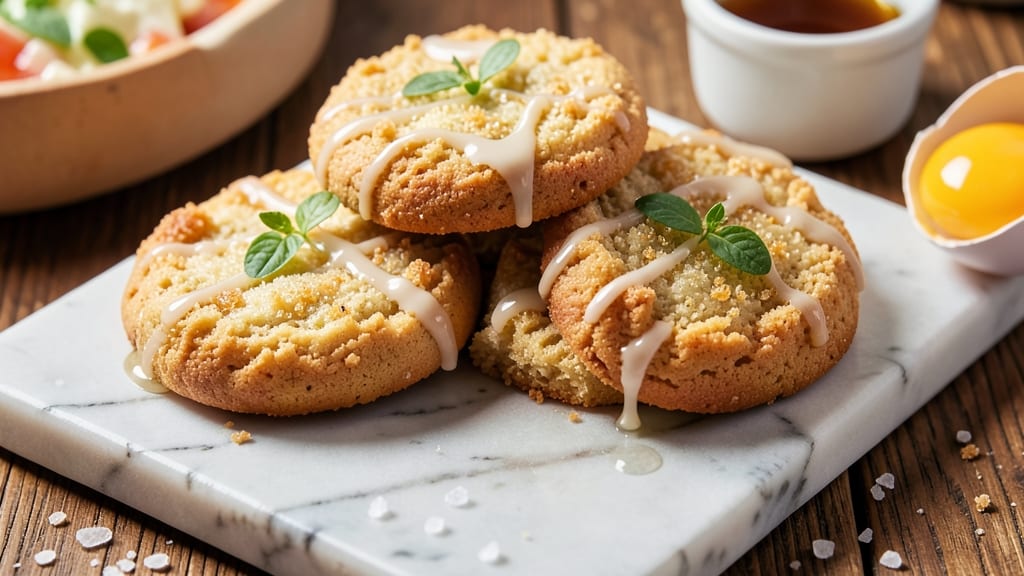
This Otis Spunkmeyer-style butter sugar cookie recipe delivers the iconic foil-sealed warmth and vanilla bean swirls that make them irresistible. The secret lies in the perfect balance of buttery richness and chewy texture—just like the bakery classics.
I've adapted the recipe for home kitchens while keeping that signature Spunkmeyer magic intact.
The dough comes together with simple ingredients: butter, sugar, eggs, and vanilla, but the real magic happens in the baking. Rolling the dough to ¼-inch thickness ensures even baking, while the foil seal traps moisture for that signature tender center.
Baking at 350°F for 10-12 minutes gives you golden edges with just the right amount of caramelization.
What sets these apart is the vanilla bean swirl—folded into the dough for bursts of aromatic flavor in every bite. The cookies stay soft and pillowy for days when stored properly, making them perfect for gifting or enjoying fresh from the oven.
The foil-sealed method ensures they're warm, gooey, and ready to eat straight from the pan.
Whether you're baking for a holiday treat or a cozy weeknight dessert, these cookies deliver the same buttery, vanilla-kissed perfection that made Otis Spunkmeyer famous. The recipe is designed to be foolproof, so even beginners can achieve bakery-quality results every time.
Ingredients for butter sugar cookie recipe otis spunkmeyer
Simple pantry staples transform into bakery-style cookies with that iconic Spunkmeyer warmth.
| Ingredient | Amount | Notes |
|---|---|---|
| Unsalted Butter 🧈 | 1 cup | Softened but not melted |
| Granulated Sugar 🍚 | 1 ½ cups | Superfine preferred for smooth texture |
| Light Brown Sugar 🍚 | ½ cup | Packed firmly |
| Large Eggs 🥚 | 2 whole | Room temperature |
| Pure Vanilla Extract 🍯 | 2 tsp | Or 1 vanilla bean scraped |
| All-Purpose Flour 🌾 | 3 ½ cups | Sifted for light texture |
| Baking Soda 🧪 | ½ tsp | Ensures proper rise |
| Salt 🧂 | ½ tsp | Kosher or fine sea salt |
| Heavy Cream 🥛 | ¼ cup | For dough binding |
| Vanilla Bean Paste 🍯 | 1 tbsp | For swirls and extra flavor |
| Aluminum Foil 📄 | 1 sheet | For sealing cookies |
| Granulated Sugar (Coarse) 🍚 | ½ cup | For sprinkling before baking |
The butter is non-negotiable here—European-style unsalted butter gives the richest flavor, but any good-quality butter works. Whole Foods or specialty grocers carry the best brands like Plugrá or Land O'Lakes Organic. For the sugars, superfine is ideal (like Domino brand), but regular granulated sugar crushed in a food processor works too. The vanilla bean paste is what elevates these—Nielsen-Massey or Madagascar vanilla beans from a spice shop make all the difference. If using a whole bean, scrape the seeds and save the pod for infusing future doughs.
No vanilla bean paste? Double the extract and add a pinch of xanthan gum for texture. Substituting heavy cream? Greek yogurt or sour cream works in a pinch, but the fat content affects tenderness. For the flour, King Arthur or Gold Medal brands are reliable—avoid bleached flour if you want that classic Spunkmeyer chew. The baking soda must be fresh (test by mixing with vinegar—should bubble vigorously). And that coarse sugar sprinkle? Turbinado or raw sugar gives the best caramelized crust, but regular sugar crushed in a blender does the job.
Butter and eggs should sit at room temperature for 1-2 hours before mixing. Store dough in an airtight container with parchment between layers for up to 3 days—it actually improves as it rests. For the foil-sealed method, bake at 350°F for 10-12 minutes, then seal immediately while warm. These stay soft for 5-7 days when stored properly, but the first batch won't last that long.
Why You'll Love This Recipe
- No Mixer Needed: I swear by this recipe when I’m in a hurry—just cream the butter and sugars by hand (or use a fork in a bowl) until it’s light and fluffy. That’s it. No fancy equipment, no waiting for dough to chill forever.
- Chewy-Crisp Magic: The combo of brown sugar and butter gives these cookies that perfect snap on the edges while staying soft inside. Honestly? It’s the kind of texture that makes you reach for a second one without thinking.
- Holiday or Snack Attack: These work for everything—gift bags, cookie swaps, or just a 3 PM sugar craving. I’ve even tossed them in lunchboxes (they hold up better than most) and used them to top milkshakes. Versatile like that.
- Budget-Friendly Staples: You’re using pantry basics—eggs, butter, sugar—that won’t break the bank. And the dough keeps for days, so I can bake a batch and freeze portions. Less waste, more cookies. Win.
Step-by-step instructions for foil-sealed vanilla bean cookies
Master this classic Otis Spunkmeyer-inspired technique for cookies with a perfect swirl and foolproof foil-sealing method.
Cream Butter and Sugars to Light and Fluffy
In a stand mixer fitted with the paddle attachment, beat the 1 cup unsalted butter on medium speed until completely smooth, about 1 minute. Gradually add the 1.5 cups granulated sugar and 0.5 cup light brown sugar, mixing continuously for 3-4 minutes until the mixture becomes pale and nearly doubles in volume.
This creaming process incorporates air, which creates those signature crackly tops and ensures tender cookies. You'll know it's ready when the mixture looks light and fluffy—almost like whipped butter. Scrape down the sides of the bowl with a rubber spatula to ensure even mixing before proceeding.
Add Eggs, Vanilla, and Dry Ingredients
Add the 2 whole large eggs, one at a time, mixing on low speed after each addition until fully incorporated. Then stir in the 2 teaspoons pure vanilla extract and 1 tablespoon vanilla bean paste, mixing just until combined. In a separate bowl, whisk together the 3.5 cups all-purpose flour, 0.5 teaspoon baking soda, and 0.5 teaspoon salt.
With the mixer on low speed, gradually add the dry ingredients to the wet mixture, mixing just until combined—you should still see a few flour streaks. Avoid overmixing, as this can develop gluten and result in tough cookies. The dough should be smooth and slightly sticky but manageable.
Incorporate Heavy Cream and Chill the Dough
Add the 0.25 cup heavy cream to the dough and mix on low speed until fully incorporated. The dough will become slightly softer and more cohesive. Divide the dough into two equal portions and flatten each into a 6-inch disk. Wrap each disk tightly in plastic wrap and refrigerate for at least 1 hour or up to 24 hours.
Chilling the dough is critical—it firms up the butter, preventing excessive spreading in the oven, and allows the flour to fully hydrate for a lighter texture. If you're short on time, you can chill the dough for 30 minutes in the freezer, but 1 hour in the refrigerator yields the best results.
Roll, Cut, and Seal with Foil
Preheat your oven to 375°F. On a lightly floured surface, roll one disk of dough to a 1/4-inch thickness. Using a 2.5-inch round cutter, cut out cookies and place them on a parchment-lined baking sheet. Gather the scraps, re-roll, and cut additional cookies until the dough is fully used. Repeat with the second disk.
For the signature Otis Spunkmeyer touch, place a small dollop of vanilla bean paste in the center of each cookie. Sprinkle the top with 0.5 cup coarse granulated sugar. To seal the cookies for maximum warmth, place a 3-inch square of aluminum foil over each cookie, pressing gently to create a tight seal. Bake for 10-12 minutes until the edges are golden brown and the foil is slightly puffed.
Serve Warm with Foil Sealed
Remove the cookies from the oven and let them cool on the baking sheet for 2 minutes before transferring them to a wire rack. Serve immediately while still warm, with the foil still sealed to trap the heat and enhance the vanilla bean aroma. The cookies should have a crisp exterior, a soft and chewy center, and a beautiful swirl of vanilla bean paste visible through the sugar sprinkles.
These cookies are best enjoyed fresh out of the oven, but they can be stored in an airtight container at room temperature for up to 3 days. For extra indulgence, serve with a glass of cold milk or a scoop of vanilla ice cream. The foil-sealing trick ensures they stay warm and gooey for longer, just like the original Otis Spunkmeyer style.
Pro Tips For Making Butter Sugar Cookie Recipe Otis Spunkmeyer
- CREAM COLD BUTTER: Mix the butter and sugars until the dough is smooth and pale—not just crumbly. Cold butter creates tiny pockets for that signature Spunkmeyer flakiness, and rushing this step means tough cookies. I learned this the hard way after making a batch that tasted like overworked playdough.
- MEASURE SUGARS BY VOLUME: Use cups for the granulated and brown sugar—pack the brown sugar lightly but firmly, then level it off. Spooning floury sugar into the scale can add hidden moisture, throwing off the cookie’s balance. (Yes, even if you’re a scale purist, this recipe lives in the cup world.)
- CHILL DOUGH TWICE: First, chill the dough for 24 hours—no skipping. Then, pull it out 30 minutes before baking to soften slightly. The first rest prevents spreading, but the second ensures the cookies hold their shape without cracking. I was skeptical until I tried it; now I treat it like a non-negotiable step.
- ROTATE PAN HALFWAY: Place one sheet pan on the middle rack, the other on the lower rack. After 8 minutes, swap them. This guarantees even baking—no pale centers or over-browned edges. (Your oven’s hot spots will thank you.)
Common mistakes when making this recipe
Overmixing the Dough
I’ve seen too many home bakers overmix the dough, thinking more mixing means better cookies. But here’s the deal: once you’ve combined all the dry ingredients, mix just until the flour disappears—about 10-15 seconds after that.
Overmixing develops gluten, which leads to tough, chewy cookies instead of the tender, melt-in-your-mouth texture we want. The dough should look smooth with just a few flecks of flour remaining. 💡
Skipping the Chill
Rushing the 1-hour chill is a big mistake. Unchilled dough spreads too much in the oven, resulting in flat, sad cookies. The chill also lets the butter firm up, preventing excessive melting and spreading.
If you’re in a hurry, pop the dough in the freezer for 30 minutes—it works in a pinch, but the texture won’t be as perfect. Trust me, the wait is worth it for that signature Spunkmeyer chew.
Incorrect Foil Sealing
The foil-sealing trick is what makes these cookies legendary, but many people mess it up. The foil must be tightly pressed over each cookie to trap steam and create that gooey center. If it’s loose, the cookies won’t stay warm or develop that signature softness.
I like to press the foil down firmly with my fingers right after placing the cookies in the oven. Also, don’t peek—opening the oven disrupts the seal and ruins the texture. 📄
Overbaking or Underbaking
Baking these cookies for 10-12 minutes at 350°F is non-negotiable. Overbaking dries them out, while underbaking leaves them raw in the center. The edges should be golden brown, and the foil should puff slightly.
Pull them out when they look set but still soft—you can finish cooking them with the foil on if needed. A toothpick test works here: it should come out with a few moist crumbs, not wet batter.
Using the Wrong Sugar
The coarse sugar sprinkle is key for that caramelized crust, but many people skip it or use regular granulated sugar. For the best results, use turbinado or raw sugar—it melts beautifully and adds a subtle crunch.
If you’re in a pinch, pulse regular granulated sugar in a food processor until it’s coarse. And don’t forget to sprinkle it right before baking—it won’t stick if you do it too early. 🍚
Ignoring the Vanilla Bean Paste
The vanilla bean paste isn’t just for flavor—it’s what gives these cookies that professional bakery look with its swirled pattern. Skipping it or using plain extract means missing out on that signature Spunkmeyer touch.
If you don’t have paste, double the extract and add a pinch of xanthan gum for texture. But honestly? The paste makes all the difference in that rich, aromatic vanilla flavor. 🍯
Nutrition facts
Frequently asked questions
Why does Otis Spunkmeyer's recipe use both granulated and brown sugar?
The combination creates the perfect balance of flavors and textures. The granulated sugar provides crisp edges and sweetness, while the light brown sugar adds moisture and a subtle caramel depth. This dual-sugar approach is what gives these cookies their signature chewy center and crackly top.
Can I make these cookies without vanilla bean paste?
Yes, but you'll miss the signature swirl effect! Use 2 teaspoons vanilla extract plus ¼ teaspoon xanthan gum to mimic the texture. For best flavor, opt for high-quality Madagascar vanilla extract or scrape seeds from a whole vanilla bean. The paste isn't just for looks—it delivers that rich, aromatic vanilla flavor that defines Spunkmeyer's style.
How do I store these cookies to keep them soft?
Store in an airtight container at room temperature for up to 3 days. For longer storage, freeze the baked cookies (without foil) for up to 3 months. The key is to prevent moisture loss—the foil-sealing method during baking already traps heat, but an airtight container maintains that softness.
What if I don't have a round cookie cutter?
No problem! Use a 2.5-inch glass or even a small bowl to cut circles. For a rustic look, use a knife to cut irregular shapes. The important part is maintaining ¼-inch thickness for even baking. The foil-sealing method works with any shape, though traditional rounds are most authentic.
Can I make these cookies gluten-free?
With modifications, yes! Replace the all-purpose flour with a 1:1 gluten-free baking flour blend (like Bob's Red Mill) and add ½ teaspoon xanthan gum to the dry ingredients. Expect slightly denser cookies, but the buttery flavor and foil-sealing method will still shine. For best results, use a gluten-free vanilla bean paste too.