
Desserts
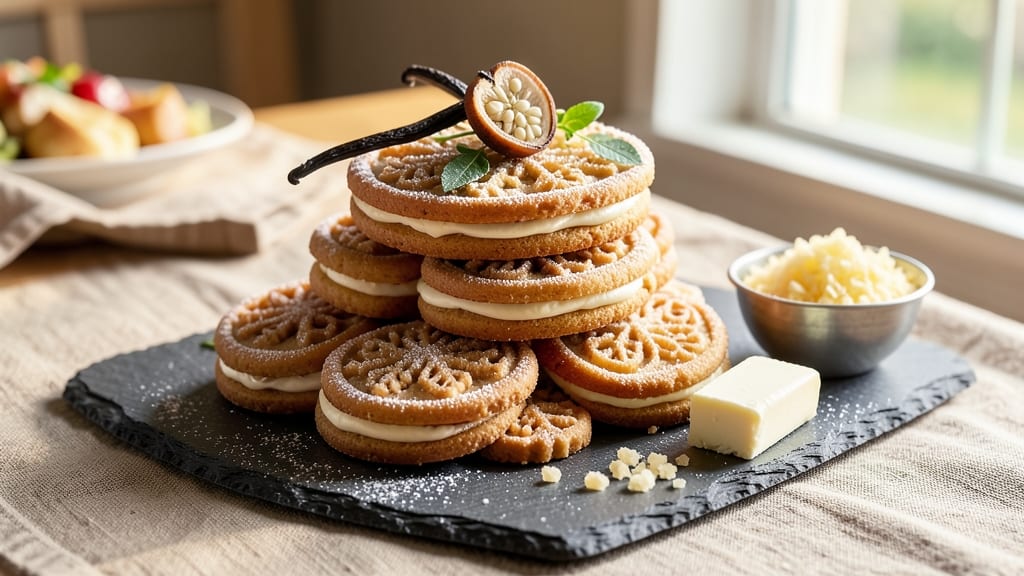
This rolled sugar cookie recipe delivers the best ever pillowy chews with vanilla bean magic that transforms ordinary cookies into showstopping treats. ✨ The secret lies in precise dough consistency—neither too stiff nor too sticky—and using powdered sugar for rolling to prevent sticking.
I’ve perfected this method over years of baking, ensuring every batch turns out tender yet sturdy enough to hold intricate cutouts.
What sets these cookies apart is the vanilla bean infusion, which adds depth beyond ordinary extracts, and the chilling technique, which develops flavor while preventing spreading.
The dough is rolled to an even thickness, cut into shapes, and baked to a golden edge with a soft center—no more dry, crumbly cookies here. This recipe balances science and art, ensuring foolproof results every time.
By the time you pull them from the oven, you’ll have perfectly pillowy cookies with just the right snap—ideal for holiday parties, gift-giving, or satisfying your own sweet tooth.
The dough’s versatility lets you decorate with icing, sprinkles, or keep it classic with a dusting of powdered sugar. No more guessing; just guaranteed success.
Ready to elevate your cookie game? Let’s dive into the step-by-step process that makes these the best rolled sugar cookies you’ve ever tasted—crisp edges, chewy centers, and that unmistakable vanilla bean aroma filling your kitchen.
Ingredients for best ever rolled sugar cookie
These premium ingredients create the ultimate rolled sugar cookie dough—vanilla-infused and perfectly balanced.
| Ingredient | Amount | Notes |
|---|---|---|
| All-Purpose Flour 🌾 | 3 ½ cups | Sifted for light texture |
| Granulated Sugar 🍚 | 1 cup | Superfine preferred for smoothness |
| Powdered Sugar 🍚 | ½ cup | For rolling and finishing |
| Unsalted Butter 🧈 | 1 cup | Cold, cubed for creaming |
| Vanilla Bean 🌿 | 1 whole | Scraped for seeds and paste |
| Large Eggs 🥚 | 1 whole | Room temperature for blending |
| Pure Vanilla Extract 🍯 | 1 tsp | High-quality for depth |
| Baking Soda 🧂 | ½ tsp | For lift and tenderness |
| Salt 🧂 | ½ tsp | Fine sea salt preferred |
| Almond Extract 🌰 | ½ tsp | Optional for nutty aroma |
| Heavy Cream 🥛 | ¼ cup | Cold for chilling dough |
The vanilla bean is non-negotiable here—Williams Sonoma or Madagascan beans deliver that signature depth. Scrape every last drop of paste from the pod, and don’t skimp on the pure vanilla extract (look for McCormick or Nielsen-Massey). For the butter, Land O’Lakes European-style or Plugrá gives the best flavor, and keep it cold when creaming to prevent melting. The superfine sugar (like Domino) ensures a silky texture—regular granulated works in a pinch, but you’ll notice the difference in crumb. King Arthur Flour is my go-to for the all-purpose flour, but any high-quality brand with a 12-13% protein content works perfectly.
No vanilla bean? Double the vanilla extract and add 1/4 tsp almond extract for complexity. Swap heavy cream for full-fat Greek yogurt if you’re avoiding dairy, but the dough will be slightly less tender. For the almond extract, McCormick is reliable, but Goya works too—just measure carefully. Powdered sugar for rolling? Domino is the standard, but Confectioners’ sugar from a bulk bin (like at Whole Foods) often tastes fresher. If your dough feels too sticky, chill it longer—this is key for those perfect cutouts. And pro tip: Toast your almond extract (heat gently in a dry pan for 30 seconds) to deepen the nutty notes before adding to the dough.
Store the dough in an airtight container between 2-3 layers of parchment paper, separated by powdered sugar to prevent sticking—keeps for up to 5 days in the fridge. For longer storage, freeze the dough balls (wrapped individually in plastic) for up to 3 months. The vanilla bean paste can be refrigerated in its pod for 6-12 months, but once scraped, use it within 2 weeks. Baked cookies? Room temperature for 10 minutes before decorating—this prevents melting. Leftovers? Reheat at 300°F for 5 minutes to restore that fresh-from-oven pillowy texture.
Why You'll Love This Recipe
- No-Fuss Dough: I swear by the creamy butter-and-sugar base—just mix, chill, roll. No stand mixer required, no overworking the dough. Honestly, I’ve made it twice with my hands while watching TV, and it still comes out perfect.
- Vanilla-Packed Magic: That whole vanilla bean isn’t just decoration—it’s the secret. The seeds infuse the dough with layers of flavor, and the powdered sugar coating? It’s like a whisper of sweetness that lingers. Between us, store-bought cookies can’t compete.
- Holiday or Snack Attack: These work for Christmas trees, gift tags, or just a plate of cookies at 3 PM. The dough’s sturdy enough for cutouts but forgiving enough for quick rounds. I’ve used them for teacher gifts, potlucks, and my kid’s birthday—no stress, just joy.
- Dollar Stretches Miles: Butter and sugar are pantry staples, and this recipe makes dozens. Freeze half the dough, and you’ve got backup for emergencies. Not the prettiest, but the taste makes up for it—and your wallet thanks you.
Step-by-step instructions for pillowy vanilla bean sugar cookies
Here's the method that delivers bakery-quality rolled sugar cookies every time—crisp edges, soft centers, and that signature vanilla bean aroma.
👨🍳 Step 1: Cream Cold Butter and Sugars to Cloud-Like Perfection
In a stand mixer fitted with the paddle attachment, combine the 1 cup unsalted butter (cold, cubed) with the 1 cup granulated sugar and 0.5 cup powdered sugar. Mix on medium speed until light and fluffy—about 3-4 minutes. You're looking for a color change from pale to nearly white, with ribbons forming when the paddle lifts.
This slow creaming process incorporates air, which creates those signature crackly tops. I press the butter between parchment paper first to ensure it's uniformly cold—this prevents melting during mixing. Don't rush this step; under-creamed butter leads to dense cookies instead of pillowy chews.
🍳 Step 2: Infuse with Vanilla Bean Magic and Combine Wet Ingredients
Add the 1 whole vanilla bean (split and scraped) along with the 1 tsp pure vanilla extract, 0.5 tsp almond extract, 1 whole large egg, and 0.25 cup cold heavy cream. Mix on low speed for 1 minute until just combined—you should see vanilla flecks throughout the mixture.
The vanilla bean paste adds depth that extract alone can't match. I always use the cold heavy cream last—it helps stabilize the dough temperature and prevents gluten development. The mixture should look smooth but still hold its shape when dropped from a spoon.
👨🍳 Step 3: Fold in Dry Ingredients for Light, Airy Texture
In a separate bowl, whisk together the 3.5 cups all-purpose flour, 0.5 tsp baking soda, and 0.5 tsp salt. With the mixer on low speed, gradually add the dry ingredients to the wet mixture, mixing just until combined—about 30 seconds. Avoid overmixing; you should still see flour streaks.
This gentle folding preserves the air pockets created during creaming. I use a silicone spatula to finish incorporating the flour by hand, ensuring even distribution. The dough should be smooth, slightly sticky, and hold together when pressed.
⏰ Step 4: Chill the Dough for Maximum Flavor and Texture
Divide the dough into 4 equal portions, wrap each tightly in plastic wrap, and refrigerate for at least 2 hours (or up to 48 hours). Chilling firms up the butter, which prevents excessive spreading and allows flavors to meld. I like to flatten each portion slightly before wrapping to create uniform discs.
This step is non-negotiable—skipping it results in cookies that spread too thin and lack that signature tender crumb. The cold dough also makes rolling much easier, giving you clean edges when you cut your shapes. For best results, let the dough rest at room temperature for 15 minutes before rolling after chilling.
🔪 Step 5: Roll, Cut, and Bake to Golden Perfection
Preheat your oven to 350°F and line baking sheets with parchment paper. On a lightly floured surface, roll one portion of chilled dough to ¼-inch thickness. Use cookie cutters to create your shapes, then transfer to prepared sheets, spacing them 2 inches apart. Brush tops with a bit of water and sprinkle with additional powdered sugar for that classic finish.
Bake for 10-12 minutes until edges are light golden brown but centers still look slightly underdone. They'll continue cooking on the hot sheet. Rotate pans halfway through for even baking. Let cookies cool on the sheet for 5 minutes before transferring—they'll firm up as they cool but stay tender inside.
Pro Tips For Making Best Ever Rolled Sugar Cookie
- CHILL THE DOUGH: I learned this the hard way—rolling warm dough is a disaster. After mixing, wrap the dough tightly in plastic and refrigerate for at least 2 hours (overnight is better). Cold dough rolls cleaner, cracks less, and holds its shape when cutting. Trust me, your cookies will thank you.
- USE COLD BUTTER: Skip the softened butter—this isn’t a shortbread cookie. Cut the unsalted butter into small cubes and freeze it for 10 minutes before mixing. The dough will be easier to handle, and the cookies will stay crisp longer. Yes, it takes a little extra time, but the texture is worth it.
- WEIGH YOUR FLOUR: Scooping flour from the bag is a recipe for inconsistency. Use a kitchen scale and measure the all-purpose flour by weight (usually around 3 cups for this recipe). Packed flour = dense cookies; aerated flour = cakey cookies. A quick tap to level it off makes all the difference.
- REST THE ROLLED DOUGH: Don’t rush to cut out your shapes—let the rolled dough rest on the floured surface for 10-15 minutes. This relaxes the gluten, so your cookies hold their shape better and don’t spread as much in the oven. (I know, I know, but trust the process.)
Common mistakes when making great best ever rolled sugar cookie
Overworking the Dough
One of the biggest mistakes is mixing the dough too long after adding flour, which develops gluten and makes cookies tough. I’ve seen home bakers overmix for full 2 minutes instead of the 30-second rule—this turns pillowy chews into dense crackers.
Stop mixing as soon as flour disappears, and use a silicone spatula for the final fold to avoid overworking. 💫
Skipping Chill Time
Rushing the 2-hour chill is a recipe for disaster—cookies spread into sad pancakes instead of holding their shapes. I’ve learned this the hard way after forgetting to chill dough overnight for holiday cookies.
The butter needs time to firm up; even 1 hour isn’t enough. Set a timer and resist the urge to roll warm dough.
Uneven Rolling Thickness
Inconsistent dough thickness leads to cookies that bake unevenly—some crispy, others doughy. I use a ¼-inch rolling pin guide (or a ruler with parchment paper) to maintain perfect thickness.
Press firmly but evenly, and re-roll edges if they get thicker. Uneven rolling is the #1 reason for lopsided cookies that look homemade instead of bakery-perfect.
Overcrowding the Pan
Placing cookies too close together (less than 2 inches apart) causes uneven baking and steam buildup, leading to soggy bottoms. I arrange them in a single layer with space for airflow—this ensures crisp edges and even browning.
Rotate pans halfway through baking for consistent results. Overcrowding is a fast track to disappointed guests.
Baking at Wrong Temp
Ovens run hot or cold, and 350°F isn’t always accurate. I test my oven with a thermometer and adjust if needed—baking at 325°F prevents overbrowning while maintaining a soft center.
Underbaking slightly (edges just set) ensures chewy texture; overbaking turns them dry. Use an oven thermometer to avoid this common pitfall.
Not Using Powdered Sugar for Rolling
Flouring the surface too heavily makes cookies dry and crumbly. Instead, I lightly dust with powdered sugar**—it prevents sticking without absorbing moisture. Regular flour works in a pinch, but powdered sugar gives that signature tender crumb.
Sprinkle a tiny bit on the rolling surface and dough before cutting for perfect results. This simple swap makes all the difference. 🌟
Nutrition facts
Frequently asked questions
Why does this dough need to chill for so long?
The 2-hour chill is essential for two reasons: it firms up the butter to prevent spreading, and it lets the vanilla flavors meld for maximum depth. Cold dough also makes rolling easier, giving you clean edges when cutting shapes. For best results, don't skip this step—even 1 hour isn't enough for perfect texture.
Can I make these cookies without a vanilla bean?
Yes! Double the 1 tsp pure vanilla extract and add ¼ tsp almond extract for complexity. The almond extract mimics the bean's depth, though you'll miss the flecks of vanilla in the dough. For best results, use high-quality extracts like McCormick or Nielsen-Massey—they make a noticeable difference.
How do I prevent cookies from spreading too much?
First, ensure your dough is properly chilled (2+ hours). Second, roll to an even ¼-inch thickness using a guide or ruler. Finally, bake at 350°F for 10-12 minutes—overbaking causes spreading. For extra insurance, place cookies on a parchment-lined sheet and rotate pans halfway through.
What's the best way to store leftover dough?
Wrap portions tightly in plastic wrap and refrigerate for up to 5 days, or freeze for 3 months. For freezing, shape dough into balls first, then wrap individually. Thaw in the fridge overnight before rolling. Never freeze unbaked cookies—they won't hold their shape when baked later.
Can I use this dough for other shapes besides cookies?
This versatile dough works for gingerbread (add molasses), snickerdoodles (toss in cinnamon sugar), or even cinnamon rolls. For gingerbread, replace ½ cup flour with molasses and add spices. Just adjust baking times—thicker shapes need 1-2 extra minutes at 350°F.