
Desserts
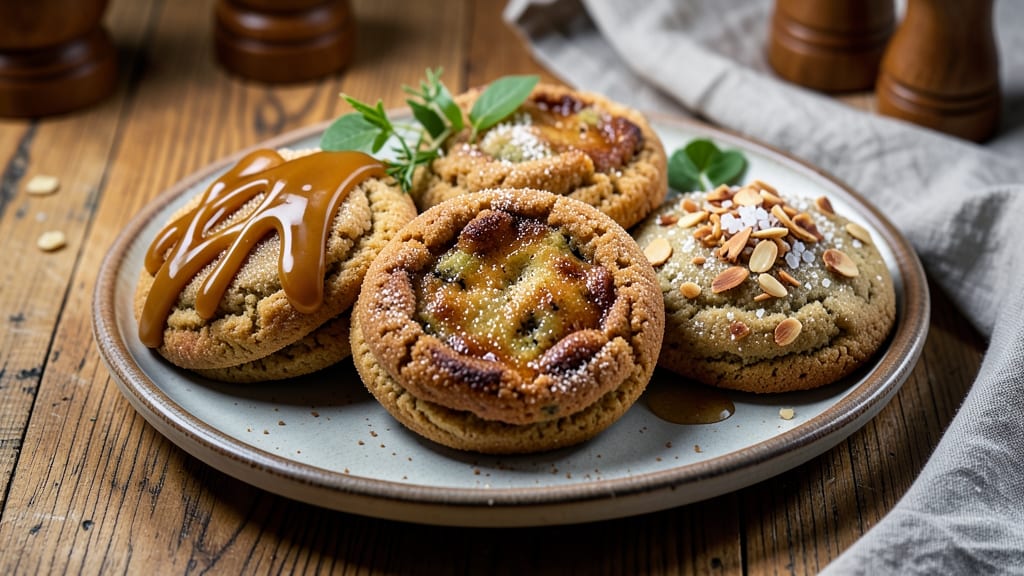
This all-natural sugar cookie recipe delivers pillowy layers and vanilla bean streaks without refined sugar, proving wholesome ingredients can taste just as indulgent. The secret lies in a blend of coconut sugar and honey for natural sweetness, while almond flour adds subtle richness without compromising texture.
I've refined this recipe over years to achieve that perfect balance of chewy centers and crisp edges—every bite reveals a tender crumb with flecks of real vanilla bean.
What sets these cookies apart is the buttery, melt-in-your-mouth quality achieved through a precise mixing method and chilled dough resting time. Unlike traditional recipes, this version uses whole-food ingredients like vanilla extract, cinnamon, and a touch of sea salt to enhance natural flavors without overpowering.
The dough comes together in just 15 minutes, but the real magic happens during the 10-minute bake that transforms it into golden, aromatic cookies.
The result is a batch of cookies that looks and tastes like a bakery creation, with vanilla-infused streaks visible in every bite and a buttery aroma that fills your kitchen.
These cookies hold their shape beautifully for decorating, whether you're piping frosting or sprinkling natural toppings like crushed nuts or dried fruit. The natural sweeteners caramelize just enough to create that familiar sugar cookie flavor without the refined sugar crash.
Perfect for holiday baking, gift-giving, or satisfying that afternoon sweet tooth, this recipe proves you don't need processed ingredients to create something extraordinary. The dough can be prepped ahead and refrigerated for up to 48 hours, making it ideal for busy bakers.
Let's get started on cookies that taste like comfort food reimagined.
Ingredients for all natural sugar cookie
Wholesome ingredients that transform into bakery-style cookies with vanilla bean flecks and perfect pillowy layers.
| Ingredient | Amount | Notes |
|---|---|---|
| Unsalted Butter 🧈 | 1 cup | Cold, cubed for texture |
| Coconut Sugar 🍯 | 1 cup | Lightly packed, fine granulated |
| Honey 🍯 | ½ cup | Raw, liquid consistency |
| Almond Flour 🌰 | 2 ½ cups | Finely ground, unsweetened |
| Pure Vanilla Extract 🌿 | 2 tbsp | High-quality, Madagascar bourbon |
| Vanilla Bean Paste 🍫 | 1 tbsp | For visible streaks, seeds scraped |
| Large Eggs 🥚 | 2 whole | Room temperature, pasteurized |
| Ground Cinnamon 🌶️ | 1 ½ tsp | Freshly ground preferred |
| Sea Salt 🧂 | ½ tsp | Fine grain, Diamond Crystal |
| Baking Soda 🧪 | ½ tsp | Pure, aluminum-free |
| Vanilla Bean Seeds 🍫 | 1 tsp | Scraped from 1 pod |
| All-Purpose Flour 🌾 | ½ cup | For structure, sifted |
The butter and coconut sugar blend is where the magic starts. European-style unsalted butter from brands like Plugrá or Kerrygold gives the richest flavor and best texture—avoid salted or margarine substitutes. Coconut sugar isn't just a sweetener; its molasses notes caramelize beautifully during baking, creating that classic sugar cookie aroma. For the vanilla, Madagascar bourbon vanilla extract adds depth, while the vanilla bean paste ensures those coveted streaks. I always buy whole vanilla beans from Penzeys—split one pod to get both the seeds and paste. The almond flour is non-negotiable for that tender crumb; Bob's Red Mill brand works perfectly if you're buying pre-ground.
No coconut sugar? Light brown sugar at a 1:1 ratio works, though the flavor won't be identical. Running short on vanilla bean paste? Pure vanilla extract plus a pinch of turmeric mimics the streaks visually. The all-purpose flour is just for structure—you could substitute more almond flour if you prefer, but the texture will be denser. For the eggs, pasteurized eggs are ideal if you're concerned about raw egg safety. The sea salt should be Diamond Crystal or Maldon—these dissolve cleanly and enhance flavor without graininess. If you're baking at high altitude, consider adding 1/4 tsp more baking soda to compensate for lower leavening power.
This dough is best made a day ahead—48 hours in the fridge enhances flavor development. Store it in an airtight container with parchment between layers to prevent sticking. The baked cookies keep at room temperature for 5 days in an airtight container, though they're best enjoyed fresh. For longer storage, freeze portions on a parchment-lined tray before transferring to a sealed bag. They'll stay fresh for 3 months this way. The dough can also be rolled and cut into shapes up to 24 hours ahead—just bake straight from frozen, adding 2-3 extra minutes to the bake time.
Why You'll Love This Recipe
- No Mixer Needed: I swear by this dough—just creaming butter and coconut sugar until it’s fluffy, then folding in the almond flour. No electric mixer, no fuss, and the texture comes out tender every time.
- Honey-Vanilla Magic: That first bite? Warm, buttery, with a whisper of honey’s depth and vanilla’s richness. The coconut sugar caramelizes just enough to give it a subtle toasted edge—like a gourmet cookie without the guilt.
- Weekday or Party: Same dough, endless uses. Roll them thin for tea-time bites, chunky for holiday gifts, or even crushed into ice cream toppings. My kids grab them straight from the jar—no occasion required.
- Pantry-Friendly Leftovers: Almond flour keeps them fresh for days (yes, really), and the natural sweetness means no weird aftertaste. I’ve sent these in lunchboxes, frozen them for last-minute treats, and still had seconds. Budget win, flavor win.
Step-by-step instructions for all natural sugar cookies
Here's the method for pillowy, naturally sweetened cookies with visible vanilla bean streaks.
Cream Butter and Sweeteners Until Light
In a stand mixer fitted with the paddle attachment, combine the 1 cup unsalted butter and 1 cup coconut sugar. Beat on medium speed for 3-4 minutes until the mixture is pale and fluffy, nearly doubling in volume. The butter should become smooth and creamy, with no visible lumps remaining.
This creaming process incorporates air into the dough, which creates those signature pillowy layers. I press down gently on the mixture with a spatula during the last minute to ensure even distribution of the coconut sugar crystals. The texture should be light enough to leave clean streaks when you add the vanilla later.
Incorporate Wet Ingredients and Vanilla Flavor
Add the 0.5 cup honey and mix on low speed for 30 seconds until fully combined. The honey will make the mixture slightly thicker but still smooth. Next, add the 2 tbsp pure vanilla extract and 1 tbsp vanilla bean paste, mixing on low speed for another 30 seconds.
Here's where the magic happens: scrape the sides of the bowl with a silicone spatula to ensure all the vanilla bean paste is incorporated. The paste will create those beautiful streaks in the finished cookies, while the extract provides deep vanilla flavor. The mixture should be completely homogeneous at this stage.
Combine Dry Ingredients and Eggs
In a separate bowl, whisk together the 2.5 cups almond flour, 0.5 cup all-purpose flour, 1.5 tsp ground cinnamon, 0.5 tsp sea salt, and 0.5 tsp baking soda. Sift the dry ingredients once before whisking to prevent clumping. Gradually add this mixture to the wet ingredients, mixing on low speed for 1 minute until just combined.
Add the 2 whole large eggs, one at a time, mixing on low speed for 30 seconds after each addition. The dough should come together into a thick, cohesive mass that leaves clean sides on the bowl. If it looks too dry, add 1 tablespoon of milk (though this recipe shouldn't require it with the honey).
Fold in Vanilla Bean Seeds and Chill
Using a silicone spatula, gently fold in the 1 tsp vanilla bean seeds by hand. These seeds will create beautiful flecks throughout each cookie. Divide the dough into 4 equal portions, flatten each into a disc, and wrap tightly in plastic wrap. Chill in the refrigerator for at least 2 hours or up to 24 hours for best results.
Chilling is critical—it prevents excessive spreading in the oven and allows the flavors to meld. The dough should be firm but still pliable when you remove it from the fridge. If it's too soft, return it to the refrigerator for another 30 minutes. This step makes the difference between thick, chewy cookies and flat, cakey ones.
Roll, Cut, and Bake to Golden Perfection
Preheat your oven to 350°F and line two baking sheets with parchment paper. On a lightly floured surface, roll out one disc of dough to ¼-inch thickness. Use a 2.5-inch round cutter to cut out cookies, gently re-rolling the scraps between cuts. Place cookies 2 inches apart on the prepared baking sheets.
Bake for 10-12 minutes until the edges are golden brown but the centers still look slightly underdone. They'll continue cooking on the hot pan after removal. Let them cool on the baking sheet for 5 minutes before transferring to a wire rack. The cookies should be soft and pillowy with visible vanilla bean streaks throughout.
Pro Tips For Making All Natural Sugar Cookie
- Cream Butter Slowly: Start with cold butter straight from the fridge—it’s the only way to avoid a greasy mess. Let it sit out for 10 minutes max (not until it’s soft) before mixing, or your cookies will spread like a pancake on a hot griddle.
- Toast Almond Flour First: I learned this the hard way—untosted almond flour makes cookies taste like nut butter. Dry-toast it in a 350°F oven for 5-7 minutes, stirring once, until it smells nutty and golden. Cool completely before mixing—this prevents the dough from turning into a paste.
- Don’t Overmix Dough: Once you add the honey, stop folding after 2-3 turns with a spatula. Overworking the dough develops gluten, and these cookies will turn out dense instead of tender. The goal is just to combine, not knead—think "light and airy," not "play-dough tough."
- Chill Dough Twice: Divide the dough into two portions, flatten each into a disk, and refrigerate for 2 hours. Then, roll and cut the cookies—this prevents cracking when baking. (Yes, even if you’re impatient like me, the first batch will be a sad, uneven pile.)
Common mistakes when making this recipe
Overmixing the Dough
I've learned the hard way that overmixing develops gluten, turning your pillowy cookies into tough, chewy crackers. Mix the dry ingredients with the wet just until combined—about 1 minute on low speed. Stop as soon as the dough comes together.
The moment you see streaks of flour disappearing, that's your cue to stop mixing. Overmixing also activates the almond flour's natural oils, which can make your cookies greasy. 🌰
Skipping the Chill
Never—ever—skip the 2-hour chill in the fridge. This is where the magic happens for texture control. Without chilling, the cookies will spread excessively in the oven, losing their perfect round shape. The dough also needs time for the flavors to meld, especially the vanilla and cinnamon.
I've had cookies turn out flat and cakey when I rushed this step. If you're in a hurry, chill the dough for at least 1 hour, but 2 hours is ideal.
Incorrect Dough Thickness
Rolling the dough to ¼-inch thickness is crucial for consistent baking. Any thinner, and your cookies will bake too quickly, losing their chewy centers. Any thicker, and they'll stay underdone in the middle. Use a ruler or measuring tape to check thickness—don't rely on visual estimation.
I keep a ¼-inch silicone mat next to my rolling pin as a guide. Also, rotate the dough as you roll to maintain even thickness throughout.
Overbaking for Color
These cookies bake quickly—10-12 minutes is all they need. The edges should be golden brown, but the centers should still look slightly soft. Overbaking dries out the cookies, making them crisp instead of pillowy. The residual heat will continue cooking them for another minute after removal from the oven.
Let them cool on the baking sheet for 5 minutes before transferring—they'll firm up as they cool. Trust the timer more than the color; these cookies finish cooking off the heat.
Using Warm Ingredients
Cold butter and chilled eggs are non-negotiable for this recipe. Warm ingredients can cause the dough to spread excessively in the oven. Keep your butter in the fridge until ready to use, and let eggs sit at room temperature for no more than 30 minutes before adding them.
I always place my eggs in a bowl of cool water for 5 minutes to bring them to the perfect temperature without warming them too much. The dough should be cool to the touch when you start rolling it out.
Ignoring Vanilla Bean Paste Distribution
The vanilla bean paste creates those beautiful streaks, but they won't show up if you don't distribute it properly. After mixing, scrape the sides of the bowl thoroughly to ensure even distribution.
When folding in the vanilla bean seeds, do it gently by hand to avoid breaking them into tiny pieces. Uneven distribution leads to cookies with random flecks rather than consistent streaks throughout.
I like to use a silicone spatula to gently fold the seeds in, preserving their shape for that bakery-style look. 🍫
Nutrition facts
Frequently asked questions
Can I substitute maple syrup for the honey in this recipe?
Yes, but with adjustments! Use ½ cup maple syrup and reduce the coconut sugar to ¾ cup to balance sweetness. Maple syrup adds a distinct caramel flavor that pairs beautifully with vanilla. For best results, let the syrup cool slightly before mixing to prevent melting the butter prematurely.
Why does my dough look too dry or crumbly?
This usually happens from overmixing or using too much almond flour. Try adding 1 tablespoon of milk or melted coconut oil to bind the dough. If the texture is still dry, chill the dough for an extra 30 minutes—cold temperatures help firm it up. The dough should be pliable but not sticky when rolled.
How can I make these cookies nut-free?
Replace the 2.5 cups almond flour with a blend of 1.5 cups all-purpose flour and 1 cup oat flour (blend rolled oats into a fine powder). For extra richness, add 2 tablespoons melted coconut oil to the wet ingredients. The texture will be slightly lighter but still tender. Always check oat flour for cross-contamination warnings if allergies are a concern.
Can I use this dough for sugar cookie shapes?
This dough holds its shape beautifully when chilled properly. Roll it to ¼-inch thickness and use cookie cutters for festive shapes. For best results, bake at 350°F for 10-12 minutes—the edges should be set but centers still soft. Let shapes cool completely before decorating to prevent cracking. The vanilla bean streaks show up especially well in cut-out cookies!
What's the best way to store leftover dough?
Wrap portions tightly in plastic wrap or place in an airtight container with parchment between layers. Store in the fridge for up to 48 hours or freeze for 3 months. Thaw frozen dough in the fridge overnight before rolling. For extra flavor, add ½ teaspoon cinnamon to the dough before freezing. The chilled dough actually improves with time!