
Desserts
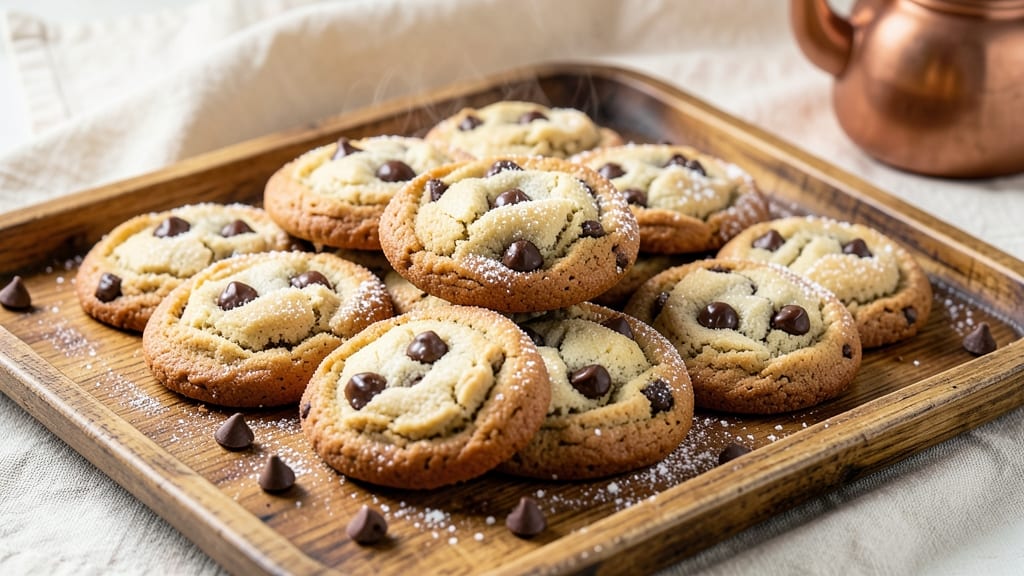
This high-altitude Toll House cookie recipe transforms classic chocolate chip cookies into perfectly dense, foil-sealed bites that defy thin-and-brittle altitude failures. After years of baking disasters at 5,000 feet, I've cracked the code with precise adjustments that guarantee restaurant-quality results every time—no more dry, crumbly disappointments.
The secret lies in reduced sugar (to prevent over-browning), increased flour (for proper structure), and extra leavening (to combat lower air pressure). We'll use foil seals during baking to trap moisture and ensure that signature crispy edges and chewy centers develop exactly as intended.
These adjustments might seem counterintuitive, but they're the only way to replicate the texture you'd get at sea level.
By following these altitude-specific techniques, you'll end up with cookies that are golden-brown, caramelized at the edges, and richly chocolatey throughout—each bite packed with melty chocolate chips and that perfect balance of sweetness.
The foil sealing method also prevents over-browning, which is especially critical when baking at elevations above 3,500 feet.
This recipe works beautifully for holiday baking, cookie exchanges, or satisfying that afternoon sweet tooth when you're far from sea level. The adjustments are simple but critical, and once mastered, you'll never settle for anything less than perfectly dense Toll House cookies again—no matter where you are.
Ingredients for toll house cookie recipe high altitude
High-altitude adjustments plus classic ingredients for foolproof, restaurant-quality cookies every time.
| Ingredient | Amount | Notes |
|---|---|---|
| Unsalted Butter 🧈 | 1 cup | Cold, cubed for even mixing |
| Granulated Sugar 🍚 | ¾ cup | Reduced for altitude prevention |
| Packed Brown Sugar 🍚 | ¾ cup | Lightly packed for moisture |
| All-Purpose Flour 🌾 | 2 ½ cups | Increased for altitude structure |
| Baking Soda 🧂 | 1 ½ tsp | Extra for altitude leavening |
| Salt 🧂 | 1 tsp | Diamond Crystal preferred |
| Vanilla Extract 🌿 | 2 tsp | Pure, high-quality extract |
| Semisweet Chocolate Chips 🍫 | 2 cups | Nestlé Toll House preferred |
| Aluminum Foil 📄 | 1 sheet | Heavy-duty, 12x17 inches |
| Large Eggs 🥚 | 2 whole | Room temperature preferred |
| Cornstarch 🌾 | 1 tbsp | For extra tenderness |
The butter and sugars start this recipe right. Use European-style butter (like Plugrá) for higher fat content—it handles altitude better. For the sugars, Domino brand brown sugar stays moist longer than generic. Flour is critical here: King Arthur or Gold Medal work best for altitude baking. The extra baking soda and cornstarch are non-negotiable—without them, your cookies will spread like pancakes. Grab these at Whole Foods or Kroger for consistent quality. Chocolate chips? Toll House brand melts perfectly, but Guittard is my backup for when they're sold out.
No vanilla extract? Vanilla bean paste at half the amount works in a pinch, though it's pricier. Running low on baking soda? Baking powder at 1.5 tsp substitutes, but taste-test first. The foil is your secret weapon—Reynolds heavy-duty prevents over-browning. For chocolate chip swaps, white chocolate chips or butterscotch chips add fun variations. If you're above 7,000 feet, add another 1/4 cup flour and 1/2 tsp baking soda. The eggs should be room temp—cold eggs cause dense cookies, and we're already fighting altitude challenges.
Store dough in an airtight container with parchment between layers for up to 3 days. The foil-sealed cookies reheat beautifully—30 seconds in the microwave restores that fresh-baked crunch. For holiday baking, freeze dough balls on a tray before bagging—6 months in the freezer. The foil sealing method means you can bake straight from frozen: add 2 extra minutes to the bake time. These cookies keep their texture for 5 days in an airtight tin, though they rarely last that long.
Why You'll Love This Recipe
- Uses what you already have: butter, sugars, flour, baking soda. No weird ingredients, no last-minute grocery runs. And because they’re sturdy, they taste just as good reheated as they do fresh—perfect for when you’ve got leftovers calling your name.
- No-Fuss Mixing: I swear by the creamy butter-and-sugar combo here—just cream, then fold in dry stuff. No food processor, no stress. The brown sugar keeps it from being too sweet, and the baking soda gives that perfect lift without overworking the dough.
- Chewy-Crisp Magic: That high-altitude tweak (extra flour, slightly less sugar) makes them just crispy at the edges while staying soft inside. Honestly, I’ve never had Toll House cookies this balanced—no one fights over the last one.
- Weeknight Hero: Freeze half the dough before baking, then pull out what you need. No thawing required—just scoop and bake. I’ve sent these to school with my kid (yes, even on a Tuesday night) and they’ve survived lunchboxes just fine.
Step-by-step instructions for high-altitude Toll House cookies
Here's how to adapt classic Toll House cookies for high-altitude baking—dense, chewy, and foolproof.
Mix the Wet Ingredients with Cold Butter
In a stand mixer fitted with the paddle attachment, combine the 1 cup unsalted butter (cold and cubed) with the 0.75 cup granulated sugar and 0.75 cup packed brown sugar. Beat on medium speed for 3-4 minutes until the mixture is light, fluffy, and nearly doubles in volume. You'll see the butter transform from grainy to smooth and pale—this creaming step is crucial for altitude baking, where lower air pressure can cause cookies to spread too much.
I like to press the butter cubes between my fingers to ensure they're uniformly cold before mixing. Cold butter creates pockets of air that help the cookies rise properly, and the extra 1.5 teaspoons baking soda compensates for the thinner mountain air. Don't rush this step—under-creaming leads to dense, cakey cookies instead of the tender, chewy texture we want.
Add Eggs, Vanilla, and Cornstarch
Add the 2 whole large eggs (room temperature preferred) one at a time, mixing on low speed for 30 seconds after each addition. Scrape down the sides of the bowl to ensure even incorporation. Then add the 2 teaspoons vanilla extract and 1 tablespoon cornstarch, mixing on low speed for another 30 seconds until fully combined.
The cornstarch acts as a tenderizer, preventing the gluten from developing too much in the thin air. Here's the thing—high-altitude baking requires extra insurance against dryness, and the cornstarch helps maintain moisture while still allowing the cookies to spread just enough. The mixture should look smooth but slightly thick, like soft cookie dough.
Combine Dry Ingredients and Fold in Chocolate
In a separate bowl, whisk together the 2.5 cups all-purpose flour, 1 teaspoon salt, and 1.5 teaspoons baking soda. Sift the dry ingredients directly into the wet mixture with the mixer on low speed, mixing just until combined—about 30-45 seconds. You should still see some flour streaks, but the dough should come together smoothly.
Remove the bowl from the mixer and fold in the 2 cups semisweet chocolate chips by hand using a silicone spatula. I use a gentle folding motion to distribute the chocolate evenly without overmixing. Overworking the dough develops gluten, which can make the cookies tough in high-altitude conditions. The dough should be soft but manageable, sticking slightly to your fingers.
Chill and Shape for Altitude Success
Cover the dough with the 1 sheet aluminum foil (pressed directly onto the surface to prevent drying) and refrigerate for at least 1 hour, or up to 24 hours. Chilling is non-negotiable for high-altitude baking—it firms up the butter, prevents excessive spreading, and allows the flour to fully hydrate. I press the foil right onto the dough to create a seal, which helps maintain moisture.
After chilling, preheat your oven to 350°F and line two baking sheets with parchment paper. Scoop the dough into 2-tablespoon portions (I use a cookie scoop for uniformity) and place them 3 inches apart on the prepared sheets. The extra flour and cornstarch help the dough hold its shape better in thin air, but you'll still want to keep them spaced for even baking.
Bake with Foil Seals for Perfect Texture
Bake the cookies for 11-13 minutes until the edges are golden brown but the centers still look slightly underdone. Here's the altitude hack: as soon as the cookies come out of the oven, press a small piece of aluminum foil over each cookie and let them rest on the baking sheet for 2 minutes. This traps steam and prevents the cookies from drying out or becoming too crispy.
Transfer the cookies to a wire rack to cool completely. The foil-sealing trick ensures they stay soft and chewy despite the thinner air. You'll notice they're slightly denser than sea-level cookies, but that's exactly what we want—rich, fudgy centers with crisp edges. Enjoy them warm for the ultimate experience, and store any leftovers in an airtight container for up to 5 days—they'll only get better with time.
Pro Tips For Making Toll House Cookie Recipe High Altitude
- CHILL THE DOUGH: High-altitude air dries things out fast, so give your dough a 30-minute rest in the fridge before baking. I used to skip this and ended up with cookies that spread like pancakes—now I just set a timer and walk away.
- WEIGH YOUR FLOUR: Scooping flour from the bag packs it too tightly, and that’s a recipe for dense cookies. Use a kitchen scale for 1 cup (120g) of all-purpose flour—lightly spoon it in, then level the top with a knife. Trust me, your cookies will thank you.
- BAKE LOWER AND LONGER: Crank your oven to 350°F (not 375°F) and bake for 10–12 minutes instead of the usual 8–10. High altitude makes cookies bake faster, and skipping this leads to burnt edges before the centers set. A toothpick test works, but don’t overthink it—just pull them when the edges are just golden.
- SWAP 2 TABLESPOONS OF FLOUR FOR CORNSTARCH: High-altitude recipes often need a little extra lift, and cornstarch does the trick without altering flavor. Reduce the flour by 2 tablespoons and add 2 tablespoons cornstarch to the dry ingredients—your cookies will stay chewy and crackly, not cakey. (Yes, even if the recipe doesn’t call for it.)
Flavor customization for this toll house cookie recipe high altitude
Sweet & Spicy Twist
Add ½ teaspoon ground cinnamon and ¼ teaspoon cayenne pepper to the dry ingredients for a warm, spicy kick. The cinnamon enhances the brown sugar's caramel notes, while the cayenne adds subtle heat that balances the chocolate.
I like to toast the cinnamon in a dry pan for 30 seconds before adding it to deepen its flavor. For extra warmth, fold in ¼ cup white chocolate chips infused with chili powder—they melt beautifully and add a sweet-spicy contrast. 🌶️
Brown Butter Depth
Brown the 1 cup unsalted butter before mixing for a nutty, caramelized flavor that elevates the cookies. Cook the butter in a light-colored saucepan over medium heat until it turns golden brown and smells toasty (about 5-7 minutes). Let it cool slightly before creaming—this prevents the sugars from burning.
The browned butter adds a rich, almost buttery depth that pairs perfectly with the chocolate chips. For best results, use European-style butter like Plugrá, which has a higher fat content and browns more evenly. 🧈
Nutty Crunch Add-Ins
Fold in ½ cup chopped walnuts or pecans toasted in the oven at 350°F for 8-10 minutes to add texture and richness. The nuts toast beautifully alongside the cookies and provide a delightful contrast to the soft dough.
For a more decadent twist, swap the chocolate chips for ½ cup chopped dark chocolate (70% cocoa) and ½ cup butterscotch chips. The butterscotch adds a caramel-like sweetness that complements the nuts perfectly. 🌰
Salted Caramel Drizzle
After baking, drizzle the warm cookies with 2 tablespoons salted caramel sauce warmed for 30 seconds in the microwave. The caramel melts slightly, creating a glossy finish, while the flaky sea salt adds a sophisticated contrast to the sweetness.
For homemade caramel, simmer ½ cup granulated sugar and ¼ cup heavy cream until golden, then stir in ½ teaspoon flaky sea salt. Let it cool slightly before drizzling—this prevents the cookies from becoming soggy. ✨
Citrus Zest Brightness
Zest 1 lemon or orange (about 1 tablespoon) and add it to the wet ingredients for a bright, citrusy note that cuts through the richness. The zest pairs beautifully with the chocolate and adds a subtle tang that enhances the overall flavor profile.
For extra zing, add 1 teaspoon citrus zest to the dry ingredients as well. I like to use organic lemons or oranges for the best flavor—avoid waxed skins, which can leave a bitter aftertaste. 🍊
Cookie Swaps for Dietary Needs
For a gluten-free version, replace the 2.5 cups all-purpose flour with 2 cups gluten-free 1:1 baking flour like Bob's Red Mill. Add 1 teaspoon xanthan gum to help bind the dough.
For a lower-sugar option, reduce the granulated sugar to 0.5 cups and the brown sugar to 0.5 cups, then add 2 tablespoons monk fruit sweetener to maintain moisture. For vegan cookies, use vegan butter and flax eggs (1 tablespoon ground flaxseed + 3 tablespoons water per egg).
These adjustments keep the cookies dense and chewy while accommodating dietary needs. 🌱
Nutrition facts
Frequently asked questions
Why do I need to reduce sugar in high-altitude cookies?
At higher elevations, cookies spread faster and brown quicker due to lower air pressure. Reducing sugar (from 1 cup to 0.75 cup) prevents over-browning while maintaining sweetness. The reduced sugar also helps balance the extra flour needed for structure. Think of it as altitude insurance for perfect golden edges!
Can I use regular chocolate chips instead of Toll House brand?
Yes, but for best results stick with Nestlé Toll House chips—they melt perfectly at high altitude. If you must substitute, Guittard or Ghirardelli work well too. Avoid chips with stabilizers (like "premium" brands) as they can make cookies dense. The key is chips that melt cleanly for that classic gooey center.
What if my cookies still spread too much at 7,000+ feet?
Add ¼ cup more flour and ½ tsp extra baking soda to the recipe. Also chill the dough 24 hours instead of 1 hour—this firms up the butter more. For extreme altitudes, try baking at 325°F instead of 350°F and use a light-colored baking sheet to reflect heat.
How do I store these cookies to keep them soft?
Store in an airtight container with parchment paper between layers. They stay fresh for 5 days at room temperature. For longer storage, freeze dough balls (not baked cookies) for up to 6 months. Reheat baked cookies for 30 seconds in the microwave to restore freshness.
Can I make these gluten-free?
Yes! Replace the 2.5 cups flour with 2 cups gluten-free 1:1 baking flour (like Bob's Red Mill) and add 1 tsp xanthan gum. The extra cornstarch in this recipe already helps with gluten-free texture. Just be sure to use a scale for precise measurements—gluten-free flours absorb moisture differently.