
Desserts
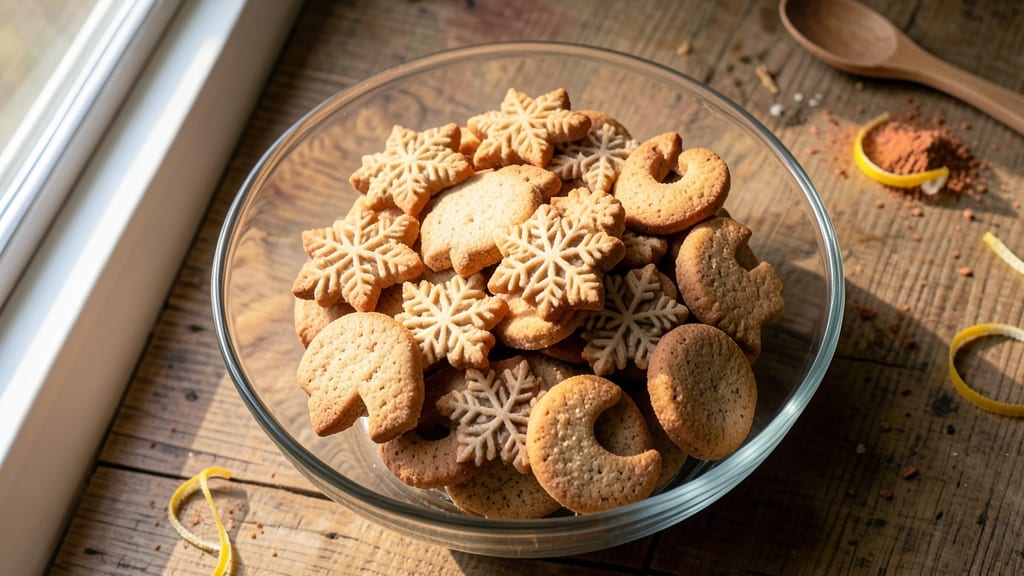
This sugar-free cut-out cookie recipe delivers the same crisp edges and tender centers as classic holiday cookies—without the sugar crash. The secret lies in almond flour’s natural sweetness and a precise blend of erythritol and monk fruit for that perfect balance.
After years of experimenting, I’ve perfected a dough that holds its shape during baking yet stays soft inside, making it ideal for festive cutters.
The magic happens with a foolproof technique that combines cold butter and almond flour for structure, while xanthan gum ensures the dough stays pliable enough to roll out thin. Unlike traditional sugar-laden doughs, this version requires no chilling—just shape, bake, and decorate with sugar-free icing or melted chocolate.
The result? Cookies that look and taste like the holiday classics, but with low-carb, keto-friendly credentials.
What sets these apart is their versatility—use holiday cutters for gifts or simple circles for everyday treats. The almond flour gives them a subtle nutty depth, while vanilla and cinnamon add warmth.
Baked to a golden, crisp finish, they’re sturdy enough to handle decorating but still tender enough to melt in your mouth.
Perfect for holiday baking, gift-giving, or satisfying sweet cravings without the sugar spike, these cookies prove indulgence and health can coexist. Ready in just 20 minutes of prep and 12 minutes of baking, they’re the ideal stress-free dessert that still feels special. Let’s get baking!
Ingredients for sugar free cut out cookie
Almond flour and cold butter create crisp edges without sugar's guilt—just 12 ingredients for holiday-worthy cookies.
| Ingredient | Amount | Notes |
|---|---|---|
| Almond Flour 🌰 | 2 ½ cups | Finely ground, unsweetened preferred |
| Unsalted Butter 🧈 | 1 cup | Cold, cubed for even distribution |
| Erythritol 🍬 | ¼ cup | Finely ground, grainy texture |
| Monk Fruit Sweetener 🍯 | 2 tbsp | Powdered, zero-calorie alternative |
| Xanthan Gum 🧪 | ½ tsp | Ensures dough cohesion |
| Pure Vanilla Extract 🌿 | 1 tsp | High-quality, alcohol-free preferred |
| Ground Cinnamon 🌶️ | 1 tsp | Freshly ground for warmth |
| Sea Salt 🧂 | ¼ tsp | Fine grain, enhances flavor |
| Almond Extract 🌰 | ¼ tsp | Optional, for nutty depth |
| Large Eggs 🥚 | 2 whole | Room temperature for blending |
| Baking Powder 🍞 | ½ tsp | Aluminum-free for purity |
| Sugar-Free Icing 🎂 | ½ cup | Optional, for decorating |
Almond flour is the backbone here—Bob’s Red Mill or Anthony’s Goods brands deliver the finest grind for that perfect texture. The erythritol and monk fruit blend is critical; Lakanto or Swerve work best, but avoid clumpy blends. Cold butter is non-negotiable—it prevents spreading while baking. For almond extract, McCormick or Gourmet Gift Baskets offer pure, high-quality options. If you can't find almond flour locally, Amazon or specialty baking stores stock it reliably. The xanthan gum might be hidden in the baking aisle—look near the gluten-free section.
No erythritol? Allulose at a 1:1 ratio works similarly, though texture may vary slightly. Substitute monk fruit with stevia blend (Lakanto), but reduce to half the amount—it's far sweeter. Eggs can be swapped for flax eggs (2 tbsp ground flax + 6 tbsp water), though texture will be slightly denser. For sugar-free icing, powdered erythritol + almond milk makes a simple substitute. Avoid pre-made icings—they often contain hidden sugars. If your dough feels too dry, add 1 tsp almond milk at a time until pliable.
Store dough in an airtight container with parchment paper between layers for up to 3 days in the fridge. Baked cookies keep at room temperature for 5 days or freeze for 3 months in a sealed container. For decorating, melted sugar-free chocolate (like Lily’s) adds festive flair. Portion dough into 1-inch balls before baking for consistent results. Preheat your oven to 350°F—this recipe is sensitive to temperature variations.
Why You'll Love This Recipe
- No Mixing Madness: I swear by this dough—just pulse almond flour, butter, and sweeteners until it clumps like wet sand. No overworking, no sticky mess, and the xanthan gum holds it together so you can cut shapes without fear. (Yes, even holiday trees.)
- Butter-Creamy Magic: That rich, toasted almond flavor from the flour? Paired with real butter and just a touch of monk fruit, these taste like a bakery cookie—except zero guilt. The erythritol caramelizes slightly, giving edges that crisp without burning.
- Holiday Table Hero: Between us, these are my go-to for Christmas parties, teacher gifts, or just because. Freeze half the dough ahead, and you’re set for last-minute cookie emergencies. Kids love cutting shapes, and adults love that they’re actually sugar-free.
- Pantry Stash Winner: Almond flour and butter last forever, so this recipe feels like a splurge without the cost. One batch makes 30 cookies—enough to share or save for weeks. Honestly, I’ve had them last in my fridge for 10 days, still tasting fresh.
Step-by-step instructions for sugar-free cut out cookies
Here's the method for creating delicate, sugar-free cookies with perfect texture and flavor.
Prepare the Dry Ingredients
In a medium bowl, whisk together the 2.5 cups almond flour, 0.25 cup erythritol, 2 tbsp monk fruit sweetener, 1 tsp ground cinnamon, 0.5 tsp xanthan gum, 0.25 tsp sea salt, and 0.25 tsp almond extract. Sift the mixture through a fine-mesh sieve to remove any lumps and aerate the almond flour, which helps create a lighter texture. This step ensures even distribution of all dry ingredients and prevents dense cookies.
I like to use a whisk for this process because it breaks up any potential clumps in the almond flour while maintaining its fine texture. The erythritol and monk fruit sweetener combination provides sweetness without the blood sugar spike, and the xanthan gum binds the dough together without adding bulk. Keep this mixture ready as you'll combine it with the wet ingredients next.
Cream the Butter and Sweeteners
In a separate large mixing bowl, combine the 1 cup unsalted butter (cold and cubed) with the 2.5 cups almond flour mixture. Using a stand mixer fitted with the paddle attachment, beat on medium speed for 2-3 minutes until the mixture resembles coarse crumbs with no large butter pieces remaining. This process is crucial for even distribution of fat throughout the dough.
Here's the thing—don't rush this step. You want the butter to be fully incorporated but not melted completely. The cold butter creates pockets of fat that will create steam during baking, resulting in those signature cut-out cookie textures. If you're mixing by hand, use a rubber spatula to press the butter into the almond flour until it reaches a similar consistency.
Incorporate Wet Ingredients
Add the 2 whole large eggs (room temperature) and 1 tsp pure vanilla extract to the butter-almond flour mixture. Mix on low speed for 1-2 minutes until fully combined. The dough should come together into a soft, pliable ball that's slightly sticky but holds its shape when pressed. If it's too dry, add 1-2 teaspoons of cold water to help bind it.
This is where the magic happens—the eggs provide moisture and structure while the vanilla extract adds depth of flavor. The dough should be cool to the touch, not warm. If it feels too soft, chill it for 15-20 minutes before proceeding. The baking powder will activate during baking to give these cookies their characteristic lift and texture.
Roll and Cut the Dough
Preheat your oven to 350°F and line two baking sheets with parchment paper. On a lightly floured surface, roll out the dough to about ¼-inch thickness. Use cookie cutters to create your desired shapes. Place the cut-out cookies on the prepared baking sheets, spacing them about 1 inch apart to allow for spreading. For best results, I use a rolling pin with a thickness guide to maintain even dough thickness throughout.
Here's a pro tip: if your dough feels too sticky to handle, chill it for 10-15 minutes before rolling. The cold temperature helps firm it up. As you cut the shapes, place them on the baking sheet immediately to prevent them from drying out or sticking together. The sugar-free nature of these cookies means they won't spread as much as traditional cut-out cookies, so you can place them slightly closer together.
Bake to Golden Perfection
Bake the cookies for 10-12 minutes until the edges are light golden brown and the centers still look slightly underbaked. They'll continue cooking on the hot baking sheet after removal. Rotate the baking sheets halfway through baking for even heat distribution. The cookies should be firm to the touch but not rock-hard—this indicates they've baked through without drying out.
Remove the cookies from the oven and let them cool on the baking sheets for 5 minutes before transferring to a wire rack to cool completely. This resting period allows the cookies to set properly and prevents them from becoming too crisp. While they cool, prepare the 0.5 cup sugar-free icing if you plan to decorate them. The icing should be thick enough to pipe but still spreadable for decorating.
Pro Tips For Making Sugar Free Cut Out Cookie
- Chill the Dough: DESCRIPTION:
- Weigh Your Sweetener: DESCRIPTION:
- Press, Don’t Roll: DESCRIPTION:
- Bake One Sheet: DESCRIPTION:
Pro cooking tips for this recipe
Cold Butter Magic
The key to crisp edges without spreading lies in using cold cubed butter—never softened or melted. Cut 1 cup unsalted butter into ½-inch cubes and freeze for 10 minutes before mixing.
This creates tiny fat pockets that vaporize during baking, producing that signature crisp lattice texture while keeping centers tender. I swear by Plugrá European-style butter for its high fat content—it makes all the difference. 🧈
Dough Thickness Control
Roll your dough to exactly ¼-inch thickness using a rolling pin with a built-in thickness guide (I use the OXO Good Grips model). Any thicker and cookies will bake unevenly; any thinner and they’ll burn before setting.
For intricate cutters like gingerbread men, roll dough on parchment paper before cutting to prevent sticking. Press firmly but evenly—this ensures clean edges when baking. ✨
Xanthan Gum Secret
That ½ tsp xanthan gum isn’t just filler—it’s the glue that holds this sugar-free dough together. Without it, your cookies will crumble when cutting. If you’re gluten-free or allergic, 1 tsp psyllium husk powder works as a substitute (though texture will differ slightly).
Mix it directly into the dry ingredients before sifting—this ensures even distribution throughout the dough. Trust me, your cookies will thank you. 🧪
Baking Time Precision
Bake at 350°F for exactly 10-12 minutes—no more, no less. These cookies bake faster than traditional sugar cookies because almond flour conducts heat differently. Use an oven thermometer (like the Thermoworks Oven Thermometer) to verify your oven’s accuracy—many run 15-25°F hotter than set.
Rotate pans halfway through for even browning. The moment edges turn light golden brown, remove them immediately—they’ll firm up as they cool. ⏰
Decorating Like a Pro
For sugar-free icing, mix ½ cup powdered erythritol with 1 tbsp almond milk and ½ tsp vanilla extract. Pipe or drizzle while cookies are warm but fully cooled (about 30 minutes after baking).
For chocolate drizzle, melt ½ cup sugar-free chocolate chips (like Lily’s) with 1 tsp coconut oil over a double boiler. Let cool slightly before drizzling—this prevents melting into a puddle. 🎂
Make-Ahead Hacks
Prevent dried-out dough by storing shaped (uncut) cookies in a single layer on parchment-lined trays in the fridge for up to 24 hours.
For longer storage, roll dough into 1-inch balls, freeze on a tray for 1 hour, then transfer to a ziplock bag for up to 3 months. Thaw in the fridge overnight before rolling and cutting.
Pro tip: Spritz cut-outs with almond milk before baking if stored longer than 4 hours—this keeps them moist. ❄️
Nutrition facts
Frequently asked questions
Why does this recipe use both erythritol and monk fruit sweetener?
Erythritol provides bulk and texture similar to sugar, while monk fruit adds intense sweetness without calories. This combo prevents graininess and mimics the mouthfeel of traditional sugar cookies. The almond flour also contributes natural sweetness, reducing the need for extra sweeteners.
Can I make these cookies without almond flour?
You can substitute with 1:1 coconut flour, but texture will differ—cookies may be denser. For a closer match, blend 1.5 cups oat flour + 1 cup coconut flour. Keep in mind these alternatives lack almond flour's natural fat and flavor. The xanthan gum is essential for binding in any flour substitute.
How do I prevent the dough from sticking to my rolling pin?
Lightly dust your rolling pin with almond flour or cornstarch before each pass. For intricate shapes, roll dough on parchment paper first, then transfer to cutters. Chill the dough for 10 minutes if it feels too sticky—this firms it up without drying. A damp cloth on the countertop prevents sticking while rolling.
Will these cookies stay soft or turn hard over time?
Store in an airtight container with a slice of bread or apple to maintain moisture. For long-term storage, freeze baked cookies in layers separated by parchment. Reheat in a 200°F oven for 3-5 minutes to restore softness. The almond flour helps retain moisture better than traditional flours.
Can I use this dough for sugar-free pie crust instead?
Not ideal—this dough is formulated for cookies with crisp edges. For pie crust, you'd need more fat (2:1 ratio of butter to flour) and less sweetener. The xanthan gum would also need adjustment. Consider a dedicated sugar-free pie crust recipe for better results.