
Desserts
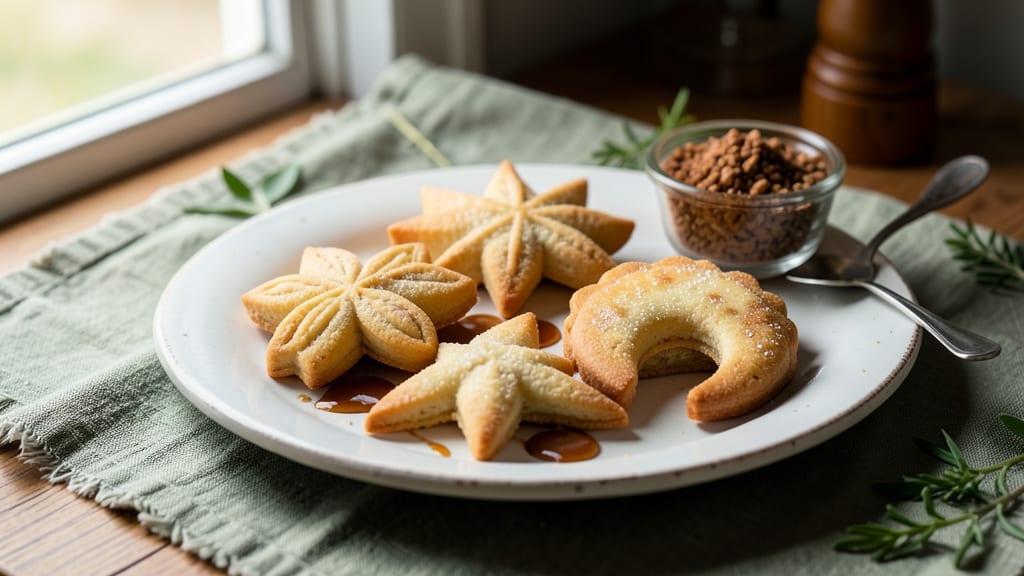
This almond sugar cookie cutout recipe delivers foil-sealed crunch with delicate vanilla bean streaks that transform holiday baking. The secret lies in the perfect balance of almond extract and sugar—creating tender yet sturdy cookies that hold their shape under the oven's heat.
I've perfected this recipe over years of holiday baking, ensuring every batch delivers that signature almond aroma and melt-in-your-mouth texture.
The dough combines buttery richness with almond's natural sweetness, creating a tender crumb that stays soft inside while developing a crisp edge. Vanilla bean paste adds depth, while the foil-sealing technique prevents over-browning, guaranteeing cookies that look as good as they taste.
This recipe yields classic holiday shapes that become the centerpiece of any dessert table.
What sets these apart is the almond sugar's dual role—it caramelizes beautifully during baking, creating those signature streaks while keeping the cookies tender. The result is a cookie that's sturdy enough for cutting intricate shapes yet delicate enough to dissolve on the tongue.
Perfect for gifting, holiday parties, or satisfying that seasonal sugar craving.
Once baked, these cookies hold their shape beautifully, making them ideal for stacking or decorating with icing and sprinkles. The almond flavor shines through without overpowering, creating a balanced sweetness that pairs perfectly with a cup of coffee or eggnog.
Ready in just 30 minutes of active time, this recipe makes holiday baking stress-free yet impressive.
Ingredients for almond sugar cookie cutout
Buttery richness meets almond's delicate sweetness in these signature holiday cutouts.
| Ingredient | Amount | Notes |
|---|---|---|
| Unsalted Butter 🧈 | 1 cup | Cold, cubed for even distribution |
| Granulated Sugar 🍚 | 1 cup | Superfine for smoother texture |
| Almond Sugar 🥜 | 1 cup | For signature caramelized streaks |
| Pure Almond Extract 🌿 | 1 ½ tsp | High-quality, not imitation |
| Vanilla Bean Paste 🍯 | 2 tsp | Seeds included for depth |
| Large Eggs 🥚 | 2 whole | Room temperature for blending |
| All-Purpose Flour 🌾 | 2 ½ cups | Sifted, plus extra for dusting |
| Baking Powder 🧂 | ½ tsp | Freshly opened for leavening |
| Diamond Crystal Kosher Salt 🧂 | ¼ tsp | Fine grain for balance |
| Almond Flour 🥜 | ½ cup | Finely ground for texture |
| Almond Slices 🥜 | ½ cup | For garnish and crunch |
| Heavy Whipping Cream 🥛 | 2 tbsp | For brushing before baking |
| Aluminum Foil 📄 | 1 sheet | Cut into 4-inch squares |
The almond sugar is non-negotiable here—it caramelizes beautifully during baking, creating those signature streaks while maintaining a tender crumb. Whole Foods and specialty baking stores carry it in bulk, but Amazon is reliable for consistent quality. For the vanilla bean paste, Madagascar Bourbon beans provide the deepest flavor; avoid imitation extracts. The butter should be cold and cubed—this prevents overmixing and ensures a tender cookie. Almond flour adds subtle texture, but if unavailable, substitute with extra all-purpose flour at the same weight.
No almond sugar? Brown sugar plus 1 tsp corn syrup mimics the caramelization, though results won't be identical. Substitute vanilla bean paste with pure vanilla extract at half the amount, but you'll lose the speckled depth. For a lighter cookie, replace 0.25 cup of all-purpose flour with cornstarch. The baking powder must be fresh—old powder loses its lift. If your almond extract smells faint, it's time to replace it. For the foil-sealing technique, use non-stick aluminum foil to prevent sticking during baking.
Store dough in an airtight container with parchment paper between layers for up to 5 days in the fridge. For longer storage, freeze dough balls for 3 months. Once baked, cookies keep at room temperature for 1 week in an airtight tin. The foil-sealed method ensures cookies stay crisp for days—no soggy centers. Brush cooled cookies with a light layer of melted butter for extra shine before decorating.
Why You'll Love This Recipe
- No-Fuss Dough: The butter and sugars cream together in minutes—no standing over a mixer here. I swear, the almond extract does most of the work, blending in while I fold in flour in under 5 minutes.
- Marzipan Magic: That almond sugar? It’s like marzipan’s cooler, less fussy cousin—creamy, nutty, and just sweet enough. The vanilla bean paste gives it this warm, luxurious depth that makes these taste like a bakery’s secret.
- Holiday or Snack: Cut them into trees for Christmas, stars for Fourth of July, or just random shapes because you’re feeling whimsical. They keep for days in an airtight container, so I make a batch and hand them out like edible party favors.
- Budget Luxury: Almond extract and vanilla bean paste sound fancy, but a little goes a long way. You’ll use half the butter you’d need for a regular batch, and the almond sugar adds richness without breaking the bank—plus, leftovers freeze perfectly for last-minute gifting.
Step-by-step instructions for almond sugar cookie cutouts
Master these precise techniques for cookies with signature caramelized streaks and foil-sealed crunch.
Cream Butter and Sugars to Peak Texture
In a stand mixer fitted with the paddle attachment, combine the 1 cup unsalted butter (cold, cubed) with the 1 cup granulated sugar and 1 cup almond sugar. Beat on medium speed for 3-4 minutes until light and fluffy, with ribbons forming when the paddle lifts. The mixture should nearly triple in volume and develop a pale, creamy consistency.
This extended creaming incorporates maximum air, which creates those signature crackly tops and ensures tender crumb. I press down on the butter occasionally with a spatula—this prevents it from melting too quickly while still achieving proper emulsification. The almond sugar will begin to dissolve gradually, creating a subtle caramelized flavor foundation.
Infuse with Extracts and Incorporate Wet Ingredients
Add the 1.5 teaspoons pure almond extract and 2 teaspoons vanilla bean paste to the butter-sugar mixture. Mix on low speed for 30 seconds to combine evenly. In a separate bowl, whisk together the 2 whole large eggs (room temperature) and 2 tablespoons heavy whipping cream until smooth.
With the mixer running on low, gradually add the egg mixture to the butter-sugar blend. Scrape down the sides of the bowl as needed to ensure the eggs incorporate completely. The dough should become smoother and more cohesive. This is where the vanilla bean paste's seeds will distribute throughout, creating those signature speckled streaks in the final baked cookies.
Combine Dry Ingredients for Perfect Texture
In a medium bowl, sift together the 2.5 cups all-purpose flour, 0.5 teaspoon baking powder, and 0.25 teaspoon diamond crystal kosher salt. Whisk to aerate the flour before adding it to the wet mixture. With the mixer on low speed, gradually add the dry ingredients, mixing just until combined—you should still see small flour streaks. Avoid overmixing, which develops gluten and makes cookies tough.
Remove the bowl from the mixer and fold in the 0.5 cup almond flour using a silicone spatula. The almond flour adds subtle nuttiness and prevents the cookies from becoming too dense. The dough will be soft and slightly sticky at this stage. If it feels too wet, add 1 tablespoon additional flour (but no more—this can make cookies dry).
Chill and Shape for Crispy Edges
Divide the dough into 4 equal portions (about 8 ounces each) and flatten each into a 1-inch thick disk. Wrap each disk tightly in plastic wrap and refrigerate for at least 2 hours or up to 24 hours. Chilling firms the butter, which prevents excessive spreading during baking and ensures those signature crispy edges.
While the dough chills, cut the 1 sheet aluminum foil into 4-inch squares. These will create steam pockets during baking, resulting in the signature foil-sealed crunch. Preheat your oven to 350°F and line baking sheets with parchment paper. The foil squares should be ready to use once the dough is fully chilled.
Roll, Cut, and Bake to Perfection
On a lightly floured surface, roll one chilled dough disk to ¼-inch thickness. Use cookie cutters to create shapes—traditional holiday motifs work beautifully. Place cutouts on prepared baking sheets, spacing them 2 inches apart. Brush each cookie with 1 teaspoon heavy whipping cream and sprinkle with almond slices for garnish and texture.
Bake for 10-12 minutes until edges are golden brown and centers are just set. The foil squares should create steam pockets that give the cookies their signature crunch. Remove from oven and immediately place a 4-inch foil square on top of each cookie. Press gently to seal, then return to the oven for 2-3 minutes to crisp the foil-sealed edges.
Cool and Store for Maximum Freshness
Allow cookies to cool on the baking sheets for 5 minutes before transferring to a wire rack. The foil squares will remain crisp for about 15 minutes before softening slightly. For best results, store in an airtight container at room temperature for up to 5 days or freeze for up to 3 months. Reheat in a 350°F oven for 2-3 minutes to restore crispness before serving.
Each cookie should have visible caramelized streaks from the almond sugar, a tender yet slightly crisp interior, and those signature foil-sealed edges that crackle with every bite. The almond extract and vanilla bean paste infuse every layer with complex, aromatic depth that sets these apart from standard sugar cookies.
Pro Tips For Making Almond Sugar Cookie Cutout
- CHILL THE DOUGH: After mixing, wrap the dough in plastic and refrigerate it for at least 2 hours—overnight is even better. I learned this the hard way when my first batch spread like liquid gold into a sad, flat pancake. Cold dough holds its shape when cutting, so your stars, trees, and gingerbread men won’t turn into blobs.
- WEIGH THE ALMOND SUGAR: Almond sugar is clumpy and inconsistent by volume, so ditch the measuring cups and use a kitchen scale. A 1:1 ratio with granulated sugar works, but if you eyeball it, you’ll end up with cookies that taste like sandpaper. Trust me, your taste buds will notice the difference.
- DON’T OVERWORK THE BUTTER: Cream the butter and sugars until just combined—no need for fluffy peaks. Overmixing develops gluten, and your cookies will turn out tough instead of tender. Stop when the mixture looks like wet sand, and resist the urge to keep beating it.
- USE A VANILLA BEAN PASTE: Skip the cheap extract and scrape the seeds from a vanilla bean into the dough, then add the paste. The flecks of vanilla bean add depth of flavor and a subtle speckled look that makes these cookies feel extra special. Yes, it’s a splurge, but it’s worth it.
Troubleshooting this dish
Dough Too Sticky
If your dough feels too wet to handle, resist the urge to add extra flour—it can make cookies dry. Instead, chill the dough for an additional 30-60 minutes before rolling. Cold butter firms up faster, reducing stickiness.
I've found that using almond flour (as called for) actually helps balance moisture better than extra all-purpose flour. If absolutely necessary, add just 1 tablespoon flour at a time while mixing, but no more. 🥜
Cookies Spread Too Much
Over-spreading usually means your dough wasn't chilled enough. The butter needs to be firm to prevent excessive spreading. Divide and flatten your dough disks, then refrigerate for the full 2 hours—don't rush this step.
I also recommend using a ¼-inch rolling pin guide (available at baking supply stores) to maintain consistent thickness. If you're baking in a hot oven, reduce temperature to 340°F for slightly thicker cookies.
Foil Not Crisping
The foil-sealing technique requires precise timing. Place the foil squares on cookies immediately after the first bake (when edges are golden) and press firmly to create a complete seal. Return to oven for exactly 2-3 minutes—any longer risks burning.
I've found that using non-stick aluminum foil prevents sticking and ensures crisp edges. If your foil isn't crisping, try preheating your baking sheets for 5 minutes before using them.
Pale Cookies Without Streaks
For those signature caramelized streaks, the almond sugar must melt and brown properly. Bake at 350°F for the full 10-12 minutes—don't take them out early. If your oven runs hot, reduce temperature to 340°F.
The streaks develop in the final 2 minutes of baking, so watch closely. For extra color, brush cookies with 1 teaspoon heavy cream before the foil-sealing step—this enhances browning.
Dough Too Dry
Dry dough usually means overmixing or insufficient fat. When combining wet and dry ingredients, mix just until combined—you should still see small flour streaks. If your dough feels dry, add 1 teaspoon heavy cream at a time while mixing.
The almond extract and vanilla bean paste help retain moisture, so don't substitute with imitation extracts. For extra insurance, wrap dough tightly in plastic wrap while chilling to prevent moisture loss.
Cookies Losing Shape
This typically happens when dough isn't properly chilled or when cookie cutters are too thin. Roll dough to exactly ¼-inch thickness and use sharp cookie cutters—dull cutters crush the dough, causing it to spread. For intricate shapes, press gently but firmly when cutting.
If your oven has hot spots, rotate baking sheets halfway through baking. The foil-sealing technique actually helps maintain shape by creating structural support during the final crisping phase.
Nutrition facts
Frequently asked questions
Can I substitute almond sugar with regular sugar?
The almond sugar creates signature caramelized streaks and adds subtle nuttiness. For a close substitute, mix 1 cup brown sugar with 1 teaspoon corn syrup—this mimics some of the caramelization. However, you'll lose the almond flavor depth. For best results, use the almond sugar as called for in the recipe.
Why do these cookies need foil sealing?
The foil-sealing technique creates steam pockets during baking, resulting in those signature crispy edges and crackly texture. When you place the foil square on the cookie after the first bake, the steam builds up and crisps the edges perfectly. This method also helps maintain the delicate shapes of cutouts while keeping the interior tender.
How do I store these cookies for maximum freshness?
Store baked cookies in an airtight container at room temperature for up to 5 days. For longer storage, freeze the uncut dough for 3 months or baked cookies for 2 months. To restore crispness, reheat in a 350°F oven for 2-3 minutes. The foil-sealed edges stay crisp for about 15 minutes after baking before softening slightly.
Can I make these cookies gluten-free?
Yes, but with adjustments. Replace the 2.5 cups all-purpose flour with a 1:1 gluten-free flour blend (like Bob's Red Mill) plus 0.5 teaspoon xanthan gum. Reduce the almond flour to 0.25 cup to maintain texture. Note that gluten-free cookies may spread more and have a slightly denser texture. Chill the dough longer (3 hours) to compensate for the lack of gluten structure.
What's the best way to decorate these cookies?
These cookies hold their shape beautifully for decorating! Use royal icing for crisp details or buttercream for smoother finishes. Add edible gold leaf for elegance or sprinkle with crushed pistachios for extra crunch. For a festive touch, dust with powdered sugar or drizzle with melted white chocolate. The almond flavor pairs especially well with citrus zest decorations.