
Desserts
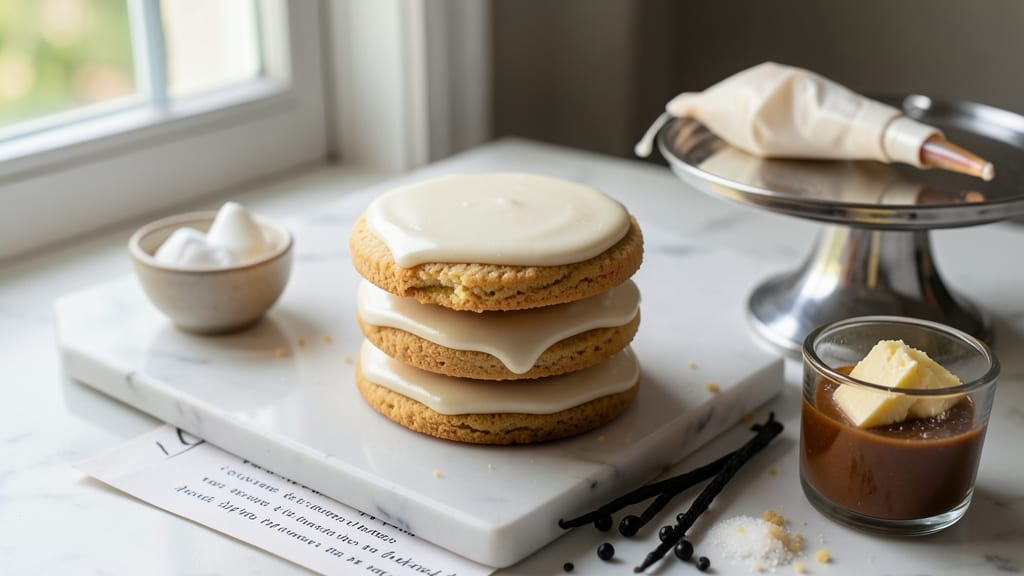
This shortbread cookie recipe with royal icing delivers the perfect marriage of buttery, crispy edges and delicate, melt-in-your-mouth centers—then transforms them into edible works of art with glossy, piped decorations.
The secret lies in precise dough preparation: cold butter, minimal flour, and gentle handling create that signature sandpaper crunch, while royal icing unlocks endless decorative possibilities from elegant swirls to intricate lace patterns.
What sets this recipe apart is the balance between technique and simplicity—no stand mixer required, just a food processor and steady hands. The dough rests overnight for maximum flavor development, while the royal icing achieves that professional glass-like finish with just egg whites and powdered sugar.
Every step is designed to ensure your cookies stay crispy while the icing sets perfectly without cracking.
By the time you're done, you'll have cookies that look like they belong in a bakery display case: golden, perfectly shaped, and topped with smooth, glossy icing that dries to a delicate finish.
The contrast between the crispy cookie base and the delicate icing creates a textural experience that's as satisfying as it is beautiful—ideal for holidays, gifting, or impressing guests with homemade elegance.
The real magic happens in the decorating: from simple borders to intricate floral designs, royal icing lets you customize each cookie into a unique masterpiece.
Whether you're creating a monogrammed gift set or a showstopping dessert platter, this recipe gives you both the foundation and the creative freedom to make every batch special.
Ingredients for shortbread cookie recipe with royal icing
Cold butter, fine sugar, and just the right touch of vanilla—these are the stars of your crispy shortbread base.
| Ingredient | Amount | Notes |
|---|---|---|
| Unsalted Butter 🧈 | 1 cup | Cold, cubed for food processor |
| Granulated Sugar 🍚 | ½ cup | Superfine preferred for smooth texture |
| All-Purpose Flour 🌾 | 1 ½ cups | Sifted, plus extra for dusting |
| Large Egg Whites 🥚 | 3 whole | Room temperature, pasteurized if preferred |
| Powdered Sugar 🍚 | 3 cups | Confectioners' sugar, sifted |
| Vanilla Extract 🌿 | 1 tsp | Pure extract, not imitation |
| Diamond Crystal Kosher Salt 🧂 | ¼ tsp | Fine grain preferred |
| Cornstarch 🌾 | 1 tbsp | For smooth icing consistency |
| Almond Extract 🌿 | ½ tsp | Optional, for added depth |
| Food Coloring or Gel Food Coloring 🎨 | 1 tsp | Optional, for decorating |
| Parchment Paper 📄 | 1 sheet | For baking and decorating |
| Piping Bags 🎨 | 2 whole | With small round tips |
| Granulated White Sugar 🍚 | ½ cup | For sprinkling on icing |
The butter needs to be cold—pop it in the freezer for 15 minutes before processing. Plugrá or Land O'Lakes unsalted work best for that rich, crumbly texture. If you're using regular sugar, pulse it in the food processor first to make it superfine. The flour? King Arthur or Gold Medal are my go-tos—they give that perfect sandpaper crunch. Sift it first, or you'll end up with lumpy dough. And trust me, the extra 10 minutes of sifting now saves you from frustration later. For the royal icing, Domino powdered sugar is my secret weapon—it's finer and dissolves better than the generic brands.
No food processor? Grated butter and a pastry cutter work in a pinch, but you'll lose some of that signature texture. Short on egg whites? Aquafaba (chickpea brine) at double the amount gives a similar consistency. The icing too thick? Add a splash of water, one drop at a time. Too thin? More powdered sugar. No piping bags? Ziploc bags with the corner snipped off do the job just fine. And if you're decorating with sprinkles or edible glitter, grab them from Michaels or Joann Fabrics—their selection is unbeatable for holiday baking.
The dough keeps for up to 5 days in the fridge, wrapped tightly in plastic. For longer storage, freeze it for 3 months—just thaw overnight in the fridge before baking. The royal icing sets best at room temperature, so let your cookies cool completely before decorating. If you're making these ahead for gifting, decorate them the day before and store in an airtight container with a slice of bread to absorb moisture. Pro tip: Spritz the icing with a little rubbing alcohol before adding sprinkles—they'll stick like magic.
Why You'll Love This Recipe
- Foolproof Mixing: I swear by this method—just cream butter and sugar until fluffy, then fold in flour like you’re tucking in a blanket. No food processor, no stress, and the dough comes together faster than you can say "shortbread."
- Buttery Crisp Magic: That first bite? Pure golden goodness. The cold butter cuts through the sugar for a melt-in-your-mouth texture, while the egg whites in the royal icing give it that delicate, almost snowy finish—like biting into a cloud with a crisp edge.
- Holiday or Zero Effort: Between us, I’ve used these for Christmas gifts, teacher appreciation, and even just because I wanted cookies at 3 PM. The royal icing lets you pipe swirls, dots, or even write names—no fancy decorating skills needed.
- Pantry Staples Only: Honestly, this recipe uses stuff you already have. Butter, sugar, flour—check. Egg whites? I keep a carton on hand for baking emergencies. And leftovers? They last for days in an airtight container, so you’re never scrambling for dessert.
Step-by-step instructions for shortbread cookies with royal icing
Here's how to make buttery shortbread with that signature sandpaper crunch, then decorate with silky royal icing.
Process the Shortbread Dough for Maximum Crispiness
In a food processor, combine the 1 cup unsalted butter (cold and cubed) with the 0.5 cup granulated sugar. Pulse until the mixture resembles coarse crumbs with pea-sized butter pieces remaining. This texture is crucial—it creates those signature shortbread layers.
Add the 1.5 cups all-purpose flour, 0.25 tsp diamond crystal kosher salt, 1 tsp vanilla extract, and 0.5 tsp almond extract. Pulse just until the dry ingredients are evenly distributed but don't overmix. The dough should hold together when pressed but still feel slightly gritty—this ensures that crispy texture we're after.
Shape and Bake for Perfect Shortbread Texture
Turn the dough out onto a lightly floured surface and gently press it into a 1-inch thick rectangle. Wrap tightly in plastic wrap and chill for at least 1 hour (or up to 24 hours). This resting period is non-negotiable—it prevents the cookies from spreading too much in the oven.
Preheat your oven to 325°F. Line a baking sheet with the parchment paper and transfer the chilled dough. Cut into 2-inch squares using a sharp knife or bench scraper. Place the cookies 2 inches apart on the prepared sheet—this gives them room to spread slightly without touching.
Bake for 30-35 minutes until the edges are just beginning to turn golden and the centers still look slightly pale. The cookies will firm up as they cool, so don't bake them until fully golden—we want that signature shortbread snap. Let cool completely on the baking sheet for 15 minutes before transferring to a wire rack.
Prepare the Royal Icing for Decorating
In a clean bowl, whisk together the 3 whole large egg whites until frothy. Gradually whisk in the 3 cups powdered sugar and 1 tbsp cornstarch until completely smooth. The icing should be thick enough to hold its shape when piped but still flow smoothly—this is your "flood" consistency for decorating.
Divide the icing into separate bowls and tint with the food coloring or gel food coloring as desired. For the classic look, I like to make white icing for the base and pastel colors for accents. The icing should be cool but not cold when you pipe it—this helps it set properly on the cookies.
Decorate with Piping Bags for Professional Results
Fill the 2 piping bags with the prepared icing and cut small tips in the corners. For the base, pipe a thin border around each cookie, then "flood" the center by gently dragging the tip through the icing. Let the first layer set for 10-15 minutes until it's no longer tacky to the touch.
For the final touch, sprinkle the 0.5 cup granulated white sugar over the iced cookies while the icing is still slightly wet. This creates that beautiful textured finish that makes shortbread cookies look so elegant. Let the decorations dry completely for at least 2 hours before serving—this ensures they hold their shape and sparkle.
Pro Tips For Making Shortbread Cookie Recipe With Royal Icing
- CHILL THE DOUGH: Cold butter is your friend here—don’t let it soften when mixing. Cut the butter and sugar together in a food processor until it’s just combined, then pulse in the flour in batches. If the dough gets warm, pop it in the fridge for 10 minutes. Warm dough spreads like crazy, and you’ll end up with sad, flat cookies instead of those crisp, buttery layers you want.
- WEIGH THE FLOUR: Scooping flour from the bag is a recipe for disaster. Use a kitchen scale and measure the flour by weight (usually around 160g for this recipe). Packing it in too tight or using a spoon to scoop will throw off the texture—shortbread needs that delicate balance of crispness and crumb. A light tap on the counter after measuring keeps it fluffy.
- DON’T OVERMIX THE ROYAL ICING: Once you whip those egg whites into stiff peaks, add the powdered sugar gradually—a tablespoon at a time—while mixing on low. If you dump it all in at once, you’ll end up with a sticky, unmanageable mess. The icing should hold its shape when you pipe it but still be smooth enough to spread. Overmixing makes it grainy, and no one wants lumpy icing on their cookies.
- LET THE COOKIES REST: Fresh out of the oven, shortbread is still soft and prone to cracking when you try to decorate. Wait at least 30 minutes—better yet, let them cool completely on a wire rack—before adding royal icing. Cold cookies hold their shape, and the icing won’t melt into a puddle. (Yes, even if you’re impatient like me.)
Flavor customization for this shortbread cookie recipe with royal icing
Citrus Zest Twist
Brighten your shortbread with 1 tsp lemon or orange zest mixed into the dough. The citrus cuts through the butterfat, adding a subtle tang that pairs beautifully with the sweet royal icing. I like to use organic Meyer lemons from Trader Joe's—they're sweeter and more aromatic than regular lemons.
For extra flair, add a tiny pinch of cardamom (about ¼ tsp) to complement the citrus. 💛
Spiced Chai Infusion
Transform your cookies into a cozy chai-inspired treat by adding ½ tsp ground cinnamon, ¼ tsp ginger, and ⅛ tsp cloves to the dough. The warm spices deepen the flavor profile and create a beautiful contrast with the cool, crisp texture.
For the royal icing, tint it with a light brown gel food coloring and pipe delicate swirls on top. This variation is perfect for holiday gifting or serving with chai tea. ✨
Brown Butter Depth
Elevate your shortbread by browning the butter before processing. Cook 1 cup unsalted butter in a light-colored saucepan over medium heat, swirling occasionally, until it turns a golden brown color and smells nutty (about 5-7 minutes).
Let it cool completely before using in your recipe. The nutty, caramelized flavor adds complexity that pairs wonderfully with the sweet icing. For decorating, try piping honeycomb patterns with a contrasting color of icing. 🌟
Matcha Green Tea
For a sophisticated twist, replace ½ cup of the all-purpose flour with ½ cup matcha powder (about 2 tbsp). The earthy, slightly bitter notes of matcha balance the sweetness of the icing beautifully.
Use white royal icing for decorating and pipe intricate lace patterns or delicate leaves. This variation is stunning when presented on a platter with gold leaf accents for special occasions. 💫
Salted Caramel Drizzle
After decorating with royal icing, drizzle the cooled cookies with salted caramel sauce. Warm ½ cup store-bought caramel sauce (like Trader Joe's or Smucker's) with 1 tbsp heavy cream until smooth.
Drizzle over the icing while it's still slightly tacky, then immediately sprinkle with flaky sea salt (like Maldon). The sweet-salty contrast is pure magic. 🔥
Fruit Jam Accents
Add a pop of fruity freshness by piping thin lines of royal icing in contrasting colors, then filling them with raspberry or apricot jam. Use a small spoon to gently press the jam into the icing lines before it sets.
For a more elegant look, create herringbone patterns with the icing and fill the spaces with jam. This technique works beautifully with strawberry or blackberry jam for a vibrant presentation. 🍓
Nutrition facts
Frequently asked questions
Can I make these shortbread cookies without a food processor?
Use the grated butter method by rubbing 1 cup cold butter with 0.5 cup granulated sugar in a bowl until crumbly. Then cut in the 1.5 cups flour with a pastry cutter or your fingers. The texture won't be quite as precise, but you'll still get delicious cookies with that signature crunch. Just be extra gentle when handling the dough.
Why does my royal icing crack when drying?
Cracking usually happens when the icing dries too quickly or isn't thick enough. For a smooth finish, make sure your icing is at "flood" consistency—thick enough to hold peaks but still flow when piped. Let the first layer dry completely (10-15 minutes) before adding a second, and work in a humidity-controlled environment (like your kitchen). A light mist of water or a tiny bit of rubbing alcohol can also help prevent cracks.
How do I store decorated shortbread cookies?
Store them in an airtight container with a slice of bread to absorb moisture. Keep them at room temperature for up to 5 days or freeze for 3 months. For gifting, decorate them the day before and let the icing dry completely. Place parchment paper between layers to prevent sticking. The bread trick keeps them fresh and crispy!
Can I use meringue powder instead of egg whites?
Yes! Replace the 3 egg whites with 3 tbsp meringue powder mixed with 3 tbsp water. This works especially well if you're avoiding raw eggs. The texture will be slightly different but still perfect for decorating. Just ensure your icing is smooth—meringue powder can sometimes create tiny lumps if not whisked thoroughly.
What's the best way to pipe intricate designs?
Start with a small round tip (size 1 or 2) for details, and practice on parchment paper first. For clean lines, keep your piping bag at a 45-degree angle and apply gentle, steady pressure. Work quickly once the icing is on the cookie to prevent smearing. A toothpick can help smooth edges or create fine details. Watching a few YouTube tutorials on royal icing techniques can make all the difference!