
Desserts
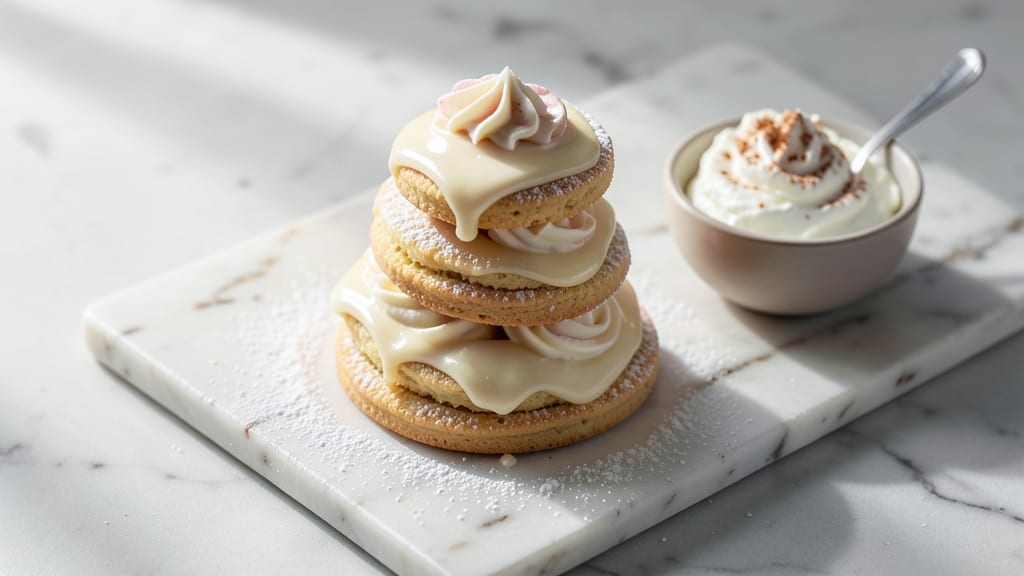
The royal iced sugar cookie recipe delivers the perfect balance of tender crumb and crisp edges, topped with that signature glossy glaze. Foil-steaming the cookies creates a professional-quality texture that's impossible to resist. This method transforms ordinary sugar cookies into bakery-worthy treats with minimal effort.
What sets these apart is the foolproof dough recipe—just 5 simple ingredients—and the secret to achieving that iconic royal icing consistency. The vanilla glaze isn't just decorative; it adds a subtle sweetness that enhances every bite.
Whether you're baking for holidays or treating yourself, these cookies are guaranteed to impress.
Once baked, the cookies develop a delicate crunch while staying soft inside, creating the ideal canvas for piping intricate designs. The royal icing hardens to a smooth, edible finish that holds its shape beautifully. This recipe bridges tradition and convenience, making it perfect for both beginners and experienced bakers.
From festive holiday gatherings to everyday indulgence, these cookies adapt effortlessly. Let's get started on creating your own batch of show-stopping treats that taste as good as they look.
Ingredients for royal iced sugar cookie
Five essential ingredients transform into bakery-style cookies with crisp edges and tender centers.
| Ingredient | Amount | Notes |
|---|---|---|
| Unsalted Butter 🧈 | 1 cup | Cold, cubed for cutting into dough |
| Granulated Sugar 🍚 | 1 ½ cups | Superfine preferred for smoother texture |
| All-Purpose Flour 🌾 | 3 ½ cups | Sifted for light, airy dough |
| Pure Vanilla Extract 🍯 | 1 tbsp | High-quality, Madagascar bourbon preferred |
| Kosher Salt 🧂 | ½ tsp | Diamond Crystal preferred |
| Heavy Cream 🥛 | ½ cup | Cold for royal icing |
| Powdered Sugar 🍚 | 4 cups | Sifted for smooth icing |
| Aluminum Foil 📄 | 1 sheet | Heavy-duty for steaming |
The butter quality makes all the difference here—Plugrá or Land O'Lakes unsalted are my go-tos for consistent performance. Keep it cold when cutting into the flour mixture to prevent overmixing. The vanilla extract should be Madagascar bourbon for that rich, complex flavor profile. For the flour, King Arthur or Gold Medal brands yield the best texture. If you're using granulated sugar instead of superfine, pulse it in a food processor for 30 seconds to achieve a similar consistency.
No superfine sugar? Pulse granulated sugar in a food processor for 30 seconds to mimic the texture. Running short on vanilla? Vanilla bean paste at half the amount works beautifully. The heavy cream for the royal icing should be cold straight from the fridge—room temperature cream creates lumps. For a lighter dough, chill the mixed ingredients for 30 minutes before rolling. The powdered sugar is non-negotiable for the icing; store-bought brands like Domino work fine, but sift it thoroughly to avoid graininess.
Store dough wrapped in plastic in the fridge for up to 48 hours—it actually develops better flavor. Baked cookies keep in an airtight container for 1 week at room temperature. For long-term storage, freeze unbaked dough balls for 3 months or baked cookies for 2 months. The royal icing hardens within 4-6 hours at room temperature, so work quickly when decorating. Use a piping bag with a round tip for professional-looking designs.
Why You'll Love This Recipe
- Just Five Ingredients: I swear, that’s it—no weird substitutions or hidden pantry raids. Soft butter, sugar, flour, vanilla, and a pinch of salt. Honestly, if you can measure and cream, you’re golden.
- Butter-Sugar Magic: The secret’s in the creaming. Cold butter cut into sugar until it’s fluffy but not greasy—this is where the magic happens. Crisp edges, tender centers, and that vanilla punch? Ridiculously good.
- Party in a Box: Bake a batch, ice them later. Stash them in airtight containers for weeks, or grab one to take to work—no one will guess they’re from your kitchen. (Yes, even on a Tuesday night.)
- Budget Baking Wins: Flour, sugar, butter—these are staples that won’t break the bank. Double the dough, freeze half, and still have enough for holidays. My wallet and my taste buds thank me.
Step-by-step instructions for foil-steamed sugar cookies
Here's the method—precise, tested, and guaranteed to deliver that signature foil-steamed crunch.
Cut the Cold Butter into the Dry Ingredients
In a stand mixer fitted with the paddle attachment, combine the 3.5 cups all-purpose flour, 1.5 cups granulated sugar, and 0.5 teaspoon kosher salt. Mix on low speed for 10 seconds to distribute evenly. Add the 1 cup cold, cubed unsalted butter and mix on low again for 1 minute until the mixture resembles coarse crumbs with pea-sized butter pieces.
This cold butter method creates steam during baking, resulting in those signature air pockets and crisp edges. Press the dough together with your hands—it should hold when squeezed but still feel slightly dry. If it's too crumbly, add 1 tablespoon ice water at a time until it comes together.
Incorporate the Wet Ingredients and Chill
Add the 1 tablespoon pure vanilla extract and mix on low for 30 seconds until combined. Scrape down the sides of the bowl, then add the 0.5 cup cold heavy cream and mix on low for 1 minute until the dough forms a smooth, slightly sticky ball. If it's too sticky, add 1 tablespoon more flour until it holds together when pressed.
Divide the dough into 4 equal portions (about 8 ounces each) and flatten into discs. Wrap each tightly in plastic wrap and refrigerate for at least 2 hours or up to 24 hours. Chilling firms the butter, preventing excessive spreading and ensuring clean cuts when rolling.
Roll and Cut the Cookies
Preheat your oven to 350°F. Line two baking sheets with parchment paper. On a lightly floured surface, roll one dough disc to ¼-inch thickness using a rolling pin. Cut out shapes using a 2-inch cookie cutter (classic rounds work best for steaming). Place cookies 1 inch apart on the prepared baking sheets.
Gather any scraps, re-roll, and cut additional cookies. For the foil-steaming technique, place a 12x12-inch square of the heavy-duty aluminum foil on each baking sheet, shiny side down. Arrange the cookies on top of the foil, ensuring they don’t touch each other or the foil edges.
Bake with Foil Steaming
Bake for 10-12 minutes, rotating the pans halfway through, until the edges are light golden brown and the centers still look slightly underbaked. The foil creates steam, which prevents over-browning while maintaining a crisp exterior. Remove the foil during the last 2 minutes of baking for a slight color boost.
Let the cookies cool on the baking sheets for 5 minutes before transferring to a wire rack. They’ll continue setting as they cool, developing that signature crunch. For best results, bake in batches—overcrowding steams the oven and makes the cookies soggy.
Prepare the Royal Icing
In a medium bowl, whisk together the 4 cups sifted powdered sugar, 0.5 cup cold heavy cream, and 1 tablespoon vanilla extract until smooth and pipeable. The icing should be thick enough to hold its shape when piped but still flow smoothly. If too stiff, add 1 teaspoon water at a time until it reaches the right consistency.
Transfer the icing to a piping bag fitted with a small round tip. Pipe borders around the edges of the cooled cookies, allowing the icing to dry slightly before adding details. For classic royal icing, use a toothpick to create lattice patterns or simple outlines. Let the icing dry completely (about 24 hours) before stacking or decorating further.
Pro Tips For Making Royal Iced Sugar Cookie
- CREAM BUTTER COLD: Take that butter straight from the fridge—no softening needed. I used to let it sit out, thinking it’d mix better, but cold butter prevents overmixing and keeps the dough from getting gummy. Just cut it into cubes and pulse in the food processor until it’s pea-sized, not paste.
- WEIGH YOUR FLOUR: Scoop and scoop again? No. Use a kitchen scale for the flour—1 cup packed vs. 1 cup loosely scooped can throw off your cookies by half a dozen. These cookies rely on structure, and accurate measurements guarantee the right texture, not a sad, dense mess.
- CHILL DOUGH TWICE: First chill (30 minutes) is non-negotiable, but I now rest the dough again for 15 minutes after rolling and cutting. The second chill prevents the cookies from spreading while baking—especially if your kitchen is warm. Trust me, the extra wait saves you from squat, sad cookies.
- USE VANILLA BEAN PASTE: Skip the cheap extract—vanilla bean paste adds depth and a tiny bit of texture that regular extract can’t match. A tablespoon of paste (about 2 teaspoons extract equivalent) gives these cookies a richer, more complex flavor. Yes, it’s pricier, but it’s the thing that matters most.
Pro cooking tips for great royal iced sugar cookie
Foil-Steaming Secrets
The foil-steaming technique is what gives these cookies their signature crisp edges and tender centers. Line your baking sheet with heavy-duty aluminum foil, shiny side down, before arranging cookies 1 inch apart.
The steam created during baking prevents over-browning while ensuring a perfect golden-brown finish. I recommend using Reynolds Wrap—it’s sturdy enough to hold its shape during baking. 🔥
Remove the foil during the last 2 minutes of baking to allow the cookies to develop a slight color boost. This step is crucial for achieving that bakery-style appearance.
If your oven runs hot, reduce the temperature to 340°F and bake for 11-13 minutes to avoid overcooking. Always rotate the pans halfway through for even heat distribution.
Dough Consistency Tips
Your dough should be slightly sticky but not wet—it should hold together when pressed but still feel slightly dry. If it’s too crumbly, add 1 tablespoon ice water at a time until it comes together.
Overworking the dough can lead to tough cookies, so mix just until combined. Chilling the dough for at least 2 hours is non-negotiable—it firms the butter and prevents excessive spreading. 🧈
For extra flavor, add ½ teaspoon almond extract or 1 teaspoon lemon zest to the dough. These subtle additions elevate the vanilla flavor without overpowering it. If you’re short on time, chill the dough overnight for even better results—the flavors meld beautifully.
Royal Icing Mastery
The key to perfect royal icing is consistency—it should be thick enough to hold its shape when piped but still flow smoothly. Start with 4 cups sifted powdered sugar and ½ cup cold heavy cream, then adjust with water or more cream as needed.
Use a small round piping tip (like Wilton #2) for clean, professional-looking borders. 💫
For vibrant colors, use gel food coloring—it won’t alter the icing’s consistency like liquid dyes. Let the icing dry completely (24 hours) before stacking or decorating further.
If you’re in a hurry, place cookies on a wire rack in a single layer to speed up drying. Avoid humidity—it can cause the icing to soften or become sticky.
Cookie Cutter Precision
Use a 2-inch round cutter for classic royal iced cookies—they’re the perfect size for piping intricate designs. For festive shapes, invest in high-quality cookie cutters like Wilton or Oxford.
Press firmly but evenly to avoid jagged edges. Roll the dough to ¼-inch thickness for consistent baking and even icing application. ✨
If your dough sticks to the rolling pin, lightly flour the surface between rolls. For extra crisp edges, place the rolled-out dough on a parchment-lined baking sheet before cutting—this prevents sticking and makes cleanup easier.
Store leftover dough scraps in the fridge for up to 48 hours and re-roll as needed.
Nutrition facts
Frequently asked questions
Why does the dough need to chill for 2 hours?
Chilling the dough firms the butter, preventing excessive spreading when baking and ensuring clean cuts with cookie cutters. It also allows flavors to meld for a more cohesive taste.
Can I use regular sugar instead of superfine?
Yes! Simply pulse 1.5 cups granulated sugar in a food processor for 30 seconds to create a similar texture. This prevents graininess in the dough. For the icing, sift powdered sugar thoroughly to avoid lumps.
How do I fix cookies that spread too much?
If your cookies spread excessively, they likely weren't chilled long enough. Next time, refrigerate the dough for at least 2 hours and use cold butter. For immediate fixes, try baking at 340°F instead of 350°F for 11-13 minutes.
Can I make the royal icing ahead of time?
Prepare the icing up to 24 hours in advance and store it in an airtight container. Cover with plastic wrap to prevent a skin from forming. Re-whisk before using to ensure smooth consistency.
What's the secret to crisp edges?
The foil-steaming technique creates steam that prevents over-browning while maintaining crisp edges. Remove the foil during the last 2 minutes of baking for a slight color boost. Bake in batches to avoid overcrowding and uneven cooking.