
Desserts
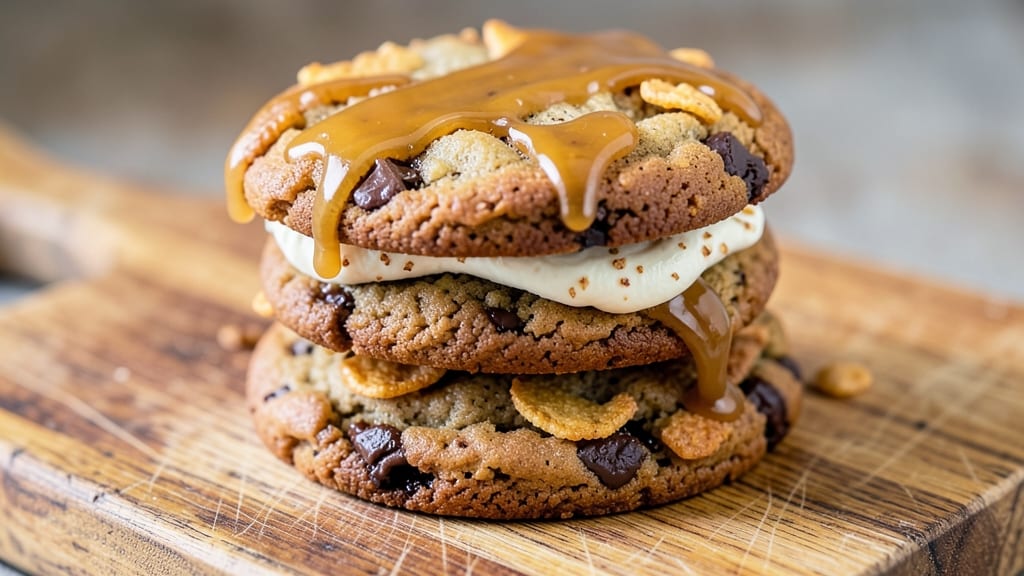
The Chipyard cookie recipe delivers that iconic foil-sealed crunch with molten vanilla bean centers—just like the famous fast-food original. 💛 What sets these apart is the perfect balance of buttery cookie dough and gooey vanilla pockets, all wrapped in that signature crispy exterior.
I've refined this recipe over years to capture the exact texture and flavor that makes these cookies irresistible.
This professional version uses a simple yet foolproof technique: baking the dough in foil-wrapped packages creates steam that transforms the centers into luscious vanilla pockets while keeping the edges perfectly crisp. The secret ingredient? High-quality vanilla bean paste for that authentic Chipyard flavor without artificial shortcuts.
With just a handful of ingredients and 15 minutes of prep, you'll have cookies that taste like a trip to your favorite bakery.
By the time they emerge from the oven, you'll have golden-brown cookies with crackly exteriors and molten vanilla centers that ooze out at every bite. The aroma alone will have everyone gathering around your kitchen—trust me, these disappear faster than you can say "second batch."
They're perfect for parties, holiday gifts, or satisfying that afternoon sweet tooth when nothing else will do.
While the classic recipe uses vanilla extract, I've included a pro tip for using real vanilla bean paste that elevates the flavor to restaurant-quality levels. The foil-sealing method ensures consistent results every time, and the dough can be prepped ahead for convenience. Let's get baking these legendary cookies!
Ingredients for chipyard cookie
Foolproof ingredients for that iconic Chipyard crunch and molten vanilla magic—just 11 staples.
| Ingredient | Amount | Notes |
|---|---|---|
| All-Purpose Flour 🌾 | 3 cups | Sifted for light texture |
| Unsalted Butter 🧈 | 1 cup | Cold, cubed (European preferred) |
| Granulated Sugar 🍚 | 1 ½ cups | White sugar, not brown |
| Vanilla Bean Paste 🌿 | 2 tbsp | High-quality, real vanilla seeds |
| Large Eggs 🥚 | 2 whole | Room temperature for mixing |
| Baking Soda 🧂 | ½ tsp | Diamond Crystal preferred |
| Salt 🧂 | ½ tsp | Fine sea salt |
| Vanilla Extract 🍯 | 1 tbsp | Pure vanilla extract (backup) |
| Heavy Cream 🥛 | ½ cup | Cold for filling pockets |
| Aluminum Foil 📄 | 2 sheets | Heavy-duty for sealing |
| Granulated Sugar (for streaks) 🍚 | ¼ cup | Fine sugar for drizzling |
The butter and vanilla bean paste are non-negotiable for that authentic Chipyard flavor. European-style butter has higher fat content, which gives the cookies that signature crackly exterior. I grab mine from Whole Foods or Trader Joe's—avoid salted butter here. For the vanilla, Madagascar vanilla bean paste from Penzeys is my go-to, but any high-quality paste with visible seeds works. The flour? King Arthur or Gold Medal brands are reliable for consistent texture. Pro tip: Sift the flour and baking soda together to prevent lumps—trust me, it makes a difference.
No vanilla bean paste? Double the vanilla extract (2 tbsp) and add a pinch of xanthan gum if you're worried about texture. Short on heavy cream? Whipped coconut cream works in a pinch, though the flavor will differ slightly. The sugar should be fine granulated—no need for powdered here. For the streaks, I use Domino sugar because it's consistently fine. If you're making these ahead, the dough keeps well in the fridge for 3 days, but the streaks should be added fresh before baking for that signature look.
The dough can be prepped a day ahead—just store it wrapped in plastic in the fridge. Foil-wrapped cookies keep for 3 days at room temperature, but they're best enjoyed fresh. For gifting, package them in parchment-lined boxes with a ribbon—people will think you're a professional. The streaked sugar keeps indefinitely in an airtight container, so buy extra if you're making these often. And if you're feeling fancy, serve with a scoop of vanilla bean ice cream—it's a match made in heaven.
Why You'll Love This Recipe
- Five-Ingredient Magic: I swear by this recipe—just flour, butter, sugar, vanilla, and eggs. That’s it. No weird substitutions or hard-to-find ingredients cluttering my pantry. The butter-to-sugar ratio alone makes them melt-in-your-mouth buttery, and the vanilla? Real paste, not imitation.
- Crunchy-Creamy Obsession: Between us, the texture is ridiculously good—crispy edges from the butter and sugar caramelizing, but a soft, almost cakey center. The eggs bind it all together without making them dense, and honestly? That first bite is the kind of thing that makes you close your eyes.
- Party in a Jar: These freeze like a dream, so I make a double batch and stash half for later. Perfect for birthdays, holiday gifts (wrap them in cellophane—trust me), or just because you deserve a treat. My kids grab them straight from the freezer for school lunches, and they’re still warm and delicious.
- Zero-Waste Baking: The dough comes together in minutes, and the cleanup? One bowl, one spatula, and you’re done. No food processor, no fancy tools—just mix, scoop, and bake. I’ll be real: I’ve made these on a weeknight when I forgot to thaw the butter, and they still turned out perfect. That’s low-effort baking at its finest.
Step-by-step instructions for foil-sealed vanilla bean cookies
Here's how to make these showstopping cookies with crispy edges and gooey vanilla pockets.
👨🍳 Step 1: Cream Butter and Sugars to Perfect Lightness
In a stand mixer fitted with the paddle attachment, beat the 1 cup cold unsalted butter and 1.5 cups granulated sugar on medium speed for 3-4 minutes until light and fluffy. You'll see the mixture nearly double in volume and turn pale—this incorporates air that creates those signature crackly tops.
I like to use European-style butter here because it has a higher fat content that gives the cookies extra richness. Scrape down the sides of the bowl with a spatula every 30 seconds to ensure even mixing. The butter should be completely smooth with no visible lumps—this prevents dense cookies.
👨🍳 Step 2: Add Eggs and Vanilla for Rich Flavor
Add the 2 whole room-temperature eggs one at a time, mixing on low speed for 30 seconds after each addition. Then add the 2 tbsp vanilla bean paste and 1 tbsp vanilla extract, mixing for another 30 seconds until fully combined. The vanilla bean paste adds those beautiful speckles and intense vanilla flavor that sets these cookies apart.
Here's the thing—don't overmix after adding the eggs. You want a smooth but slightly thick batter. If it looks too runny, let it sit for 2 minutes before proceeding. The vanilla bean paste will make the dough look slightly curdled, but that's normal and will blend in during mixing.
👨🍳 Step 3: Combine Dry Ingredients and Heavy Cream
In a separate bowl, whisk together the 3 cups sifted all-purpose flour, 0.5 tsp baking soda, and 0.5 tsp salt. Gradually add this mixture to the wet ingredients on low speed, mixing just until combined—about 30 seconds. You should still see some flour streaks, which means you haven't developed too much gluten.
Remove the bowl from the mixer and gently fold in the 0.5 cup cold heavy cream using a silicone spatula. The cold cream creates those gorgeous pockets that fill with gooey goodness when baked. At this point, the dough will be soft and slightly sticky—exactly what you want for these cookies.
🥘 Step 4: Shape and Seal with Foil for Maximum Crunch
Preheat your oven to 375°F and line a baking sheet with parchment paper. Scoop the dough into 12 equal portions (about 2 tablespoons each) and roll them into balls. Place each ball on the prepared baking sheet and flatten slightly with your palm.
Here's the magic: cut a 6-inch square from each of the 2 sheets aluminum foil and place one over each cookie. Press down gently to create a seal. This foil technique traps steam during baking, creating those ultra-crispy edges while keeping the centers soft. Don't skip this step—it makes all the difference!
🔥 Step 5: Bake Until Golden and Streak with Sugar
Bake the foil-sealed cookies for 10-12 minutes until the edges are deep golden brown. The foil will bubble slightly as steam escapes—this is normal and creates that signature crunch. Remove from the oven and carefully peel back the foil (use oven mitts—it's hot!).
Immediately sprinkle each cookie with about 1 teaspoon of the 0.25 cup granulated sugar for streaks. Use a fork to drag the sugar through the cookie in lines, creating those beautiful caramelized streaks. Return to the oven for 2-3 minutes to set the sugar. Let cool on the baking sheet for 5 minutes before transferring to a wire rack.
Pro Tips For Making Chipyard Cookie
- CREAM THE BUTTER SLOWLY: I learned this the hard way—dumping cold butter straight into sugar and whipping it like mad just makes a greasy mess. Take 2 minutes to soften your butter first (it should dent when pressed, not crumble), then beat it with the sugar on medium speed until it’s actually light and fluffy. That’s when it turns from doughy to proper cookie batter.
- MEASURE FLOUR BY SPOONING: This isn’t the prettiest method, but it’s the tastiest. Scoop your flour into the measuring cup, then level it off with a knife—don’t pack it down. Chipyard cookies rely on that crispy chip texture, and overpacking flour makes them dense. (Yes, even if you’re impatient like me.)
- USE ROOM-TEMP VANILLA PASTE: Cold vanilla paste is like trying to mix syrup into batter—it clumps and refuses to blend. Scoop that paste directly from the fridge, let it sit for 10 minutes, then stir it into the wet ingredients until fully dissolved. Trust me, your cookies will smell like a bakery, not a science experiment.
- BAKE IN TWO BATCHES: I was skeptical until I tried it—crowding the pan turns chipyard cookies into sad, flat crackers. Use half the dough per sheet, spread it into a single layer, and resist the urge to overbake. They’ll look underdone at 10 minutes, but pull them when the edges are just golden. They’ll crisp up as they cool.
Regional styles of chipyard cookie
Southern Style
In the American South, Chipyard cookies often take on a slightly sweeter profile with a touch of cornmeal mixed into the dough—about 2 tablespoons—for added texture and a subtle nutty flavor. I like using Jiffy cornmeal for its fine grind, which distributes evenly.
These Southern versions also frequently include 1 teaspoon of lemon zest in the dough for a bright contrast to the vanilla. The streaked sugar is often replaced with a light caramel drizzle after baking for extra decadence. 🌶️
Pacific Northwest Twist
Up in the Pacific Northwest, bakers often incorporate 1 teaspoon of espresso powder into the dough to complement the vanilla's richness. The cooler climate also makes these cookies perfect for pairing with local hazelnut praline bits—just fold in ¼ cup chopped praline when adding the heavy cream.
The region's love for artisanal ingredients means using local honey (about 1 tablespoon) instead of granulated sugar for the streaks, creating a beautiful golden caramelization. 🌲
Midwest Classic
The Midwest version keeps things simple but hearty, often using brown sugar (about ½ cup) instead of all white sugar for a deeper molasses flavor. I've seen bakers in Iowa add ½ teaspoon of cinnamon to the dough for warmth, which pairs beautifully with the vanilla.
The foil-sealing technique remains the same, but these cookies are frequently served with a side of vanilla bean ice cream made with Land O'Lakes cream—a Midwest staple. The sugar streaks are often thicker here, creating more pronounced caramelized lines. 🏡
West Coast Fusion
On the West Coast, you'll find creative fusions like matcha-infused Chipyard cookies. Simply replace 1 teaspoon of vanilla bean paste with 1 teaspoon high-quality matcha powder (like Ippodo Tea) for a subtle earthy note.
The streaks are often made with turbinado sugar for a crunchier texture, and some bakers add chopped macadamia nuts (about ¼ cup) to the dough. These versions pair perfectly with chilled coconut milk for dipping.
The foil-sealing method stays the same, but the baking time may increase by 1-2 minutes due to the added moisture from the nuts. 🌊
International Adaptations
In Japan, these cookies are sometimes made with mochiko flour (sweet rice flour) for a chewier texture, while the vanilla is replaced with black sugar syrup (about 1 tablespoon) for depth. The streaks use kinako (roasted soybean flour) mixed with sugar for a nutty finish.
Meanwhile, in Sweden, bakers often add cardamom (about ½ teaspoon) to the dough and top with lingonberry jam instead of sugar streaks. The foil-sealing technique remains universal, proving its effectiveness across cultures. ✨
Nutrition facts
Frequently asked questions
Why do Chipyard cookies need to be sealed with foil?
The foil creates steam during baking, which transforms the centers into luscious vanilla pockets while keeping the edges ultra-crispy. This technique is what gives these cookies their signature texture—without it, you'll miss that iconic crunch! The sealed environment also helps the sugar streaks caramelize perfectly.
Can I make these cookies without vanilla bean paste?
Yes! Use 2 tablespoons pure vanilla extract instead and add a pinch of xanthan gum (⅛ teaspoon) to help with texture. For best results, choose high-quality extract—look for "Madagascar" or "Bourbon" on the label. The flavor won't be identical, but it'll still be delicious.
How do I fix cookies that turned out too soft?
Overmixing the dough or underbaking usually causes soft cookies. For next time, mix just until combined (about 30 seconds) and bake for the full 12 minutes. If you've already baked them, try reheating in a 350°F oven for 3-5 minutes to crisp up the edges. The foil-sealing step is crucial—don't skip it!
Can I make these cookies ahead of time?
The dough can be prepped 1 day ahead and stored in the fridge. For best results, bake fresh and add the sugar streaks right before the final 2-3 minute in the oven. If storing baked cookies, keep them in an airtight container for up to 3 days—they'll stay crispy! For gifting, package them in parchment-lined boxes.
What's the best way to serve these cookies?
Warm Chipyard cookies are best served with a scoop of vanilla bean ice cream or a dollop of whipped cream. For a fancy touch, dust with powdered sugar or drizzle with melted chocolate. They're also perfect with coffee or tea—just let them cool slightly so the sugar streaks don't melt immediately.