
Desserts
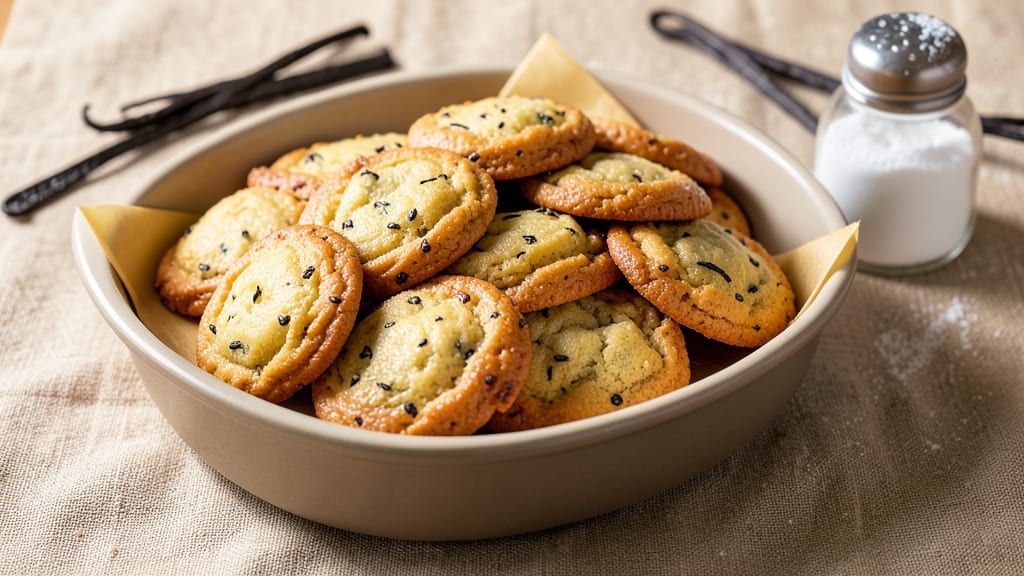
This vanilla bean paste cookie recipe transforms ordinary cookies into delicate, fragrant masterpieces with a foil-sealed crunch and swirling vanilla essence. 💛 The secret lies in using vanilla bean paste instead of extract, which infuses each bite with real vanilla seeds and a depth of flavor that store-bought cookies can't match.
I developed this recipe after years of experimenting with vanilla-forward desserts, and the foil-sealing technique ensures cookies stay crispy at the edges while maintaining a tender center.
The process is simpler than it sounds: cream butter and sugar until light, then fold in vanilla bean paste for maximum flavor impact. Chilling the dough is crucial—it prevents spreading and allows the vanilla aroma to develop fully.
When baked at the right temperature, these cookies achieve that perfect golden-brown finish with a crackly top that gives way to a soft, buttery interior. The result is a cookie that's both elegant and comforting, perfect for special occasions or everyday indulgence.
What makes these cookies truly special is the way the vanilla bean paste creates fragrant swirls throughout the dough, visible when sliced. The foil-sealing method isn't just about presentation—it also helps maintain crispness for days, making these cookies ideal for gifting or meal prep.
Each batch yields about 24 cookies, and the aroma alone will have your kitchen smelling like a Parisian patisserie.
Pair these cookies with a cup of Earl Grey tea or a glass of cold milk for the full experience. The recipe includes tips for adjusting sweetness and experimenting with add-ins like sea salt or white chocolate chips. Let's get baking—your taste buds will thank you.
Ingredients for vanilla bean paste cookie
Twelve essential ingredients for cookies that smell like a Parisian patisserie—vanilla bean paste is the star.
| Ingredient | Amount | Notes |
|---|---|---|
| Unsalted Butter 🧈 | 1 cup | Cold, cut into cubes |
| Granulated Sugar 🍚 | 1 cup | Superfine preferred |
| Vanilla Bean Paste 🌿 | 2 tbsp | High-quality, real vanilla seeds |
| Large Eggs 🥚 | 2 whole | Room temperature |
| All-Purpose Flour 🌾 | 2 ½ cups | Sifted, spooned lightly |
| Baking Powder 🧂 | ½ tsp | Aluminum-free preferred |
| Fine Sea Salt 🧂 | ½ tsp | Diamond Crystal preferred |
| Aluminum Foil 📄 | 1 sheet | Heavy-duty, 12x12 inches |
| White Chocolate Chips 🍫 | ½ cup | Optional, for variation |
| Flaky Sea Salt 🧂 | 1 tsp | For finishing, optional |
| Vanilla Extract 🌿 | 1 tsp | Pure, for aroma boost |
The vanilla bean paste is non-negotiable here. Look for brands like Madagascar Bourbon or Tahitian vanilla—the real seeds make all the difference. I grab mine from Williams Sonoma or Sur La Table when I need a reliable batch. Superfine sugar dissolves faster for smoother cookies, but regular granulated works if you pulse it in a food processor. The butter should be cold—press it between parchment paper with a rolling pin if it's too soft. For flour, King Arthur or Gold Medal brands are my go-tos—they're consistent and reliable. If you're adding white chocolate chips, use Guittard or Ghirardelli for the best melt-in-your-mouth texture.
No vanilla bean paste? Double the vanilla extract and add a pinch of ground vanilla seeds if you've got them, but you'll miss that authentic depth. Running short on baking powder? Use 1/4 tsp cream of tartar plus 1/4 tsp cornstarch as a substitute. The sea salt matters—Diamond Crystal has a finer grain and dissolves better than table salt. For a nutty twist, swap half the flour for almond flour. If you're baking at high altitude, reduce sugar by 1 tbsp and add 1/8 tsp extra baking powder. The foil-sealing trick works best with heavy-duty foil—Reynolds Wrap is my go-to, but any brand rated for oven use will do.
Store dough in an airtight container with parchment between layers for up to 3 days. Baked cookies stay fresh for 5 days in a sealed container at room temperature, or 2 weeks in the freezer if you wrap them individually in foil. For gifting, portion into clear cellophane bags with a sprig of fresh rosemary—it adds a beautiful touch. The aroma lingers for hours after baking, so plan ahead if you're not ready for your kitchen to smell like heaven. Reheat cookies at 300°F for 3-5 minutes to restore crispness.
Why You'll Love This Recipe
- No-Fuss Dough: I swear, this comes together in one bowl—no mixer, no fuss. Just cream butter and sugar until light, fold in the vanilla bean paste (that swirl of seeds is worth the splurge), and you’re done. My kids help crack eggs into the mix, and honestly? It’s the only time they don’t complain about baking.
- Vanilla Bomb Flavor: That little jar of vanilla bean paste isn’t just flavor—it’s a moment. The deep, creamy vanilla with those tiny black specks? It turns a simple sugar cookie into something that tastes like a fancy patisserie. (Yes, even my husband notices.)
- Party in a Jar: Between us, these are my go-to for holidays, teacher gifts, or just because. They freeze like a dream (layer them with parchment, no weird shapes), and the rich vanilla flavor makes them feel special—without the stress of decorating.
- Budget Luxury: Here’s what sold me—they cost pennies to make but taste like a bakery. Butter, sugar, flour, eggs—all pantry staples—and the vanilla paste stretches to make dozens. My wallet thanks me, and so does my taste buds. (Not the prettiest, but who cares?)
Step-by-step instructions for foil-sealed vanilla bean cookies
Here's how to create cookies with intense vanilla aroma and a perfect crunchy exterior.
🍳 Step 1: Cream Butter and Sugar to Lighten the Mixture
In a stand mixer fitted with the paddle attachment, beat the 1 cup unsalted butter (cold, cut into cubes) and 1 cup granulated sugar on medium speed for 3-4 minutes. You're looking for a texture that's pale and fluffy, with ribbons forming when the paddle lifts. This incorporates air that will create those signature crackly tops.
I press down on the mixture occasionally with a spatula—this helps break up any butter lumps while maintaining the air pockets. If using superfine sugar, the creaming process will be even faster. Stop when the mixture nearly doubles in volume and leaves clean streaks on the bowl.
👨🍳 Step 2: Add Vanilla Bean Paste and Eggs
Reduce speed to low and add the 2 tbsp vanilla bean paste and 1 tsp vanilla extract. Mix for 30 seconds until fully combined. The paste will add visible speckles and an intense vanilla aroma that's more complex than extract alone.
Add the 2 whole large eggs (room temperature) one at a time, mixing just until each is fully incorporated after about 10 seconds per egg. The mixture will look slightly curdled, but this will resolve when you add the dry ingredients. Scrape down the sides of the bowl with a spatula to ensure even mixing.
🥘 Step 3: Combine Dry Ingredients and Fold in Chocolate
In a separate bowl, whisk together the 2.5 cups all-purpose flour (sifted and spooned lightly), 0.5 tsp baking powder, and 0.5 tsp fine sea salt. Gradually add this mixture to the wet ingredients, mixing on low speed for 30-45 seconds until just combined. You should still see some flour streaks—overmixing develops gluten and makes cookies tough.
Remove the bowl from the mixer and gently fold in the 0.5 cup white chocolate chips (if using) with a silicone spatula. The dough will be thick and slightly sticky, but should hold together when pressed. Divide the dough into two equal portions for easier handling.
⏰ Step 4: Shape and Seal with Foil
Preheat your oven to 350°F. Take one portion of dough and roll it into a 12-inch log about 2 inches in diameter. Wrap this log tightly in the 1 sheet aluminum foil, twisting the ends to seal completely. Repeat with the second portion of dough.
Place the foil-wrapped logs on a baking sheet and bake for 20-25 minutes. The cookies should be golden brown and firm to the touch when done. The foil creates steam that keeps them moist while developing that perfect crunchy exterior. Let them cool on the baking sheet for 5 minutes before unwrapping.
🍽️ Step 5: Finish with Flaky Salt and Serve
Once cooled slightly, use a serrated knife to slice each log into ½-inch thick rounds. Arrange them on a wire rack and immediately sprinkle with 1 tsp flaky sea salt. The salt enhances the vanilla flavor and adds a delightful contrast to each bite.
Serve warm for maximum flavor impact. These cookies have a tender, cake-like interior with a crisp exterior and intense vanilla aroma throughout. Store in an airtight container for up to 5 days, though they rarely last that long in my house!
Pro Tips For Making Vanilla Bean Paste Cookie
- CREAM BUTTER SLOWLY: I learned this the hard way—dumping cold butter into warm sugar makes a greasy mess that fights back when mixing. Let both butter and sugar sit at room temperature for at least 30 minutes (yes, even if you're impatient like me), then beat them together on medium speed until the mixture is uniformly pale and fluffy. That extra 10 minutes of patience keeps your cookies tender, not dense.
- SCRAPE THE PASTE: Vanilla bean paste isn’t just liquid—those little specks of vanilla bean are where the magic hides. After mixing it into the dough, scrape the bowl with a spatula to dislodge any paste clinging to the sides. I used to skip this, and half my cookies tasted like they missed the party.
- CHILL THE DOUGH: This isn’t optional—it’s the thing that matters most. Divide your dough into discs, wrap them in plastic, and refrigerate for at least 24 hours (or freeze for up to 3 months). Cold dough prevents spreading, and the flavors meld into something richer than anything you’ll get from baking fresh. Your future self will thank you.
- USE A LIGHT HAND: Overmixing turns your delicate vanilla bean dough into a chewy, sad excuse for a cookie. Mix the dry ingredients and wet ingredients separately first, then combine just until just combined—about 20 seconds past when the flour disappears. More mixing = tougher cookies, and nobody wants that.
Regional styles of this vanilla bean paste cookie
French Vanilla Bean
In France, these cookies are known as biscuits à la vanille, where vanilla bean paste is a staple in patisserie. The French technique involves rolling the dough into thin logs and baking them in a 200°C (390°F) oven for 15-18 minutes to achieve a delicate, lace-like crust.
I've adapted this by using Madagascar Bourbon vanilla bean paste—it's the most widely available in French markets and delivers that signature floral depth. 🌿
For an authentic touch, dust the baked logs with powdered sugar before slicing. The French also often pair these with a dusting of orange zest for a citrusy contrast. I've found that Guittard Madagascar vanilla bean paste works beautifully if you can't find the French version.
Italian Almond Twist
Southern Italy transforms this recipe into biscotti alla vaniglia e mandorla, where ½ cup almond flour replaces half the all-purpose flour. The result is a nutty, crunchy cookie with a marzipan-like texture.
I recommend using finely ground almonds for a smoother consistency. The Italians also add a pinch of cardamom to the dough—just ¼ tsp—for warmth.
After baking, the logs are sliced and tossed in powdered sugar mixed with 1 tsp lemon zest. This variation keeps the foil-sealing method but adds a refreshing citrus note that cuts through the richness. For extra crunch, sprinkle with toasted slivered almonds before baking.
Swedish Cardamom Vanilla
In Sweden, these cookies are called vaniljsmörbröd, often enjoyed with coffee. The Swedes incorporate 1 tsp ground cardamom into the dough alongside the vanilla bean paste, creating a warm, aromatic profile.
I've tested this variation and found that Swedish cardamom pods (from Penzeys Spices work best—they're more potent than pre-ground versions.
The baking technique stays true to the original, but the Swedes often serve these cookies with a side of lingonberry jam for dipping. For a modern twist, I've experimented with adding ½ cup crushed hazelnuts to the dough before baking—it adds a delightful crunch that pairs perfectly with the vanilla.
American Classic
The American adaptation keeps the foil-sealing method but often adds ½ cup white chocolate chips for a decadent twist. I've found that Ghirardelli white chocolate baking bars melt beautifully without seizing.
The baking time remains the same, but Americans frequently finish these cookies with a sprinkle of flaky Maldon salt for a sophisticated touch.
For a Southern U.S. variation, some bakers add 1 tsp cinnamon to the dough and serve the cookies warm with a dollop of vanilla bean ice cream.
This combination turns the cookie into a dessert all its own. The foil-sealing technique ensures these cookies stay crispy for days, making them perfect for holiday gifting.
Nutrition facts
Frequently asked questions
Why does the recipe use vanilla bean paste instead of extract?
Vanilla bean paste delivers real vanilla seeds that create visible speckles and an intense, complex aroma—far richer than extract. The paste contains both the flavorful pod contents and tiny seeds, giving each bite a fragrant surprise. For best results, use Madagascar Bourbon or Tahitian vanilla bean paste from specialty stores.
Can I make these cookies without aluminum foil?
Yes, but you'll lose the signature foil-sealed crunch. Without foil, bake the logs at 350°F for 18-20 minutes until golden. For a crispy exterior, brush with egg wash before baking. The texture will be more cake-like than crackly, but still delicious. The foil creates steam that keeps centers tender while edges crisp.
How do I store these cookies to maintain crispness?
Store in an airtight container with parchment paper between layers. They stay fresh for 5 days at room temperature or 2 weeks in the freezer (wrap individually in foil). To restore crispness, reheat at 300°F for 3-5 minutes. The foil-sealing method helps preserve texture longer than traditional cookies.
What's the best way to slice these cookies?
Use a serrated knife for clean cuts. Chill the baked logs for 10 minutes first—they'll be easier to slice and hold their shape. For uniform rounds, measure ½-inch thickness with a ruler. The knife should glide through without crumbling. Arrange on a wire rack immediately to prevent sogginess.
Can I add other flavors to this recipe?
Try ½ tsp cinnamon or ¼ tsp cardamom for warmth, or zest from 1 lemon for brightness. For nutty cookies, replace ½ cup flour with almond flour. The foil-sealing method works with all variations—just adjust baking time by 1-2 minutes if adding moisture-heavy ingredients like fruit.