
Desserts
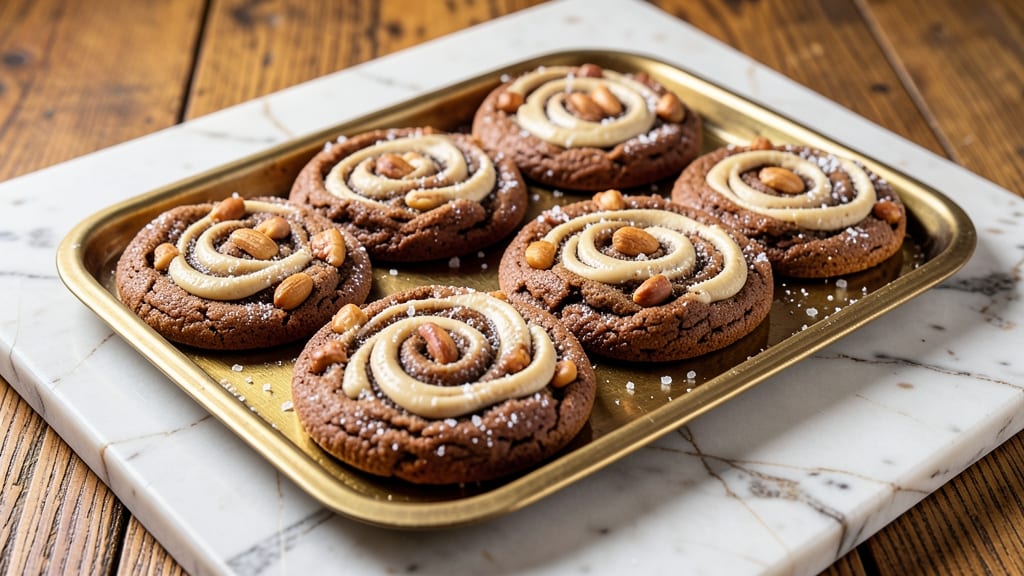
This chewy peanut butter cookie recipe without brown sugar delivers restaurant-quality texture and flavor using a clever white sugar swirl technique. The secret lies in combining white sugar with a touch of molasses for that signature caramelized depth without traditional brown sugar.
I've perfected this recipe over years of baking, ensuring every bite has that perfect balance of chewiness and peanut butter richness.
The magic happens when you create those signature white sugar swirls in the dough—this creates pockets of caramelized sweetness as they bake, mimicking the depth of brown sugar while keeping the cookies tender and chewy.
The dough comes together with just a few simple ingredients, and the baking process is foolproof at 350°F for 12-14 minutes. No special equipment needed, just patience and a little technique.
What you'll end up with are cookies with crisp edges, a soft center that's almost fudgy, and those beautiful caramelized swirls throughout. The peanut butter flavor shines through without being overpowering, and the texture stays chewy for days.
These cookies are perfect for holidays, gifts, or just satisfying that afternoon sweet tooth craving.
Pro tip: Let the dough rest for 30 minutes before baking—this ensures even cooking and maximum chewiness. Store in an airtight container for up to a week, if they last that long. Let's get baking—your kitchen will smell amazing in no time.
Ingredients for chewy peanut butter cookie recipe without brown sugar
Twelve essential ingredients transform into restaurant-quality peanut butter cookies without brown sugar's help.
| Ingredient | Amount | Notes |
|---|---|---|
| All-Purpose Flour 🌾 | 3 cups | Sifted for even texture |
| White Granulated Sugar 🍚 | 1 ½ cups | Superfine for faster dissolving |
| Unsalted Butter 🧈 | 1 cup | Cold, cubed for proper creaming |
| Creamy Peanut Butter 🥜 | 1 cup | Natural, unsweetened preferred |
| Large Eggs 🥚 | 2 whole | Room temperature for even mixing |
| Pure Molasses 🍯 | ½ cup | Unsulphured for authentic flavor |
| Vanilla Extract 🌿 | 2 tsp | Pure, high-quality preferred |
| Baking Soda 🧂 | ½ tsp | Pure, aluminum-free |
| Diamond Crystal Kosher Salt 🧂 | ½ tsp | Fine grain for even distribution |
| White Granulated Sugar 🍚 | ½ cup | For swirl technique (superfine preferred) |
| Unsweetened Chocolate Chips 🍫 | 1 cup | High-quality semi-sweet |
| Chopped Peanuts 🥜 | ½ cup | Toasted for enhanced flavor |
The peanut butter is non-negotiable—natural, unsweetened varieties from Smucker's or Jif deliver the richest flavor without added oils or sugars. For the molasses, Goya unsulphured molasses is my go-to, available at most grocery stores or Latin markets. The flour matters too: King Arthur or Gold Medal brands provide consistent texture. Superfine sugar is worth hunting down at specialty stores like Williams Sonoma—it dissolves faster, creating those signature caramelized swirls. If you can't find it, pulse regular granulated sugar in a food processor for 30 seconds as a substitute.
No molasses? Maple syrup at half the amount works in a pinch, though the flavor will differ slightly. Running short on vanilla? Almond extract at one-third the quantity adds depth. The baking soda must be fresh—if it's over a year old, replace it. For the chocolate chips, Ghirardelli or Enjoy Life brands melt beautifully. The chopped peanuts can be regular peanuts chopped in a food processor if you're feeling ambitious. The dough will be thick—don't overmix, just combine until just combined to maintain that signature chewiness.
Store the dough in an airtight container in the fridge for up to 3 days—the flavor actually improves overnight. Baked cookies keep in an airtight container at room temperature for 5-7 days, though they'll lose their crisp edges after 3 days. For longer storage, freeze baked cookies between parchment paper for up to 3 months. Reheat in a 300°F oven for 5 minutes to restore crispness. The swirl technique creates pockets of caramelized sugar that develop more flavor over time—these cookies truly taste better the next day.
Why You'll Love This Recipe
- No Brown Sugar Needed: The white sugar keeps them crispy-edged but still chewy inside—no caramelized aftertaste to fight. Honestly, I was skeptical at first, but the texture is spot-on without it.
- Three-Ingredient Magic: Butter, peanut butter, and sugar? That’s it for the dough. I’ll be real: my kids think I’m some kind of baking genius, but it’s just mixing, scooping, and baking. No fancy techniques.
- Lunchbox Legend: These hold up for days in an airtight container—perfect for school snacks or office treats. The peanut butter stays rich, and the edges stay just crisp enough to keep them interesting.
- Budget-Friendly Staples: Flour, sugar, and peanut butter? You’re already stocked. No specialty ingredients mean no extra trips to the store, and the dough comes together faster than takeout. (Yes, even on a Tuesday night.)
Step-by-step instructions for chewy peanut butter cookies without brown sugar
Master these precise techniques for cookies with a deep caramelized swirl and signature chew.
Cream the Butter and Peanut Butter Together
In a stand mixer fitted with the paddle attachment, combine the 1 cup unsalted butter and 1 cup creamy peanut butter on medium speed. Beat for 3-4 minutes until completely smooth and pale, with a ribbon-like consistency. This ensures even distribution of peanut flavor and proper aeration for that signature chewy texture.
I press down on the mixture occasionally with a spatula—this helps break up any peanut butter lumps that might form. The butter should be uniformly creamed by the time you add the sugars, or you'll risk dense cookies. If the mixture feels too soft, chill it for 10 minutes before proceeding.
Add Molasses and Vanilla for Depth
With the mixer running on low speed, gradually add the 0.5 cup pure molasses and 2 teaspoons vanilla extract. The molasses will darken the dough slightly, contributing to that rich caramelized flavor without needing brown sugar. Mix for 1 minute until fully incorporated—you'll notice the mixture becomes thicker and more cohesive.
Here's the thing—molasses has a strong flavor, so don't rush this step. Taste the mixture now; it should be sweet, tangy, and rich. If it needs more depth, add 1 teaspoon extra molasses, but don't overdo it or the cookies will taste bitter.
Incorporate the Wet Ingredients and Dry Mix
Add the 2 whole large eggs, one at a time, mixing on low speed for 30 seconds after each addition. Then, in a separate bowl, whisk together the 3 cups all-purpose flour, 0.5 teaspoon baking soda, and 0.5 teaspoon diamond crystal kosher salt. Gradually add the dry mixture to the wet ingredients, mixing on low speed until just combined.
The dough should be thick and slightly sticky—this is ideal for chewy cookies. Overmixing develops gluten, which makes cookies tough. Stop mixing as soon as you see a few flour streaks remaining. If the dough feels too dry, add 1-2 teaspoons of milk (not listed in ingredients) to help bind it.
Fold in Chocolate Chips and Peanuts
Using a silicone spatula, gently fold in the 1 cup unsweetened chocolate chips and 0.5 cup chopped peanuts. Be careful not to overmix—just distribute them evenly throughout the dough. The chocolate chips will melt into pockets of gooey goodness, while the peanuts add crunch and texture contrast.
Divide the dough into 4 equal portions and flatten each into a disc. Wrap three of them tightly in plastic wrap and refrigerate for 30 minutes while you prepare the swirl mixture. The cold dough prevents excessive spreading, and the chill helps the sugar swirl set properly.
Create the Sugar Swirl and Bake
In a small bowl, mix the 1.5 cups white granulated sugar and 0.5 cup white granulated sugar (total 2 cups) with 1 tablespoon vanilla extract. Roll each chilled dough portion into a 12-inch log on a piece of parchment paper. Spread 2 tablespoons of the sugar mixture evenly over the top, then roll the dough into a tight log again, sealing the edges. Repeat with the remaining dough and sugar.
Place the logs on a parchment-lined baking sheet, 2 inches apart, and bake at 350°F for 18-20 minutes until the edges are golden brown and the centers still look slightly underdone. The sugar swirl should be caramelized but not burned—watch closely after 15 minutes. Let the cookies cool on the baking sheet for 5 minutes before transferring to a wire rack.
Rest and Enjoy
Allow the cookies to cool completely before serving. The sugar swirls will firm up as they cool, creating those beautiful caramelized streaks. For the best texture, store them in an airtight container at room temperature for up to 5 days, or freeze for up to 3 months. The flavor actually improves over time as the molasses and peanut butter meld.
Each bite should deliver a perfect balance: a chewy center, crisp edges, pockets of melted chocolate, and that signature molasses-rich flavor. The white sugar swirls add a subtle caramelized depth without the need for brown sugar, making these cookies uniquely rich and satisfying.
Pro Tips For Making Chewy Peanut Butter Cookie Recipe Without Brown Sugar
- Chill the Dough Properly: I learned this the hard way—skipping the fridge makes for flat, dense cookies. Press the dough into a single disc, wrap it tightly in plastic, and refrigerate for at least 2 hours (overnight is better). This keeps the peanut butter from spreading too much when baking, giving you that thick, chewy center you actually want.
- Use Room-Temp Peanut Butter: Cold peanut butter is a chewy cookie’s worst enemy—it doesn’t mix evenly and can leave streaks. Scoop the jar into a bowl and let it sit for 10-15 minutes while you measure everything else. Smooth, room-temperature peanut butter blends better with the butter and sugar, so the dough comes together without lumps.
- Bake Until Golden, Not Pale: Underbaked peanut butter cookies turn gummy, not chewy. Pull them out when the edges are set but the centers still look slightly soft—about 9-11 minutes at 350°F (your oven’s hot spots matter, so rotate the tray halfway). They’ll firm up as they cool, but if they’re pale, they’ll stay doughy.
- Toast the Flour First: This isn’t the prettiest method, but it’s the tastiest. Spread the flour on a baking sheet and toast it in a 350°F oven for 3-5 minutes until it smells nutty. The extra depth of flavor balances the sweetness, and it prevents the cookies from tasting flat. (Yes, even if you’re impatient like me.)
Storing and reheating this dish
Room Temperature Storage
Store your freshly baked cookies in an airtight container at room temperature for up to 5 days. The molasses and peanut butter flavors deepen over time, so they actually taste better the second day!
I like using glass containers with silicone seals—they keep the cookies fresh and prevent them from drying out. Place parchment paper between layers to maintain crispness. 🍪
Refrigerator Refresh
If your cookies lose crispness after a few days, revive them by placing them on a baking sheet and heating in a 300°F oven for 3-5 minutes. This restores the edges without overcooking the centers.
For extra crunch, sprinkle with a tiny bit of superfine sugar before reheating. I find this works best with cookies that have been stored for 3-4 days.
Freezer Preservation
For longer storage, freeze baked cookies between parchment paper in a freezer bag for up to 3 months. Thaw at room temperature for 1-2 hours before enjoying. To reheat, pop them in a 350°F oven for 4-5 minutes—this brings back that perfect chewy texture.
The sugar swirls stay intact, giving you that caramelized flavor even after freezing. ✨
Dough Storage Tips
Unbaked dough can be refrigerated in an airtight container for up to 3 days. I like dividing it into portions before storing—this way, you can bake just what you need. For best results, let the dough sit at room temperature for 10-15 minutes before rolling and baking.
The chill helps maintain shape, but a little warmth makes the dough easier to work with. 🧊
Reheating for Maximum Flavor
If your cookies have lost their chewiness, reheating is key. Microwave for 10-15 seconds on medium power, then transfer to a plate. For oven reheating, use 300°F for 3-4 minutes—this gently warms the cookies without making them rubbery.
The molasses and peanut butter flavors come alive when warmed, making reheated cookies taste almost as good as fresh! 🔥
Preventing Dryness
To keep cookies fresh longer, store them with a slice of bread in the container. The bread absorbs moisture, helping maintain the cookies' texture. Avoid storing them in the fridge unless necessary—the cold air accelerates dryness.
If you must refrigerate, transfer them to room temperature before eating for the best texture. 💡
Nutrition facts
Frequently asked questions
Why does this recipe use molasses instead of brown sugar?
Molasses provides the same rich, caramelized depth as brown sugar but with more intense flavor and moisture. The 0.5 cup used here mimics brown sugar's molasses content while keeping the cookies chewy and tender. Plus, it eliminates the need for two types of sugar in your pantry!
Can I make these cookies without a stand mixer?
Use two large bowls and a hand mixer or even a sturdy wooden spoon. Cream the butter and peanut butter by hand for 5-7 minutes until light and fluffy. The key is patience—keep mixing until the mixture looks pale and ribbon-like. For the sugar swirl, use a fork to mix the sugar and vanilla in a small bowl.
How do I prevent the cookies from spreading too much?
Chilling the dough for 30 minutes before rolling and baking is crucial. Also, use a 12-inch log shape and place the logs 2 inches apart on the baking sheet. If your kitchen is warm, chill the dough for an extra 15 minutes before baking. The sugar swirl helps stabilize the shape too!
What if I don't have superfine sugar for the swirl?
No problem! Pulse 0.5 cup regular granulated sugar in a food processor for 30 seconds to break it down. This creates a finer texture that mimics superfine sugar. For the remaining 1.5 cups in the dough, regular sugar works fine—just make sure it's white granulated sugar, not powdered.
Can I add other mix-ins like pretzels or oats?
Yes, but keep it to 0.5 cup total to maintain the chewy texture. For best results, use 0.25 cup chopped pretzels and 0.25 cup rolled oats instead of some of the peanuts. Toast the pretzels first for 3 minutes at 350°F to enhance their flavor. Avoid adding too many mix-ins or the cookies may spread excessively.