
Desserts
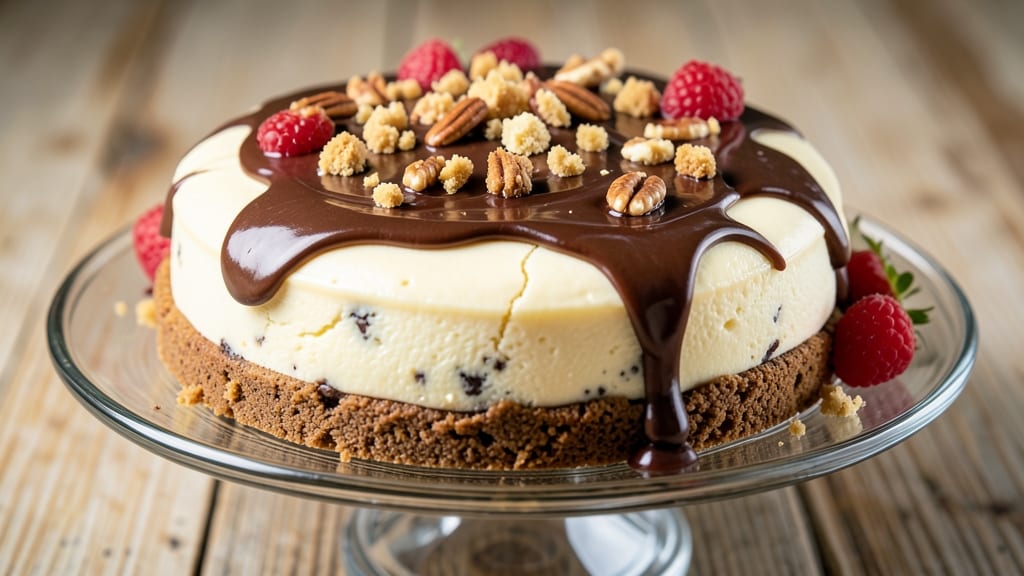
This cheesecake recipe with cookie dough crust delivers the perfect marriage of crunchy cookie dough base and silky cheesecake filling that's impossible to resist. 🌟 The secret lies in baking the crust to just the right texture—firm enough to support the filling but still tender enough to melt slightly when sliced.
I've perfected this technique over years of baking, ensuring every bite combines that nostalgic cookie dough flavor with velvety cheesecake perfection.
The cookie dough crust sets the stage with its rich, buttery flavor and satisfying crunch, while the cheesecake filling stays creamy and smooth thanks to a water bath baking method.
This approach prevents cracking and ensures a tender crumb that melts in your mouth. The key is patience—allowing everything to chill properly between layers guarantees that clean slice you dream about.
What makes this recipe truly special is how the two components work together: the cookie dough crust adds a playful twist to classic cheesecake, while the traditional filling keeps it familiar and comforting.
You'll end up with a dessert that's sturdy enough to slice neatly but still tender enough to satisfy any cheesecake craving.
Perfect for special occasions or when you want to impress guests, this cheesecake is also beginner-friendly with clear steps for both the crust and filling. The water bath method might sound intimidating, but I'll walk you through it—no stress, just delicious results. Let's get baking!
Ingredients for cheesecake recipe with cookie dough crust
Cookie dough crust meets velvety cheesecake filling—these 15 ingredients create magic.
| Ingredient | Amount | Notes |
|---|---|---|
| All-Purpose Flour 🌾 | 1 ½ cups | Sifted for lighter texture |
| Unsalted Butter 🧈 | 1 cup | Cold, cubed for cookie dough |
| Granulated Sugar 🍚 | ¾ cup | For cookie dough sweetness |
| Brown Sugar 🍚 | ¼ cup | Packed for moisture |
| Large Eggs 🥚 | 2 whole | Room temperature for mixing |
| Vanilla Extract 🌿 | 1 tbsp | Pure extract preferred |
| Chocolate Chips 🍫 | 1 cup | Semi-sweet for classic flavor |
| Cream Cheese 🧀 | 32 oz | Full-fat, room temperature |
| Sour Cream 🥛 | ½ cup | Full-fat for creaminess |
| Granulated Sugar 🍚 | 1 ½ cups | For cheesecake sweetness |
| Lemon Juice 🍋 | 2 tbsp | Freshly squeezed |
| Lemon Zest 🍋 | 1 tbsp | Fine grated for brightness |
| Large Eggs 🥚 | 4 whole | Room temperature for filling |
| All-Purpose Flour 🌾 | ¼ cup | For filling stability |
| Heavy Cream 🥛 | 1 cup | For water bath |
The cookie dough crust starts with cold cubed butter—never melted—so it stays flaky. King Arthur or Gold Medal flour works best for that tender crunch. I grab Nestlé Toll House chocolate chips for the classic flavor, but Ghirardelli melts just a little better. The key is packing the brown sugar—don't scoop it—so the crust stays moist. For the cream cheese, Philadelphia is my go-to, but any full-fat brand works. Room temperature is critical—cold cream cheese won't blend smoothly and can cause cracks later. If you're in a hurry, microwave it for 20 seconds to soften without melting.
No vanilla extract? Pure almond extract at half the amount works in a pinch. Substituting butter? Vegetable shortening gives a similar texture, but butter's flavor wins. For the lemon, bottled juice is fine but fresh zest makes all the difference—store-bought zest is often dull. The extra flour in the filling acts as a stabilizer, but if you're gluten-free, substitute with cornstarch. Want extra richness? Add 1/4 cup sour cream to the filling too. The heavy cream in the water bath isn't for eating—it creates steam to keep the cheesecake silky smooth and prevent cracking. Use whole milk if you're out of cream, but the texture won't be as light.
The cookie dough crust keeps 3 days wrapped at room temperature, but it's best fresh. The cheesecake filling needs at least 4 hours to set in the fridge before slicing—patience prevents crumbling. For make-ahead magic, bake the crust, then freeze the filling mixture in a container. Thaw overnight in the fridge before baking. Leftovers? Portion into small containers—they reheat beautifully in the microwave for 20 seconds. The cookie dough crust gets soggy if you skip the parchment paper under it during baking, so don't skip this part. Store baked cheesecake in the fridge for up to 5 days, covered tightly.
Why You'll Love This Recipe
- No-Fuss Layers: I swear by this crust—just mix the flour, butter, sugars, and a splash of vanilla until it clumps, then press it in. No rolling, no fuss, and that buttery cookie texture? It’s foolproof every time.
- Sweet & Salty Magic: The moment the warm cookie dough meets the tangy cheese filling, something special happens. That caramelized brown sugar edge from the crust balances the creamy eggs and butter filling—it’s like dessert hugged comfort food.
- Party in a Pan: I’ve used this for birthday cakes, holiday desserts, and even a last-minute potluck. The crust holds up like a champ, and you can top it with berries, chocolate chips, or caramel—no one will guess it’s secretly a weeknight dessert.
- Budget-Friendly Luxury: This recipe uses pantry staples—flour, butter, sugar, eggs—and stretches to feed six without breaking the bank. Plus, leftovers? They’re even better the next day, sliced cold with a scoop of ice cream.
Step-by-step instructions for cheesecake with cookie dough crust
Here's how to build the perfect crunchy crust and silky filling—no fancy tools needed.
👨🍳 Step 1: Make the Cookie Dough Crust
Preheat your oven to 350°F and line a 9-inch springform pan with parchment paper. In a large bowl, combine the 1.5 cups sifted all-purpose flour, 0.75 cup granulated sugar, and 0.25 cup packed brown sugar. Mix well to break up any lumps.
Cut in the 1 cup cold cubed unsalted butter using a pastry cutter or your fingers until the mixture resembles coarse crumbs. Add the 2 whole room-temperature eggs, 1 tbsp vanilla extract, and 1 cup chocolate chips, mixing just until combined. Don't overmix—you want to preserve those cookie dough pockets.
Press the dough firmly and evenly into the bottom of your prepared pan, using the back of a spoon to create an even layer. Bake for 12-15 minutes until the edges are light golden brown and the center looks set. Let it cool completely before adding the filling—this prevents melting and ensures that perfect crunch.
🍳 Step 2: Prepare the Cheesecake Filling
While the crust cools, beat the 32 oz room-temperature cream cheese and 1.5 cups granulated sugar together in a large mixing bowl until completely smooth and creamy. This step is crucial—any lumps will show up in your finished cheesecake. Scrape down the sides of the bowl as needed to ensure even mixing.
In a separate bowl, whisk together the 4 whole room-temperature eggs, 0.5 cup sour cream, 2 tbsp lemon juice, and 1 tbsp lemon zest. Add this mixture to the cream cheese base, mixing on low speed until just combined. Be gentle—overmixing incorporates air, which can cause cracks in the final product. The batter should be thick but pourable.
🥘 Step 3: Assemble and Bake the Cheesecake
Pour the filling over the cooled cookie dough crust, spreading it evenly to the edges. Place the springform pan in a large roasting pan and pour the 1 cup heavy cream into the bottom of the roasting pan. This creates a water bath that helps the cheesecake bake gently and evenly.
Bake at 325°F for 50-60 minutes until the edges are set but the center still jiggles slightly (it will firm up as it cools). The top should be golden and slightly puffed. Turn off the oven and crack the door open—this prevents sudden temperature shifts that can cause cracks. Let the cheesecake cool in the oven for 1 hour before removing it.
⏰ Step 4: Chill and Serve
Once the cheesecake has cooled to room temperature, cover it tightly with plastic wrap and refrigerate for at least 6 hours (overnight is best). This long chilling time ensures the cookie dough crust stays crisp and the filling becomes perfectly silky. When ready to serve, run a knife around the edges to loosen it from the pan, then release the springform.
Slice with a warm knife for clean cuts, and serve chilled. The contrast between the warm, gooey cookie dough crust and the cool, creamy filling is what makes this cheesecake truly magical. Store leftovers in the fridge for up to 5 days—if it lasts that long!
Pro Tips For Making Cheesecake Recipe With Cookie Dough Crust
- CHILL THE CRUST: Press the cookie dough crust into the pan, then pop it in the freezer for 15 minutes before baking. I learned this the hard way—skipping it means the crust spreads into a sad, greasy puddle instead of holding its shape. (Yes, even if you're impatient like me.)
- MELT BUTTER FIRST: Cream the butter and sugars together until light and fluffy—about 3-5 minutes. Cold butter? Nope. Room temp butter that’s been whipped until it’s pale and doubled in volume. After burning three batches with lumpy dough, I finally realized this isn’t optional.
- DON’T OVERMIX THE FILLING: Once you add the eggs to the cheesecake batter, mix just until combined—maybe 20 seconds. Overmixing adds air that’ll make the filling crack like an old screen door. I was skeptical until I tried it: smooth mixing = fewer cracks, every time.
- USE A WATER BATH: Wrap the springform pan in foil first, then place it in a larger pan filled with hot water (about halfway up the sides). The water bath keeps the center from sinking or cracking as it bakes. Sounds weird, but it works—my first attempt without it ended in a sad, dense puddle.
Essential equipment for this dish
Springform Pan
This is the most critical piece of equipment for your cookie dough cheesecake. A 9-inch springform pan with a removable bottom ensures clean slices and prevents the crust from breaking. I recommend the Nordic Ware Natural Aluminum pan—it distributes heat evenly and releases easily.
For budget-friendly options, Wilton's stainless steel springform works well too. Always line the bottom with parchment paper to prevent sticking and make removal effortless. 🧑🍳
Mixing Bowls
Use two large, sturdy mixing bowls—one for the cookie dough crust and another for the cheesecake filling. I prefer stainless steel bowls from OXO because they're durable and won't warp. For the filling, a non-reactive bowl prevents any metallic taste from creeping into your mixture.
If you only have glass bowls, make sure they're thick enough to handle the weight of the cream cheese batter.
Parchment Paper
Line the bottom of your springform pan with parchment paper to create a barrier between the dough and metal. This prevents the crust from sticking and makes cleanup a breeze. I use Reynolds Unbleached Parchment Paper because it's sturdy and easy to tear.
For the water bath method, cut a large sheet to wrap around the outside of the pan to catch any potential spills from the heavy cream.
Hand Mixer
A hand mixer or stand mixer is essential for achieving that silky cheesecake texture. I use my KitchenAid Artisan Series mixer with the paddle attachment for the cream cheese batter—it blends everything smoothly without overmixing.
If you don't have a mixer, a whisk works in a pinch, but it takes more elbow grease. For the cookie dough, I mix by hand with a spatula to avoid overworking the butter.
Measuring Cups
Precision is key when baking cheesecake, so invest in liquid measuring cups and dry measuring cups with clear markings. I love the OXO Good Grips set—they're easy to read and have pour spouts.
For the cookie dough, use a scoop or spoon to pack the brown sugar firmly into the measuring cup. The filling requires exact measurements, especially for the eggs and cream cheese, so don't eyeball it. 📏
Knife for Slicing
Serve your cheesecake with a warm, wet knife for clean slices. I dip my knife in hot water and wipe it dry between cuts. A serrated knife works best for cutting through the cookie dough crust without tearing.
For a restaurant-quality finish, use a long, thin knife like the Mercer Culinary Genesis—it glides through the filling effortlessly. Always chill the cheesecake for at least 4 hours before slicing to ensure clean cuts. 🔪
Nutrition facts
Frequently asked questions
Can I make this cookie dough crust without chocolate chips?
Swap the chocolate chips for 1 cup chopped walnuts or white chocolate chips for a different flavor twist. For a classic cookie dough taste, use 1/2 cup mini marshmallows instead—they'll melt slightly into the crust for a gooey texture. Just keep the total volume at 1 cup to maintain the right balance.
Why does my cookie dough crust get soggy?
This happens when moisture from the filling seeps into the crust before it fully sets. To prevent this, always bake the crust until it's completely cool before adding the filling. Another trick is to chill the baked crust in the fridge for 15 minutes after baking—this helps it firm up faster.
Can I use a different type of cookie dough for the crust?
Yes! Try peanut butter cookie dough (replace chocolate chips with peanut butter) or oatmeal cookie dough (add 1/2 cup rolled oats). For a nutty flavor, use 1/2 cup crushed pecans instead of chocolate chips. The key is keeping the dough texture similar—it should hold together when pressed into the pan.
How do I prevent cracks in the cheesecake filling?
Cracks usually happen from overmixing or sudden temperature changes. Mix the filling just until combined, then let it sit at room temperature for 10 minutes before baking. Also, when removing the cheesecake from the oven, turn off the heat and crack the oven door open for 10 minutes to cool it gradually.
Can I freeze this cheesecake?
Yes, but only the baked cheesecake (without the crust) freezes well. Wrap individual slices tightly in plastic wrap and freeze for up to 3 months. Thaw overnight in the fridge. The cookie dough crust doesn't freeze well—it loses its crisp texture when thawed. For best results, serve this cheesecake fresh within 5 days.