
Desserts
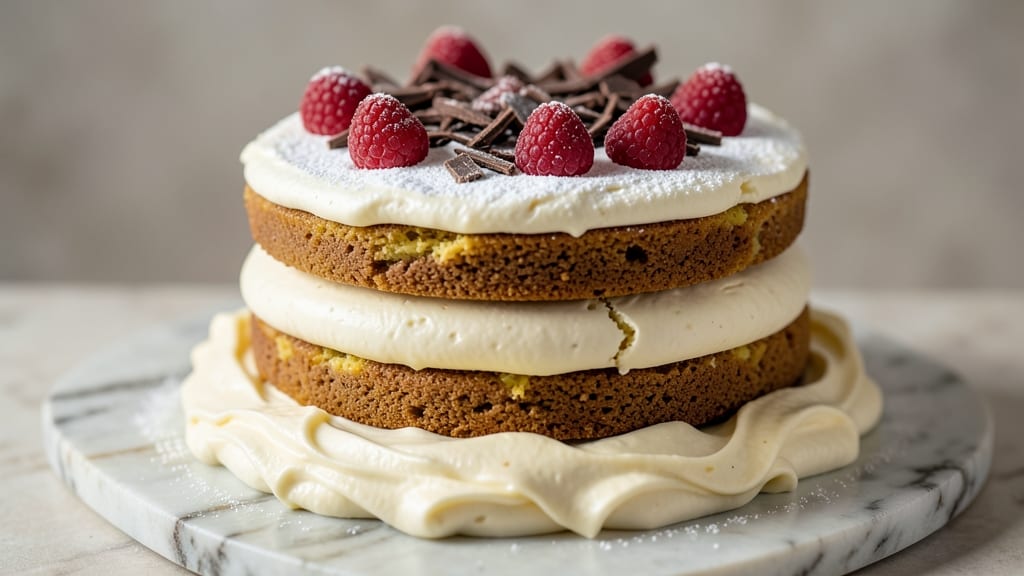
This buttercream recipe for cookie cake delivers the perfect balance of velvety smoothness and structural stability—no grainy texture or separation in sight. 💛 The secret lies in precise temperature control and a touch of meringue powder, which transforms this into a professional-quality frosting that spreads effortlessly over cookie cake layers while holding its shape for clean piping and decorative details.
What sets this recipe apart is its foolproof method for achieving that signature buttercream consistency—light enough to spread without tearing cookie layers yet firm enough to pipe rosettes or borders.
I’ve tested this frosting on everything from simple two-layer cakes to elaborate tiered designs, and it never fails to deliver that silky, melt-in-your-mouth finish that makes cookie cakes irresistible.
The base is built on high-ratio butter and powdered sugar, but the real magic happens with the meringue powder and careful whipping. This combination eliminates the need for corn syrup or shortening, keeping the flavor pure and the texture perfectly balanced.
Whether you’re filling a single-serving cake or a showstopping dessert for 20, this recipe scales seamlessly while maintaining its signature smoothness.
Ready to elevate your cookie cake game? This buttercream isn’t just about taste—it’s about texture, stability, and that restaurant-quality finish that turns home bakers into dessert heroes. Let’s get started with a frosting that’s as impressive as the cake it adorns.
Ingredients for buttercream recipe for cookie cake
Eight precision ingredients create velvety frosting that defies separation and delivers restaurant-quality texture.
| Ingredient | Amount | Notes |
|---|---|---|
| Unsalted Butter 🧈 | 1 ½ cups | Room temperature, high-fat content preferred |
| Powdered Sugar 🍚 | 4 cups | Sifted for smooth texture |
| Meringue Powder 🍯 | 1 ½ tbsp | Key for stability and shine |
| Heavy Cream 🥛 | ½ cup | Cold, for whipping |
| Vanilla Extract 🌿 | 1 ½ tbsp | Pure Madagascar preferred |
| Salt 🧂 | ¼ tsp | Fine sea salt for balance |
| Lemon Juice 🍋 | ½ tsp | Freshly squeezed for brightness |
| Corn Syrup 🥄 | 1 tbsp | Light corn syrup for moisture |
The unsalted butter is non-negotiable—European-style with at least 82% fat content ensures that signature smoothness. Wegmans or Plugrá are my go-tos for high-quality European butter, but any brand works if it's truly unsalted. Room temperature is critical: cold butter creates lumps, while butter that's too soft won't whip properly. For the powdered sugar, Domino or C&H are reliable choices, but sift it yourself for the finest texture—pre-sifted bags often contain clumps. The meringue powder (Royal brand) is what prevents separation and gives that professional sheen, so don't skip it.
No meringue powder? 1 extra tbsp powdered sugar plus 1 tsp cornstarch mimics its effect, though results won't be identical. Swapping vanilla extract? Almond extract at half the amount adds depth, but pure vanilla remains ideal. The heavy cream must be cold—straight from the fridge—to whip properly. If you're dairy-free, coconut cream whipped to stiff peaks works as a substitute, though texture will differ slightly. For the lemon juice, fresh is always better, but bottled works in a pinch if you're in a hurry. The corn syrup acts as a moisture retainer—don't omit it, even if you're using meringue powder.
This buttercream keeps its perfect consistency for 3-4 days in an airtight container at room temperature, though flavor peaks within the first 48 hours. For longer storage, refrigerate and re-whip briefly before use—it firms up beautifully. Portion it into small jars for individual projects, and always cover with parchment paper to prevent a skin from forming. Freeze for up to 3 months if needed, but thaw gradually in the fridge to preserve texture. The key to success? Work in a cool kitchen—heat is the enemy of smooth buttercream.
Why You'll Love This Recipe
- Zero Fuss Mixing: I swear by this method—just beat the butter until soft, then fold in powdered sugar and meringue powder like you’re whipping up a snow angel. No sifting, no stress, and that heavy cream at the end gives it this dreamy, fluffy texture that’s way easier than piping Swiss buttercream.
- Vanilla Bomb: That vanilla extract? It’s not just flavor—it’s the star. The meringue powder amplifies it, turning every bite into this warm, sweet hug. Honestly, I’ve tried store-bought frosting, but this tastes like someone handcrafted it just for you.
- Party Ready: Birthday? Baby shower? Last-minute potluck? Slap this on a cookie cake and watch it disappear. The meringue powder keeps it stable enough to frost or pipe, so you can go from zero to showstopper without breaking a sweat.
- Budget-Friendly Luxe: Butter and powdered sugar are pantry staples, and a little meringue powder stretches like crazy. I’ve made three cookie cakes with this recipe—one for my kid’s party, one for my mom’s birthday, and one because I couldn’t resist—and never once felt guilty about the cost.
Step-by-step instructions for velvety cookie cake buttercream
Here's the professional method for silky, stable buttercream that won't separate or weep.
🍳 Step 1: Whip the Buttercream Base
In a stand mixer fitted with the paddle attachment, beat the 1.5 cups unsalted butter on medium speed for 2-3 minutes until completely smooth and free of lumps. This ensures no graininess in your final frosting. The butter should be at room temperature—press a finger into it; it should leave a slight indent but hold its shape.
Gradually add the 4 cups powdered sugar and the 1.5 tbsp meringue powder through a fine-mesh sieve while mixing on low speed. This prevents dust clouds and ensures even distribution. Once fully incorporated, increase speed to medium-high and beat for 3-4 minutes until light and fluffy. You're looking for a pale, airy texture that nearly doubles in volume.
🍳 Step 2: Incorporate Liquids for Stability
With the mixer running on low speed, add the 0.5 cup cold heavy cream, 1.5 tbsp vanilla extract, 0.5 tsp lemon juice, 1 tbsp corn syrup, and 0.25 tsp salt. Let the mixture combine completely before increasing speed to medium-high for 2-3 minutes. This gradual incorporation prevents curdling and ensures the meringue powder activates properly for that professional sheen.
The meringue powder is critical here—it stabilizes the emulsion so your buttercream won't separate when piped or spread. If you notice any graininess at this stage, add 1-2 tablespoons of heavy cream and mix briefly to smooth it out.
⏰ Step 3: Test and Adjust Consistency
For a spreadable consistency (ideal for cookie cakes), the buttercream should hold its shape when piped but still be smooth enough to spread. To test, pipe a small amount onto parchment paper—it should form a peak that holds its shape for 30 seconds before gently flattening. If it's too stiff, add 1 tablespoon of heavy cream at a time until it reaches the perfect balance.
For piping decorations, increase speed to high and beat for an additional 1-2 minutes until glossy and thick enough to hold peaks. The final texture should be velvety smooth with no visible graininess. If you're concerned about separation, chill the buttercream for 15-20 minutes before using—this helps the fat stabilize.
🍽️ Step 4: Use Immediately for Best Results
Transfer the buttercream to a piping bag fitted with your desired tip or to a mixing bowl for spreading. Work quickly—this buttercream is at its peak when fresh. For cookie cakes, pipe directly onto the assembled layers or spread between layers and over the top. The meringue powder ensures it won't weep or slide off, even in warm conditions.
If you need to store leftovers, cover tightly with plastic wrap pressed directly against the surface to prevent drying. Re-whip briefly before use if it thickens slightly. This recipe yields enough for a two-layer 8-inch cookie cake with generous sides—perfect for celebrations.
Pro Tips For Making Buttercream Recipe For Cookie Cake
- SOFTEN THE BUTTER FIRST: Take your unsalted butter out of the fridge at least 2 hours before mixing—room temp is key. Cold butter means you’ll fight the mixer, and warm butter can turn your buttercream greasy. I learned this the hard way when my first batch split like wet sand.
- SIFT THE POWDERED SUGAR: Don’t just dump that powdered sugar—sift it through a fine-mesh strainer first. Clumps in your buttercream mean grainy texture, and nobody wants to scrape lumps off their cake. Takes 30 seconds but saves hours of frustration.
- ADD CREAM SLOWLY: Pour the heavy cream in tablespoon by tablespoon, mixing well after each addition. Dumping it all at once risks curdling, and your buttercream will separate like oil and water. I was skeptical until I tried it—now I never skip this step.
- CHILL THE MIXER BOWL: Run your mixer bowl and beaters under cold water for 10 seconds before starting. The heat from mixing builds up fast, and warm buttercream loses its structure. Sounds weird, but it works—your frosting will stay smooth and pipeable.
Pro cooking tips for this recipe
Temperature Control Secrets
Buttercream is all about temperature balance—room-temperature butter is non-negotiable. Press your finger into it: if it leaves a slight indent but holds shape, it's perfect. Cold butter creates lumps, while butter that's too soft won't whip properly.
I keep my kitchen at 68°F during mixing to prevent overheating, which can cause separation. If your room feels warm, chill the bowl in the freezer for 5 minutes before starting. 🌡️
Powdered sugar should also be at room temperature to prevent moisture condensation, which leads to clumping. Sift it through a fine-mesh sieve while mixing on low speed—this prevents dust clouds and ensures even distribution.
The meringue powder (Royal brand) needs to be incorporated slowly to activate properly, so don't rush this step.
Mixer Speed Mastery
Start with medium speed when adding powdered sugar to avoid a mess, then increase to medium-high once fully combined. The goal is to whip the buttercream until it's light and fluffy, nearly doubling in volume.
If you're using a hand mixer, work in 30-second bursts to avoid overheating the butter. I always use my KitchenAid stand mixer with the paddle attachment—it's worth the investment for professional results.
When incorporating liquids, begin on low speed to prevent splattering. Gradually increase to medium-high for 2-3 minutes to fully emulsify the mixture. The meringue powder is what stabilizes the emulsion, so don't skip the low-speed incorporation—this is where the magic happens for that silky, non-separating texture.
Consistency Testing
For cookie cakes, you want a spreadable but pipeable consistency. Test by piping a small amount onto parchment paper—it should hold a 30-second peak before gently flattening. If it's too stiff, add 1 tablespoon of cold heavy cream at a time.
For piping decorations, whip on high speed for 1-2 minutes until glossy and thick enough to hold sharp peaks. I always do a quick 15-minute chill in the fridge if I'm concerned about separation.
Pro tip: If your buttercream starts to look curdled or grainy, add 1-2 tablespoons of heavy cream and mix briefly to smooth it out. The meringue powder helps prevent this, but temperature fluctuations can still cause issues. Always work in a cool environment to maintain stability.
Storage and Reuse
This buttercream keeps its perfect texture for 3-4 days in an airtight container at room temperature. For longer storage, refrigerate and re-whip briefly before use—it firms up beautifully. Portion it into small jars and cover with parchment paper to prevent a skin from forming.
Freeze for up to 3 months if needed, but thaw gradually in the fridge to preserve texture.
When reheating, I recommend stovetop method: Place the buttercream in a heatproof bowl over a pot of simmering water (double boiler) for 1-2 minutes, stirring constantly.
This gently warms it without overheating. Re-whip until smooth and fluffy before using. The key is to avoid direct heat—microwaving can cause separation.
Nutrition facts
Frequently asked questions
Can I make this buttercream without meringue powder?
Yes, but with adjustments! Replace the 1.5 tbsp meringue powder with 1 tbsp powdered sugar + 1 tsp cornstarch to mimic its stabilizing effect. For extra insurance, add 1 extra tbsp heavy cream and chill the buttercream for 30 minutes before using. The texture won't be identical, but it'll still hold together for spreading.
Why did my buttercream separate?
Separation usually happens from temperature issues—either butter that's too warm or powdered sugar with moisture. Fix it by adding 1 tbsp cold heavy cream and mixing on low speed until smooth. For prevention, always use room-temperature butter (press test: slight indent remains) and sift powdered sugar while mixing on low speed.
How do I flavor this buttercream for different cookie cakes?
Start with the base recipe, then add 1-2 tbsp of extract (almond, coconut, or peppermint work beautifully) or 2 tbsp melted chocolate for chocolate flavor. For citrus, add 1 extra tsp lemon or orange zest. Pro tip: Infuse 1 tbsp of the heavy cream with spices (cinnamon, cardamom) before adding to the mixer for deeper flavor.
Can I use this buttercream for cupcakes instead?
This recipe works perfectly for cupcakes too—just adjust the consistency slightly. For piping swirls, whip the buttercream to stiffer peaks (add 1 extra tbsp powdered sugar if needed). The meringue powder keeps it stable enough for tall cupcakes. Use a Wilton 1M tip for clean swirls or a star tip for decorative borders.
How do I prevent buttercream from sliding off cookie cakes?
Chill the assembled cake for 15-20 minutes before adding buttercream to firm up the cookies. Also, pipe or spread the buttercream in thin layers (about 1/4 inch thick), letting each layer set for 10 minutes before adding the next. For extra stability, dust the cake with 1 tsp cornstarch before piping.