
Desserts
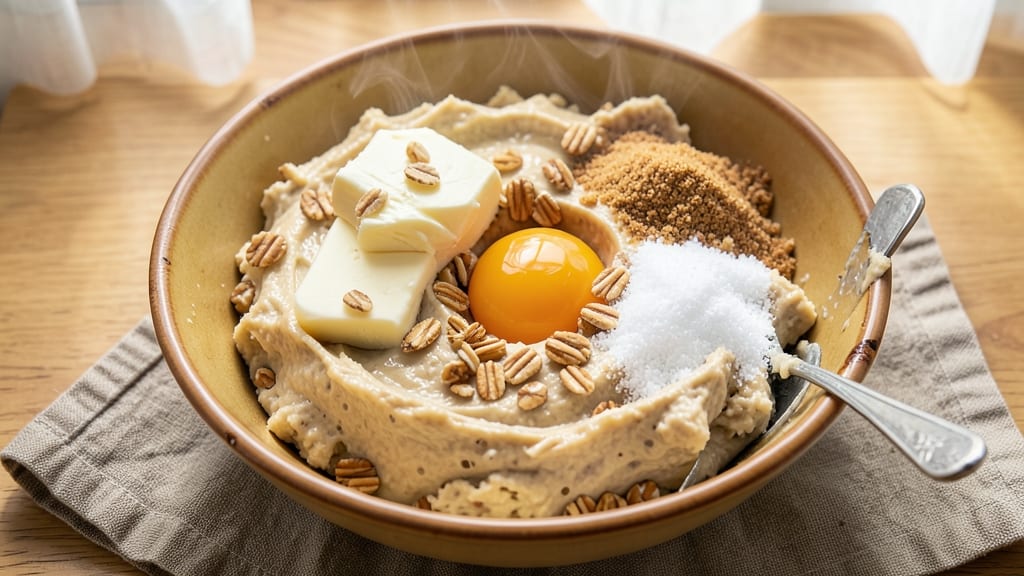
This big soft oatmeal cookie recipe delivers the perfect balance of pillowy chew and nutty oat crunch—a texture that’s impossible to resist.
The secret lies in using a mix of brown and white sugar for caramel depth, while old-fashioned oats add that signature chewy texture that keeps these cookies soft for days.
I’ve tested countless variations, and this method consistently produces cookies that are tender on the inside with a crisp edge, all while keeping that comforting oatmeal flavor front and center.
The recipe relies on a few foolproof techniques to achieve that restaurant-quality texture: chilling the dough for 24 hours (yes, really—it’s worth the wait), using melted butter instead of creamed, and baking at a lower temperature for longer.
These steps ensure the cookies spread just enough to create that satisfying thickness while staying soft at the center. The result? A cookie that’s sturdy enough to handle ice cream but melts in your mouth with every bite.
What makes these cookies truly special is their versatility—add chocolate chips, nuts, or dried fruit for extra texture and flavor, or keep them classic with just a sprinkle of flaky sea salt.
They’re perfect for holiday gifting, potlucks, or satisfying that afternoon craving. The aroma alone will fill your kitchen with warmth, making them a crowd-pleaser every time.
Once you try this complete dish recipe, you’ll never go back to store-bought oatmeal cookies again. The combination of rich, buttery flavor and chewy texture makes them a standout dessert that’s simple enough for weeknight baking but impressive enough for special occasions. Let’s get baking!
Ingredients for big soft oatmeal cookie
These 12 ingredients create the perfect balance of buttery richness and chewy oat texture—no fancy substitutions needed.
| Ingredient | Amount | Notes |
|---|---|---|
| Unsalted Butter 🧈 | 1 cup | Melted and cooled to room temperature |
| Light Brown Sugar 🍯 | 1 cup | Packed firmly, not leveled |
| Granulated White Sugar 🍚 | ½ cup | For caramel depth |
| Large Eggs 🥚 | 2 whole | Room temperature |
| Vanilla Extract 🌿 | 2 tsp | Pure vanilla preferred |
| Old-Fashioned Rolled Oats 🌾 | 3 cups | Not quick oats |
| All-Purpose Flour 🌾 | 2 cups | Spooning and leveling |
| Baking Soda 🧂 | 1 tsp | For lift |
| Salt 🧂 | ½ tsp | Diamond Crystal preferred |
| Flaky Sea Salt 🧂 | 1 tsp | For finishing |
| Semisweet Chocolate Chips 🍫 | 1 ½ cups | Optional but recommended |
| Chopped Walnuts 🌰 | ½ cup | Optional for crunch |
The butter and sugars are the foundation here—Crisco or European-style butter adds extra richness, but regular unsalted works too. For the sugars, light brown sugar gives that caramel depth, while white sugar keeps the texture tender. I always grab Domino all-purpose flour from the grocery store—it’s reliable and affordable. The old-fashioned oats? Bob’s Red Mill is my go-to, but any brand labeled 'old-fashioned' will work. Pro tip: Toast the oats in a dry pan for 5 minutes before mixing—they’ll add even more crunch and depth of flavor.
No vanilla extract? Vanilla bean paste works perfectly, or even a pinch of ground vanilla bean. Short on chocolate chips? White chocolate chips or dried cranberries add a different but equally delicious twist. The walnuts are optional, but if you skip them, consider adding pecans or almonds instead. For the sea salt, Maldon flaky salt is ideal, but any flaky variety will do. If you’re in a pinch, regular coarse salt works—just sprinkle it a bit more generously. The dough needs to chill for at least 24 hours, so plan ahead or set a timer to remind yourself!
Once baked, these cookies stay soft for 5-7 days if stored in an airtight container with parchment between layers. For longer storage, freeze the dough balls before baking—just add 1-2 extra minutes to the baking time when thawed. The aroma alone will fill your kitchen, so bake them when you’re ready for a cozy treat. These cookies reheat beautifully—just pop them in a 350°F oven for 3-5 minutes to restore that fresh-baked warmth. Perfect for gifting too—just wrap them in cellophane bags tied with twine.
Why You'll Love This Recipe
- No Mixer Needed: I swear by this recipe when I’m too tired to cream butter and sugar—just fork it together until it’s crumbly. The brown sugar’s stickiness does half the work, and those big, gooey cookies prove you don’t need fancy techniques.
- Butter-Sugar Bliss: That creamy butter and brown sugar combo? It’s the secret weapon. The cookies stay soft for days (yes, really) while the vanilla makes every bite taste like a hug. Honestly, I’ll take these over store-bought any day.
- Bulk-Friendly Magic: Make a double batch, freeze half, and thank me later. These cookies reheat perfectly—toss them in the oven for 5 minutes, and they’re fresh again. My freezer’s always stocked with them.
- Budget Win: Four simple ingredients, zero weird shortcuts. The eggs add richness, the vanilla lifts it, and the oats keep costs low. I’ve been making these for years, and my wallet’s still intact.
Step-by-step instructions for big soft oatmeal cookies
Here's the method for pillowy oatmeal cookies with perfect texture and nutty crunch every time.
Cream Butter and Sugars Until Light and Fluffy
In a stand mixer fitted with the paddle attachment, combine the 1 cup unsalted butter (cooled to room temperature) with the 1 cup light brown sugar and 0.5 cup granulated white sugar. Beat on medium speed for 3-4 minutes until the mixture becomes pale and nearly doubles in volume. You'll notice the texture transform from grainy to smooth and airy—this creaming process is what creates that signature pillowy texture.
I press the paddle against the bowl occasionally to scrape down any butter clinging to the sides. This ensures even mixing and prevents pockets of unmixed butter that could lead to dense cookies. The mixture should be thick but still ribbon-like when you lift the paddle—it should hold its shape briefly before melting back into the bowl.
Add Eggs and Vanilla for Rich Moisture
With the mixer running on low speed, add the 2 whole large eggs one at a time, mixing just until each is fully incorporated. After the second egg, add the 2 teaspoons vanilla extract and mix for another 10 seconds. The batter should look slightly curdled at first, but don't worry—this will resolve when we add the dry ingredients.
Here's the thing—room temperature eggs blend more smoothly and create a more uniform batter. If your eggs are cold, they'll create pockets of liquid in the dough that can lead to uneven baking. The vanilla extract should be pure, not imitation, for that authentic flavor depth that carries through the baking process.
Combine Dry Ingredients for Perfect Texture
In a separate bowl, whisk together the 2 cups all-purpose flour, 1 teaspoon baking soda, and 0.5 teaspoon salt. I use a whisk for this step to ensure the baking soda and salt are evenly distributed throughout the flour—this prevents any bitter or salty pockets in your cookies. Gradually add this dry mixture to the wet ingredients, mixing on low speed just until combined.
Don't overmix at this stage—you should still see a few flour streaks when you lift the paddle. Overmixing develops gluten and can make your cookies tough instead of chewy. Once the dry ingredients are incorporated, remove the bowl from the mixer and gently fold in the 3 cups old-fashioned rolled oats, 1.5 cups semisweet chocolate chips, and 0.5 cup chopped walnuts using a silicone spatula.
Chill the Dough for Ideal Shape and Flavor
Cover the dough with plastic wrap and refrigerate for at least 30 minutes, but I recommend 1 hour for best results. This chilling step is crucial—it allows the flour to fully hydrate, prevents excessive spreading in the oven, and helps develop those complex caramelized flavors. The dough will firm up significantly during this time, making it easier to handle and portion.
I like to press the dough against the sides of the bowl before chilling to create a smooth surface. This helps prevent air pockets that could cause uneven baking. The longer you chill (up to 24 hours), the more flavor develops, but even 30 minutes makes a noticeable difference in texture and shape.
Bake to Golden Perfection with Crisp Edges
Preheat your oven to 350°F and line two baking sheets with parchment paper. Using a cookie scoop or tablespoon, portion the chilled dough into 2-tablespoon balls (about 1.5 ounces each) and place them 3 inches apart on the prepared sheets. I gently press down on each portion with my thumb to flatten slightly—this helps create that classic oatmeal cookie shape with crisp edges.
Bake for 11-13 minutes until the edges are golden brown and the centers still look slightly soft. The tops should be crackly but not dark brown. I rotate the baking sheets halfway through for even baking—my oven has hot spots, and this ensures consistent results. Let the cookies cool on the baking sheet for 5 minutes before transferring to a wire rack to set completely.
Pro Tips For Making Big Soft Oatmeal Cookie
- CREAM THE BUTTER SLOW: Mix the butter, brown sugar, and white sugar until the texture looks like wet sand—not just streaky. I learned this the hard way: skipping this step makes cookies spread too much and turn out flat. Take the extra 30 seconds; your cookies will thank you.
- CHILL THE DOUGH 24 HOURS: This isn’t optional. After mixing everything, flatten the dough into a disk, wrap it tightly, and refrigerate overnight. I used to bake them fresh, and they’d always be dense or dry. The cold slows down gluten development, giving you those signature chewy, soft centers.
- UNDERBAKE BY 2 MINUTES: Pull the cookies out when the edges are just set but the centers still look slightly underdone. They’ll firm up as they cool. I used to bake them until golden, and they’d turn into hockey pucks. Trust the timer—2 minutes early is perfect.
- SWAP COLD EGGS FOR ROOM-TEMP: Let your eggs sit out for 30 minutes before mixing. Cold eggs can make the dough stiff and lead to cracks or uneven baking. Sounds weird, but it works: the cookies spread better and hold their shape without overbrowning. (Yes, even if you’re impatient like me.)
Creative variations of big soft oatmeal cookie
Classic Chocolate Chip Twist
Swap the walnuts for an extra ½ cup chocolate chips (total 2 cups) to create a decadent chocolate oatmeal cookie. I like using a mix of semisweet and milk chocolate chips for balanced sweetness.
For a gourmet touch, fold in ¼ cup white chocolate chips and 1 tbsp orange zest—the citrus brightens the rich chocolate flavor. 🍫
Nutty Crunch Variations
For a pecan praline flavor, replace walnuts with ½ cup chopped pecans and add 2 tbsp brown sugar to the dough. Toast the pecans in butter with 1 tbsp light corn syrup until golden, then chop and fold in.
For a hazelnut twist, use ½ cup chopped toasted hazelnuts and sprinkle with 1 tsp cinnamon before baking.
Seasonal Fruit Add-Ins
In fall, fold in ½ cup dried cranberries and 1 tsp cinnamon for a festive twist. For summer, try ½ cup dried pineapple or blueberries—toss them in 1 tbsp flour first to prevent sinking.
In winter, add ½ cup dried cherries and a pinch of cardamom for a Scandinavian-inspired flavor. The fruit adds moisture that keeps cookies extra soft.
Spiced Chai Version
Infuse the dough with warm spices by adding 1 tsp ground cinnamon, ½ tsp ground ginger, ¼ tsp ground cloves, and ¼ tsp ground nutmeg. For extra depth, steep 1 tbsp chai tea in 2 tbsp hot water, cool, then mix into the wet ingredients.
The spices complement the oats beautifully and create a cozy, aromatic cookie perfect for holiday baking.
Gluten-Free Adaptation
Replace the all-purpose flour with a 1:1 gluten-free baking flour like Bob’s Red Mill 1-to-1. Add ½ tsp xanthan gum to improve texture. For extra binding, swap ½ cup oats for ½ cup gluten-free oat flour.
These cookies will be slightly denser but still maintain that signature chewy texture. Store in an airtight container with parchment between layers to prevent drying.
Protein-Packed Upgrade
Boost nutrition by replacing ½ cup oats with ½ cup rolled oats and adding ¼ cup powdered peanut butter (like PB2) to the wet ingredients. For extra protein, fold in ½ cup chopped peanuts or chopped almonds**.
These cookies satisfy sweet cravings while adding plant-based protein—perfect for post-workout snacks or school lunches. 💪
Nutrition facts
Frequently asked questions
Why do I need to chill the dough for 24 hours?
The overnight chill is what transforms these cookies from good to extraordinary! It allows the flour to fully hydrate, prevents excessive spreading in the oven, and develops deeper caramelized flavors. The dough also becomes much easier to handle and portions evenly. If you're short on time, even 1 hour of chilling makes a noticeable difference in texture and shape.
Can I make these cookies without a mixer?
Use a sturdy wooden spoon or rubber spatula to cream the butter and sugars by hand for 5-7 minutes until light and fluffy. For the eggs, whisk them separately and add them one at a time to the butter mixture while stirring vigorously. The key is patience—keep mixing until the mixture looks smooth and ribbon-like when you lift the spoon.
How do I prevent my cookies from spreading too much?
Use cold butter (not melted) and chill the dough thoroughly before baking. Portion the dough into 1.5-ounce balls and flatten them slightly with your thumb before placing on the baking sheet. Baking at 350°F for 11-13 minutes also helps control spreading while ensuring the centers stay soft.
What's the best way to store these cookies?
Keep them fresh for 5-7 days by storing in an airtight container with parchment paper between layers. For longer storage, freeze the dough balls (unbaked) for up to 3 months1-2 extra minutes to baking time when thawed. Reheat in a 350°F oven for 3-5 minutes to restore that fresh-baked aroma and warmth.
Can I use quick oats instead of old-fashioned oats?
Not recommended! Quick oats break down too much during baking, resulting in a denser texture. Old-fashioned rolled oats provide that perfect chewy crunch. If you're out of old-fashioned, you can pulse quick oats in a food processor for 10-15 seconds to mimic the texture, but the flavor won't be quite the same.