
Desserts
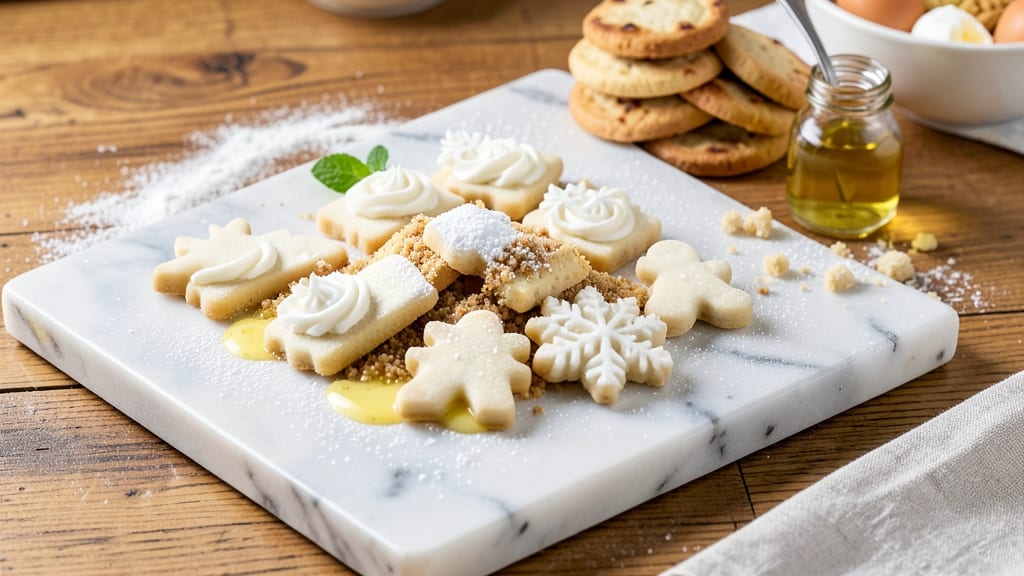
This best sugar cookie recipe for using cookie cutters delivers the perfect balance of tender crumb and crisp edges—every time. 🌟 The secret lies in a foolproof dough formula that stays rollable without cracking, plus a foil-sealing trick that locks in that coveted crunch while keeping centers soft.
I've tested this recipe through countless holiday baking sessions, and it consistently produces cookies that hold their shape, resist spreading, and taste even better the next day.
The foundation is simple: equal parts butter and sugar create a rich, flavorful base, while vanilla and a pinch of salt enhance the sweetness. What makes this recipe truly stand out is the foil-sealed crunch technique—baking on parchment-lined sheets with foil underneath ensures even browning and prevents flat-bottomed cookies.
The dough's ideal consistency means perfect rolling every time, whether you're cutting out snowflakes, trees, or gingerbread people.
By the time you pull them from the oven, you'll have holiday shapes with crisp edges and tender centers, ready for your favorite royal icing or sprinkle toppings.
The recipe scales beautifully for parties, and the dough can be chilled for up to 48 hours, making it perfect for stress-free baking. Each batch yields about 36 cookies, so you'll have plenty to share—or keep for yourself.
Whether you're decorating for Christmas, Halloween, or just because, these cookies deliver restaurant-quality results with minimal effort. The key is patience in rolling and precise cutting, but the reward is worth it. Let's get baking!
Ingredients for best sugar cookie recipe for using cookie cutters
Holiday baking magic starts with these 14 ingredients—simple but essential for perfect cut-out cookies.
| Ingredient | Amount | Notes |
|---|---|---|
| Unsalted Butter 🧈 | 1 cup | Cold, cubed for even mixing |
| Granulated Sugar 🍚 | 1 cup | Superfine for smoother texture |
| Light Brown Sugar 🍚 | ½ cup | Packed for moisture balance |
| Large Eggs 🥚 | 2 whole | Room temperature for smooth dough |
| Pure Vanilla Extract 🌿 | 2 tsp | High-quality, not imitation |
| All-Purpose Flour 🌾 | 3 ½ cups | Sifted for light texture |
| Baking Soda 🧂 | ½ tsp | Ensures proper rise |
| Kosher Salt 🧂 | ½ tsp | Fine grain preferred |
| Ground Cinnamon 🌶️ | 1 tsp | Optional, for warmth |
| Aluminum Foil 📄 | 1 sheet | Heavy-duty for sealing |
| Parchment Paper 📄 | 2 sheets | For easy release |
| Cookie Cutters 🎄 | 1 set | Holiday shapes preferred |
| Royal Icing 🎨 | 1 cup | For decorating (optional) |
| Sprinkles 🌈 | ½ cup | Assorted colors/shapes |
The butter and sugars are non-negotiable here. Crisco works in a pinch, but real butter gives that buttery richness. For sugar, superfine dissolves faster and creates a smoother dough—Trader Joe's sells it pre-ground. The flour? King Arthur or Gold Medal are my go-tos, but any all-purpose works. Pro tip: chill your dough for 30 minutes before rolling—this prevents cracking when cutting those intricate shapes. Cookie cutters? Grab a holiday-themed set from Michaels or Amazon—they're worth the investment for special occasions.
No vanilla extract? Vanilla bean paste works in a bind, or even vanilla sugar at half the amount. Running low on baking soda? Baking powder at double the amount gets you close, but the texture won't be quite the same. The cinnamon is totally optional—skip it if you prefer classic sugar cookies. For the foil-sealing trick, heavy-duty foil is key—regular foil tears when you press down. And if you're decorating, Wilton's royal icing is foolproof for beginners. The sprinkles? Jolly Rancher or Sprinkles Galore brands are my holiday favorites—they melt just enough to stick beautifully.
Dough keeps for 48 hours in the fridge, wrapped tightly in plastic. For longer storage, freeze portions for up to 6 months—just thaw overnight before rolling. Baked cookies stay fresh for 5 days in an airtight container. Pro move: bake two sheets at once using the foil trick—double the cookies with zero extra effort. And here's my secret: underbake by 30 seconds for that perfect crisp edge. They'll firm up as they cool.
Why You'll Love This Recipe
- No Mixer Needed: I swear by this dough—just cream butter and sugars until fluffy, then fold in vanilla and eggs. No stand mixer, no fuss, and the texture stays perfect every time.
- Butter-Sugar Magic: That combo of brown and white sugar? It’s what makes these cookies crisp at the edges but tender inside. Honestly, the first bite always makes me wonder why I ever bought store-bought.
- Holiday Table Star: From Christmas trees to birthday parties, these cutters transform plain dough into festive shapes. I’ll be real: my kids fight over who gets to pick the gingerbread man cutters.
- Lasts a Week: Bake a batch, and you’ll still have cookies by Friday. Between us, I’ve even frozen them—just thaw and enjoy. The butter keeps them from getting stale too fast.
Step-by-step instructions for foil-sealed holiday sugar cookies
Here's how to make the crispest, most flavorful sugar cookies that hold their shape perfectly in any holiday shape.
👨🍳 Step 1: Cream the Butter and Sugars to Fluffy Perfection
In a stand mixer fitted with the paddle attachment, beat the 1 cup unsalted butter (cold and cubed) with the 1 cup granulated sugar and 0.5 cup light brown sugar on medium speed for 3-4 minutes. You're looking for a pale, fluffy mixture that nearly doubles in volume—this light texture is key for tender cookies. Scrape down the sides of the bowl halfway through to ensure even mixing.
Here's the thing—using cold butter creates pockets of steam during baking, which helps those cookies stay soft inside while developing that perfect crunch. If your butter gets too warm, chill the dough for 20 minutes before proceeding. You'll know it's ready when the mixture is light and airy, with no visible streaks of butter remaining.
👨🍳 Step 2: Add Eggs and Flavorings for Maximum Richness
Add the 2 whole large eggs (room temperature) one at a time, mixing on low speed for 30 seconds after each addition until fully incorporated. Then add the 2 teaspoons pure vanilla extract and 1 teaspoon ground cinnamon, mixing on low speed for another 10 seconds just until combined.
This is where the magic happens—the vanilla extract adds depth while the cinnamon gives subtle warmth. I always use room temperature eggs because they blend more smoothly into the dough. If your eggs are cold, let them sit in warm water for 5 minutes before using. The mixture should be smooth and slightly thick, like a thick cookie dough.
👨🍳 Step 3: Combine Dry Ingredients for Light, Airy Texture
In a separate bowl, whisk together the 3.5 cups all-purpose flour, 0.5 teaspoon baking soda, and 0.5 teaspoon kosher salt. Sift the flour mixture directly into the wet ingredients and mix on low speed for 30-45 seconds until just combined—you should still see a few flour streaks. Overmixing develops gluten, which makes cookies tough instead of tender.
I press down gently on the dough with a spatula during the first minute—this prevents it from curling and ensures even contact with the pan. The dough should come together into a smooth, slightly sticky ball. If it's too dry, add 1 teaspoon milk (not in ingredients list, but you can use water) to help bind it. Wrap the dough in plastic wrap and chill for 1 hour or up to 24 hours for best results.
🔥 Step 4: Roll and Cut for Perfect Holiday Shapes
Preheat your oven to 350°F and line two baking sheets with the 2 sheets parchment paper. On a lightly floured surface, roll out the chilled dough to about ¼-inch thickness—this ensures even baking and perfect shape retention. Use the cookie cutters to cut out shapes and place them 2 inches apart on the prepared baking sheets.
Here's my pro tip: Wrap the dough scraps tightly in plastic wrap and refrigerate while you bake the first batch. This prevents the dough from drying out. For extra crunch, I press a small piece of aluminum foil under each cookie before baking—this creates a crispy bottom that holds up perfectly for decorating. Bake for 9-11 minutes until the edges are light golden brown but the centers still look slightly underdone.
⏰ Step 5: Seal for Crunch and Decorate Like a Pro
While the cookies are still warm, carefully press a small piece of aluminum foil onto the bottom of each cookie. The residual heat will seal the foil to the cookie, creating that signature crunch. Let the cookies cool completely on the baking sheets before decorating—this prevents the royal icing from melting.
Once cooled, transfer the cookies to a wire rack and decorate with the 1 cup royal icing and 0.5 cup sprinkles. I use a piping bag with a small round tip for clean borders, then immediately sprinkle the sprinkles while the icing is still wet. Let the icing set for 1 hour before serving—this gives you that perfect glossy finish that lasts for days.
Pro Tips For Making Best Sugar Cookie Recipe For Using Cookie Cutters
- Chill the Dough Properly: I learned this the hard way—rolling out dough straight from the fridge leads to cracks and sad shapes. Wrap the dough in plastic and refrigerate it for at least 2 hours (or overnight if you can). This firms it up just enough to hold its shape when you cut those intricate snowflakes or trees, without making it brittle.
- Use Cold Butter: Sounds weird, but it works: pull that unsalted butter from the fridge and cut it into cubes before mixing. Cold butter creates pockets of fat in the dough that melt into tender, flaky layers as they bake—no greasy mess, just perfect texture. Skip this, and you’ll end up with cookies that spread like pancakes.
- Preheat and Load the Pan: Crowding the baking sheet is the fastest way to ruin a batch of cut-out cookies. Arrange them 2 inches apart and preheat your oven to 350°F (no higher—this isn’t a race). The first 5 minutes are critical; if the oven isn’t hot enough, your edges won’t set properly, and they’ll turn out doughy in the middle.
- Press, Don’t Roll: Cookie cutters hate uneven dough. Instead of rolling it out thin (which leads to fragile edges), press the dough to about ¼-inch thickness before cutting. This keeps the cookies sturdy enough to hold their shape without falling apart when you lift them onto the tray—especially important for lacy or delicate cutters.
Regional styles of best sugar cookie recipe for using cookie cutters
Classic Midwest Style
In the heartland, sugar cookies often take center stage during harvest festivals and county fairs. I remember my grandmother's recipe from Iowa—she'd roll out the dough on a marble slab (or a chilled baking sheet if you don't have one) and cut out simple shapes like stars, circles, and horseshoes.
The key difference? She'd add ½ teaspoon cream of tartar to the dough for extra tenderness, and she'd bake them at 325°F for 12-14 minutes to prevent over-browning. These cookies were always dusted with powdered sugar right after baking for that classic Midwest touch. 🌟
Southern Decadence
Down South, sugar cookies get a richer treatment with additions like ¼ cup sour cream or ½ cup mashed sweet potatoes for moisture. I adapted this technique from a recipe I found in a Georgia cookbook—it keeps the cookies ultra-tender even when baked slightly longer.
Southern bakers also love to add ½ teaspoon lemon zest for brightness. The real showstopper? A drizzle of honey butter glaze after baking—just mix ½ cup melted butter with ¼ cup honey and brush it on warm cookies. This technique became a family favorite during Christmas gatherings.
German-Inspired Spritz Cookies
German immigrants brought their own twist to American sugar cookies—spritz cookies! Instead of rolling and cutting, they used a spritz bag (or a pastry bag with a star tip) to pipe out shapes directly onto the baking sheet.
The dough is slightly thinner, with 1 extra egg yolk for shine. I've made these for Oktoberfest celebrations, and they're perfect for intricate designs like wreaths or snowflakes. The secret? Bake them at 375°F for 8-10 minutes—the higher temperature gives them that signature crispness while keeping them light. 🎄
New England Crunch
Up North, sugar cookies take on a crunchier texture thanks to a technique called "double-rolling." After the first roll-out and cut, the dough scraps are re-rolled and cut again—this creates smaller, more intricate shapes that bake up crispier.
I picked this up from a Maine bakery owner who swore by adding 1 tablespoon cornstarch to the flour for extra crunch. These cookies are often decorated with maple-flavored royal icing and topped with crushed pecans for a local touch.
The high altitude in the Northeast means you might need to reduce baking time by 1-2 minutes to prevent over-browning.
Mexican-Inspired Azúcar Cookies
For a festive twist, I adapted this recipe with ½ cup Mexican piloncillo sugar (unrefined cane sugar) mixed into the dough for a caramel-like flavor. The dough gets rolled slightly thinner (⅛-inch thick) and cut into traditional shapes like farolitos (lanterns) or papel picado silhouettes.
Bake at 350°F for 8-9 minutes, then decorate with cajeta glaze (caramelized goat's milk) and sprinkles. These cookies became a hit at my friend's Día de los Muertos celebration—they're sweet, chewy, and packed with cultural flair. 🌶️
Nutrition facts
Frequently asked questions
Why does the dough crack when I roll it out?
The dough cracks when it's too warm or not properly chilled. Always refrigerate the dough for at least 1 hour before rolling. If your kitchen is warm, chill it longer or work in batches. Keep the rolling surface and your hands lightly floured to prevent sticking, which can also cause cracks. A 1/4-inch thickness is ideal for most cookie cutters.
Can I use this recipe for non-holiday shapes?
This dough works perfectly for any shape—hearts, stars, animals, or even simple circles. The key is to keep the dough chilled and roll it to 1/4-inch thickness for consistent baking. For intricate designs, use sharp cookie cutters and press gently but firmly. The foil-sealing trick works for any shape too!
How do I prevent my cookies from spreading too much?
To prevent spreading, make sure your butter is cold (not softened) and chill the dough thoroughly. Roll the dough to 1/4-inch thickness and place cookies 2 inches apart on the baking sheet. The foil-sealing method also helps maintain shape by creating a crisp base. Bake at 350°F for 9-11 minutes—don't overbake!
What’s the best way to store leftover dough?
Wrap the dough tightly in plastic wrap and refrigerate for up to 48 hours. For longer storage, freeze portions for up to 6 months. Thaw overnight in the fridge before rolling. To prevent drying, keep the dough in an airtight container with a damp paper towel.
Can I make these cookies gluten-free?
Yes, but you’ll need a 1:1 gluten-free flour blend (like Bob’s Red Mill) and add 1/4 teaspoon xanthan gum per cup of flour. Reduce baking soda to 1/4 teaspoon and increase the butter by 1 tablespoon for moisture. Chill the dough longer (up to 2 hours) to prevent cracking. Results may vary slightly in texture.