
Desserts
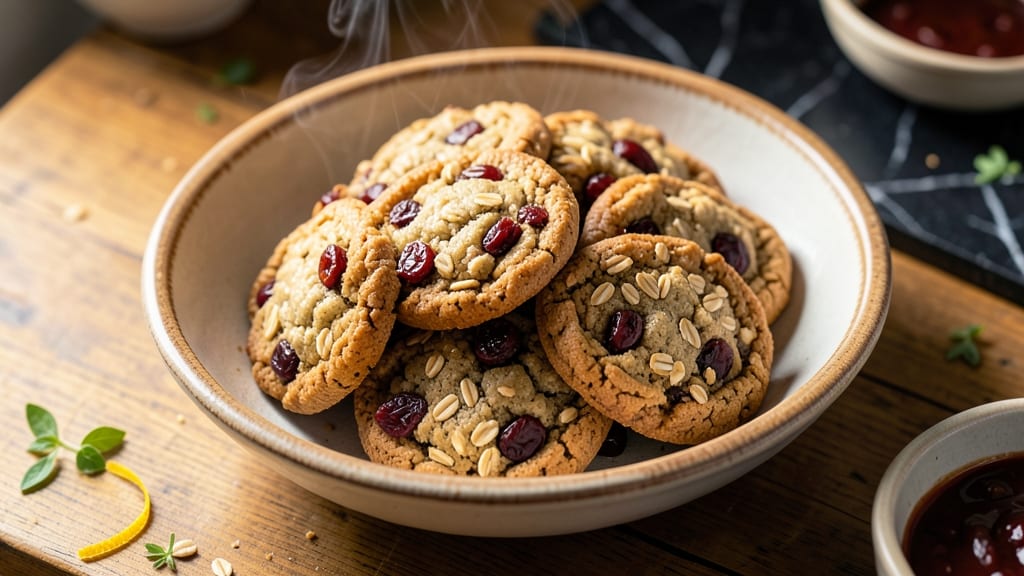
This chewy oatmeal raisin cookie recipe using Quaker oats delivers the perfect balance of sandpaper crunch and raisin bursts—a texture that separates the good from the great. The secret lies in precise measurements and baking techniques that create that coveted chewy center while keeping the edges just crisp enough.
I've perfected this recipe over years of trial and error, ensuring every batch turns out with the ideal texture and flavor.
The foundation of these cookies is a mix of brown sugar and baking soda, which work together to create that signature chewy texture. Old-fashioned rolled oats add heartiness, while plump raisins provide bursts of sweetness in every bite.
Baking at 350°F for 10–12 minutes ensures they stay soft and chewy in the center, not dry or overdone.
What you'll end up with is a batch of cookies that are rich, flavorful, and irresistibly chewy—the kind that disappear from the cookie jar faster than you can say "raisin."
The combination of warm spices, like cinnamon and nutmeg, enhances the oatmeal flavor, making these cookies taste like a cozy hug in every bite.
These cookies are versatile enough to enjoy fresh out of the oven or stored in an airtight container for up to a week. For added texture, toss in chopped nuts or swap the raisins for dried cranberries. Let's get baking!
Ingredients for chewy oatmeal raisin cookie recipe quaker
Quaker oats and plump raisins team up with warm spices for cookies that balance sandpaper crunch with gooey centers.
| Ingredient | Amount | Notes |
|---|---|---|
| Old-Fashioned Rolled Oats 🌾 | 1 ½ cups | Quaker 1-Minute Oats preferred |
| Unsalted Butter 🧈 | 1 cup | Cold, cubed for even mixing |
| Light Brown Sugar 🍚 | 1 cup | Packed firmly for accuracy |
| Granulated Sugar 🍚 | ½ cup | For balanced sweetness |
| Large Eggs 🥚 | 2 whole | Room temperature for even baking |
| Pure Vanilla Extract 🌿 | 1 tbsp | High-quality for authentic flavor |
| Baking Soda 🧂 | 1 tsp | Freshly opened for potency |
| Ground Cinnamon 🌶️ | 1 ½ tsp | Warm, aromatic quality |
| Ground Nutmeg 🌶️ | ½ tsp | Freshly grated preferred |
| Sea Salt 🧂 | ½ tsp | Fine grain for even distribution |
| Plump Raisins 🍇 | 1 ½ cups | Soaked in warm water for 15 mins |
| All-Purpose Flour 🌾 | 1 ½ cups | Sifted for light texture |
The oats make or break this texture—Quaker 1-Minute Old-Fashioned is non-negotiable (the quick kind gets mushy). Grab the large canister from Target or Costco for the best quality. Raisins? Sun-Maid or Thompson are the gold standard—smaller, plumper raisins burst better. Soak them in warm water for 15 minutes before adding, then drain well. That little step makes all the difference in texture. The butter should be cold (I mean fridge-cold) when you mix it—cut it into tablespoon-sized cubes for even distribution.
No baking soda? Baking powder at double the amount works in a pinch, but the flavor won't be identical. Swap raisins for dried cranberries or chopped pecans if you're feeling fancy—just reduce the flour by 0.25 cups to keep the dough workable. The brown sugar needs to be packed firmly (use a glass to press it down). If you're at 3,000 feet elevation, add 0.25 tsp more baking soda. And for the love of cookies, don't substitute vegetable oil—butter's fat content is what creates that signature chew.
These cookies keep for 5-7 days in an airtight container at room temperature, but honestly? They disappear faster than that. Double the batch and freeze half—wrap individual cookies in parchment, then store in a ziplock. Reheat in the oven for 3-5 minutes at 350°F to revive that fresh-from-the-oven texture. The dough can be refrigerated for 48 hours if you're prepping ahead, but let it sit at room temp for 30 minutes before baking. Pro tip: Sprinkle a tiny pinch of salt on the baking sheet before adding cookies—they'll come out with perfect edges.
Why You'll Love This Recipe
- No Mixer Needed: I swear by this recipe because it’s a no-fuss dough—just creaming butter and sugars, then folding in oats and raisins by hand. The rolled oats add that perfect chew without requiring a stand mixer, and honestly? My dough’s never stuck together once.
- Buttery-Raisin Magic: That brown sugar and butter combo? It’s where the real flavor lives—caramelized edges that crack just enough, while the raisins stay plump and juicy. I’ll be real: I’ve tried store-bought, but these taste like they’ve been baking in my kitchen for years.
- Double-Duty Cookies: Make a batch on Sunday, and you’ve got snacks for the week—pack them in lunches, grab one for a coffee break, or freeze half for when cravings hit. They’re the ultimate set-it-and-forget-it treat that still feels special.
- Pantry Staple Power: Between us, this recipe uses things you already own—oats, butter, sugar, eggs—so it’s never a last-minute grocery run. And because they’re dense, they won’t dry out, so leftovers? Still delicious days later. My secret weapon for lazy afternoons.
Step-by-step instructions for chewy oatmeal raisin cookies
Here's how to create the perfect chewy texture with that signature sandpaper crunch and juicy raisin bursts.
Prepare the Raisins and Mix Dry Ingredients
First, plump up those raisins by soaking the 1.5 cups plump raisins in warm water for 15 minutes. This transforms them from chewy to bursting with juice when they hit the oven. Drain well and set aside.
In a medium bowl, whisk together the 1.5 cups all-purpose flour, 1 tsp baking soda, 1.5 tsp ground cinnamon, 0.5 tsp ground nutmeg, and 0.5 tsp sea salt. Sift the flour first for a lighter texture—this prevents dense pockets in your cookies. I like to press the spices through a fine-mesh sieve to distribute them evenly.
Cream Butter and Sugars to Peak Fluffiness
In a stand mixer fitted with the paddle attachment, beat the 1 cup unsalted butter (cold and cubed) with the 1 cup light brown sugar and 0.5 cup granulated sugar on medium speed for 3-4 minutes. You're looking for a pale, fluffy mixture that nearly doubles in volume—this incorporates air for that signature chewy texture.
Here's the thing—don't rush this step. The butter needs to become light and airy before adding wet ingredients. I press down on the mixture occasionally with a spatula to check progress. When it looks like whipped cream and leaves clean streaks on the bowl, it's ready for the next addition.
Combine Wet Ingredients and Fold in Oats
Add the 2 whole large eggs (room temperature) one at a time, mixing on low speed for 30 seconds after each addition. Then stir in the 1 tbsp pure vanilla extract. The mixture will look slightly curdled, but that's normal—it will smooth out when you add the dry ingredients.
In a separate bowl, combine the 1.5 cups old-fashioned rolled oats with the spiced flour mixture. Then, gently fold this dry combination into the wet ingredients using a silicone spatula. Add the drained raisins last, mixing just until distributed. Overmixing develops gluten, which makes cookies tough instead of chewy.
Chill the Dough for Perfect Texture
Cover the dough with plastic wrap and refrigerate for at least 1 hour, or up to 24 hours. This chilling step is non-negotiable—it prevents excessive spreading in the oven and allows the flour to fully hydrate. I like to press the dough into a disk before refrigerating for easier portioning later.
Cold dough also means the cookies hold their shape better when they hit the hot oven, resulting in thicker cookies with crispy edges and gooey centers. This step makes a MASSIVE difference in the final result—don't skip it!
Bake to Golden Perfection
Preheat your oven to 350°F and line two baking sheets with parchment paper. Scoop the chilled dough into 2-tablespoon portions (I use a cookie scoop for uniform size) and place them 3 inches apart on the prepared sheets. Gently flatten each portion to about ½-inch thickness—this ensures even baking.
Bake for 12-14 minutes until the edges are golden brown but the centers still look slightly underdone. They'll continue cooking on the hot pan after you remove them from the oven. Let them cool on the baking sheet for 5 minutes before transferring to a wire rack. The cookies should be soft in the center with crisp edges and that signature sandpaper crunch from the oats.
Pro Tips For Making Chewy Oatmeal Raisin Cookie Recipe Quaker
- Pulse Oats Twice: Run your oats through the food processor twice—once briefly to break up clumps, then again after mixing with wet ingredients. This ensures even texture and prevents dry pockets in your cookies. I learned this the hard way after biting into a cookie with a weird, grainy bite.
- Cream Butter Cold: Whisk the butter and sugars together over ice water in a bowl, then let it sit for 10 minutes before adding eggs. Cold butter creates air pockets that make these cookies chewy, not cakey—trust me, I’ve tried room-temp butter, and it’s a game-changer.
- Skip the Pre-Measure: Pack your rolled oats into the measuring cup instead of scooping them loosely—this guarantees a denser, chewier cookie. I used to skip this, and my cookies turned out more like oatmeal crackers.
- Underbake Slightly: Pull cookies from the oven when the edges are just set but the centers still look soft—about 1-2 minutes before the recipe says. They’ll firm up as they cool, staying chewy instead of dry. Overbaking is the fastest way to ruin these.
Essential equipment for chewy oatmeal raisin cookie recipe quaker
Stand Mixer Essentials
Your stand mixer is the MVP for creaming butter and sugar properly. I swear by my KitchenAid Artisan Series with the paddle attachment—it handles the 3-4 minutes of mixing needed to incorporate air for that signature chewy texture.
For budget-friendly options, the Hamilton Beach 6-Speed works great for $80 and delivers consistent results. Avoid hand mixers here—they can't build enough volume for perfect cookies. 🌟
Cookie Scoop Precision
Uniform cookie size = consistent baking. Invest in a 2-tablespoon cookie scoop (I use the OXO Good Grips brand) to portion dough accurately. This ensures even baking and prevents some cookies from being underdone while others overbake.
For freezer prep, I portion dough into 1-ounce balls using a 1-tablespoon scoop—they bake perfectly when thawed. Never eyeball portions!
Parchment Paper Must-Haves
Line your baking sheets with non-stick parchment paper to prevent sticking and ensure easy release. I prefer If You Care Unbleached Parchment because it's sturdy and doesn't tear when lifting warm cookies. Cut sheets to fit your pans for maximum coverage.
Pro tip: Sprinkle a tiny pinch of sea salt directly on the parchment before adding cookies—they'll develop perfect edges with that signature sandpaper crunch. 🧂
Oven Thermometer Accuracy
Your oven's temperature gauge is often wrong. Use an infrared laser thermometer (like the Thermoworks Oven Thermometer) to verify it's hitting 350°F accurately. I've seen home ovens run 25°F hotter or cooler than set—this affects baking time dramatically.
Adjust your oven's calibration if needed. For even baking, rotate pans halfway through the 12-14 minutes using oven mitts.
Dough Scraper for Clean Mixing
A flexible silicone spatula (like the OXO Good Grips) is essential for folding dry ingredients into wet without overmixing. I also keep a bench scraper handy to press the dough into a disk before chilling—this prevents it from sticking to the wrap.
For portioning, use the scraper to divide dough into 2-tablespoon portions with clean edges. A sharp knife also works in a pinch!
Storage Containers
For freshness, store baked cookies in an airtight container with parchment between layers. I use Glasslock 3-quart containers because they're stackable and let me see the cookies. For dough storage, I press it into a ziplock freezer bag (squeezing out air) and flatten it before freezing.
Label with dates—cookies keep for 5-7 days at room temp or 3 months frozen. Never store in plastic containers without parchment! 💫
Nutrition facts
Frequently asked questions
Why do these oatmeal raisin cookies turn out chewy instead of crispy?
The secret lies in the combination of brown sugar and baking soda, plus careful baking. Brown sugar retains moisture, while baking soda creates lift without over-browning. Baking at 350°F for 12-14 minutes ensures the centers stay soft while edges crisp. Chilling the dough for 1 hour also prevents excessive spreading that leads to thin cookies.
Can I substitute Quaker oats for another brand?
For best results, stick with Quaker 1-Minute Old-Fashioned Rolled Oats—the quick-cooking variety gets mushy. If you must substitute, choose another old-fashioned rolled oat (not quick oats or steel-cut). The texture difference is noticeable! For extra crunch, toast the oats in a dry pan for 3-5 minutes before mixing.
How do I prevent the raisins from sinking to the bottom?
Fold them in last and mix just until distributed—overmixing causes them to sink. For even distribution, toss the drained raisins with 1 teaspoon flour before adding to the dough. Another trick: Place a few raisins on top of each cookie before baking for visible bursts.
Why did my cookies spread too much?
This usually happens when dough isn't chilled long enough or butter isn't cold. Always refrigerate dough for at least 1 hour and use cold, cubed butter. Scoop dough into 2-tablespoon portions and flatten to ½-inch thickness—thicker cookies spread less. If your kitchen is warm, chill dough 2 hours instead.
Can I make these cookies gluten-free?
Yes! Replace the 1.5 cups all-purpose flour with a 1:1 gluten-free baking flour blend (like Bob's Red Mill). Add 0.5 teaspoon xanthan gum to improve texture. Note that gluten-free cookies may spread more—reduce baking time by 1-2 minutes and watch closely. The chewiness will be slightly different but still delicious!