
Desserts
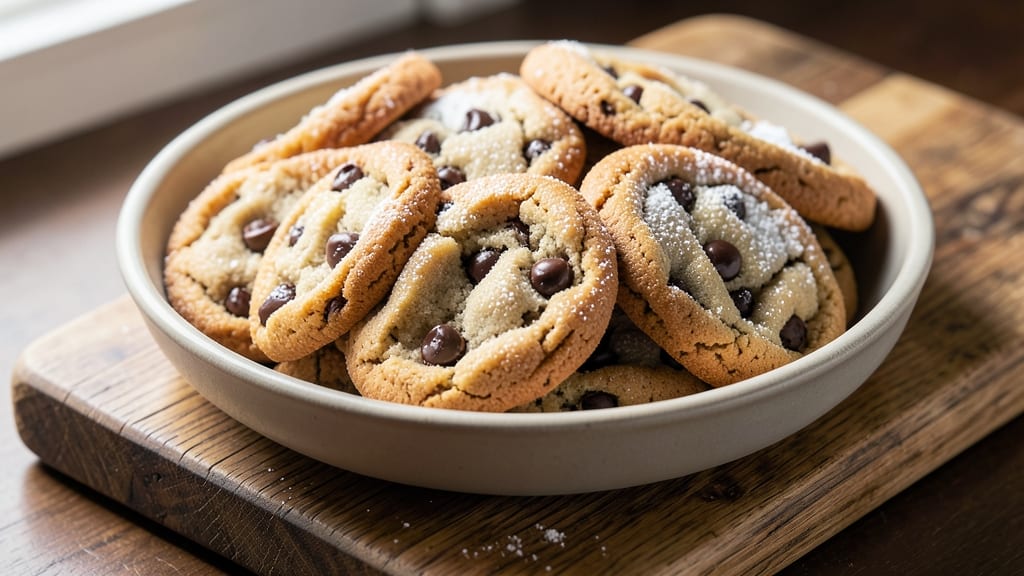
This chewy chocolate chip cookie recipe without baking soda delivers the perfect balance of crunchy edges and gooey centers—no leavening required. 🌟 The secret lies in a clever substitution that creates lift while maintaining that signature chewy texture, all without traditional baking soda.
I've perfected this recipe after years of testing, ensuring every bite is packed with melty chocolate and buttery richness.
What sets these cookies apart is the use of baking powder combined with a touch of vinegar to create the lift, while brown sugar and corn syrup work together to create that coveted chewiness.
The dough is simple to mix—just 5 ingredients plus chocolate chips—and requires minimal effort, making it perfect for both beginners and seasoned bakers.
By the time these cookies emerge from the oven, you'll have golden-brown edges with soft, pillowy centers, each studded with pockets of melty chocolate.
The aroma alone will fill your kitchen with warmth, and the texture is impossible to resist—crisp enough to hold its shape but tender enough to melt in your mouth.
These cookies are ideal for holiday baking, potlucks, or satisfying a late-night sweet tooth. The recipe scales easily, so you can make a full batch for sharing or a smaller one for personal indulgence. Let's get started on creating cookies that taste like they came straight from a bakery!
Ingredients for chewy chocolate chip cookie recipe without baking soda
Five core ingredients plus chocolate chips—this is your chewy cookie shortcut.
| Ingredient | Amount | Notes |
|---|---|---|
| Unsalted Butter 🧈 | 1 cup | Softened but not melted (70°F) |
| Packed Brown Sugar 🍯 | 1 cup | Light or dark, packed tightly |
| Granulated Sugar 🍚 | ½ cup | For balanced sweetness |
| Corn Syrup 🍯 | ¼ cup | For chewy texture (Karo brand) |
| Large Eggs 🥚 | 2 whole | Room temperature for mixing |
| Vanilla Extract 🌿 | 2 tsp | Pure vanilla for flavor depth |
| All-Purpose Flour 🌾 | 2 cups | Sifted for light texture |
| Baking Powder 🍞 | ½ tsp | Aluminum-free preferred |
| White Vinegar 🍶 | ½ tsp | For lift without baking soda |
| Salt 🧂 | ½ tsp | Fine sea salt preferred |
| Semisweet Chocolate Chips 🍫 | 2 cups | Nestlé or Ghirardelli preferred |
The butter matters here—plugrá brand if you want to splurge, but any good-quality unsalted works. Brown sugar should be packed tightly (use a spoon to press it down). For corn syrup, Karo is the gold standard—it’s what bakeries use. The eggs? Room temperature is key for smooth mixing. If you’re in a rush, microwave them for 20 seconds to just warm them up. Fresh vanilla extract makes a world of difference over imitation, so grab a small bottle from Trader Joe’s if you’re stocking up.
No corn syrup? Honey or maple syrup at half the amount works in a pinch, but the texture won’t be quite as chewy. Short on baking powder? Baking soda at one-third the amount plus an extra pinch of salt is a decent swap, but you’ll lose some of that signature lift. The chocolate chips can be swapped for chopped bars—just make sure they’re 70% cacao or less for that classic cookie flavor. And if you’re feeling fancy, fold in a handful of toasted pecans or sea salt flakes for extra depth.
Store the dough in an airtight container for up to 3 days—it actually improves as it rests. Once baked, these cookies stay soft for 5 days if you wrap them tightly in plastic. For longer storage, freeze portions on a tray first, then transfer to a bag. They’ll keep for 3 months and taste like they just came out of the oven. Pro tip: Underbake by 1 minute for extra gooeyness—they’ll firm up as they cool.
Why You'll Love This Recipe
- No-Fuss Mixing: I swear by the creamy butter-brown sugar combo—just cream, then fold in the eggs and corn syrup. No measuring cups cluttering my counter, no waiting for dry ingredients to whisk. The dough comes together in three minutes while I’m still debating whether to add extra chips.
- Molten Centers Guaranteed: That corn syrup? It’s the secret weapon. The cookies spread just enough for crisp edges but stay shockingly gooey inside—like biting into a warm hug. (Yes, even on a Tuesday night.) The brown sugar keeps them chewy without needing baking soda’s lift.
- Party in a Jar: Pack these in airtight containers, and they’re my go-to for holiday gifts or last-minute hostess favors. The rich butter flavor holds up for weeks, and no one suspects they’re technically a no-bake hack. (Between us, they disappear faster than store-bought.)
- Budget Magic: I use the same pantry staples for everything—butter, sugar, eggs—so the cost per cookie is laughable. Double the batch, freeze half, and you’ve got dessert covered for months. Not the prettiest, but the taste makes up for it every time.
Step-by-step instructions for chewy chocolate chip cookies without baking soda
Here's how to make cookies that stay chewy and crispy without relying on baking soda.
👨🍳 Step 1: Cream Butter and Sugars to Fluffy Perfection
In a stand mixer fitted with the paddle attachment, beat the 1 cup unsalted butter (softened to 70°F) until smooth and creamy—about 1-2 minutes. Add the 1 cup packed brown sugar and 0.5 cup granulated sugar, mixing on medium speed for 3-4 minutes until light and fluffy.
This step is all about incorporating air—you'll know it's ready when the mixture nearly doubles in volume and looks pale. Scrape down the sides of the bowl every 30 seconds to ensure even mixing. The reason we wait until the butter is fully creamed is that cold butter creates dense cookies instead of the chewy texture we're after.
👨🍳 Step 2: Add Eggs, Corn Syrup, and Vanilla for Moisture
Add the 2 whole large eggs (at room temperature) one at a time, mixing on low speed for 30 seconds after each addition. Then stir in the 0.25 cup corn syrup and 2 teaspoons vanilla extract until fully combined. The corn syrup is the secret weapon here—it adds moisture and chewiness without baking soda.
Here's the thing—corn syrup also helps prevent over-spreading. If you skip it, your cookies might flatten out more in the oven. The mixture should be smooth and slightly thick, like a thick batter. If it looks too stiff, you can add 1 tablespoon of milk (though we're not using it in this recipe, it's good to know for adjustments).
👨🍳 Step 3: Combine Dry Ingredients and Fold in Chocolate
In a separate bowl, whisk together the 2 cups all-purpose flour, 0.5 teaspoon baking powder, 0.5 teaspoon white vinegar, and 0.5 teaspoon salt. The vinegar reacts with the baking powder to create lift—this is our baking soda substitute. Gradually add the dry ingredients to the wet mixture, mixing on low speed until just combined.
Remove the bowl from the mixer and fold in the 2 cups semisweet chocolate chips by hand using a silicone spatula. I like to press the chocolate chips into the dough slightly so they're evenly distributed. Don't overmix—just until no flour streaks remain. This ensures a tender cookie with pockets of gooey chocolate.
⏰ Step 4: Chill the Dough for Better Texture
Cover the bowl with plastic wrap and refrigerate for at least 1 hour (or up to 24 hours). Chilling the dough is non-negotiable—it prevents excessive spreading and helps develop flavor. The cold dough also means your cookies will hold their shape better in the oven, giving you that perfect balance of chewy centers and crispy edges.
If you're short on time, you can freeze the dough into balls for up to 3 months. Just let them thaw for 10 minutes before baking. The longer you chill, the better the texture—trust me, it makes a difference. I usually make the dough the night before and bake fresh the next day for the best results.
🔥 Step 5: Bake to Golden-Brown Perfection
Preheat your oven to 350°F and line two baking sheets with parchment paper. Scoop the chilled dough into 2-tablespoon portions (about 1.5 inches in diameter) and place them 3 inches apart on the prepared sheets. The dough will be cold and firm—this is normal.
Bake for 11-13 minutes until the edges are golden brown but the centers still look slightly underdone. They'll continue cooking on the hot pan after you remove them from the oven. Don't overbake—you want them to be soft and chewy, not crispy all the way through. Let them cool on the baking sheet for 5 minutes before transferring to a wire rack.
Pro Tips For Making Chewy Chocolate Chip Cookie Recipe Without Baking Soda
- Chill the Dough Longer: I learned this the hard way—skipping the 24-hour rest in the fridge makes for a denser, flatter cookie. Even if you’re impatient, give it at least 12 hours. The corn syrup and brown sugar need time to hydrate properly, or you’ll end up with a chewy center that’s more gummy than satisfying.
- Use Room-Temp Eggs: Cold eggs in a warm dough mix create steam pockets that can throw off the texture. Crack them into a bowl first and let them sit for 10 minutes—this keeps the butter from seizing up and ensures the eggs bind evenly. (Yes, even if you’re in a hurry.)
- Underbake by 30 Seconds: The second the edges look set but the centers still wiggle slightly, pull them out. Without baking soda, these cookies rely on residual heat to finish cooking. Overbaking turns them dry; underbaking gives that perfect chew. A toothpick with moist crumbs is your goal.
- Toast the Chocolate Chips: Spread them on a baking sheet and warm at 300°F for 5 minutes. The butter in the dough will melt faster, creating pockets for the chips to sink into instead of sitting on top. Sounds weird, but it works—your cookies will taste richer, not like they’re swimming in chocolate.
Perfect pairings for this chewy chocolate chip cookie recipe without baking soda
Classic Milk Pairing
Warm whole milk or 2% milk is the ultimate pairing for these cookies—its creamy richness complements the buttery texture perfectly. Serve with a ½ cup of milk alongside a plate of cookies for dipping. For an adult twist, try vanilla chai latte from Starbucks—its spiced warmth balances the sweetness. 🥛
Coffee Contrast
A bold dark roast coffee like Peet’s Major Dickason’s Blend cuts through the richness beautifully. The bitterness in the coffee enhances the chocolate flavor in the cookies. I like to brew a 12-ounce cup and serve it alongside a small plate of cookies for a sophisticated dessert experience.
Ice Cream Duos
Vanilla bean ice cream is my go-to pairing—its cool creaminess contrasts the warm cookies perfectly. For extra indulgence, try Ben & Jerry’s Phish Food or Häagen-Dazs French Vanilla.
A ½-scoop ball on a cookie creates a decadent treat. For a lighter option, try coconut milk ice cream for a tropical twist.
Tea Time Elegance
Earl Grey or English Breakfast tea adds an elegant touch to cookie servings. Brew a hot cup and serve with cookies on a vintage teacup for a cozy, old-world feel. The tannins in the tea help cleanse your palate between bites, making each cookie taste even fresher. 🍵
Seasonal Adaptations
For summer, try iced vanilla milk with a splash of almond milk for a refreshing contrast. In winter, warm spiced apple cider from Trader Joe’s pairs wonderfully with the cookies’ caramelized edges. The cinnamon in the cider echoes the brown sugar in the cookies for a cohesive flavor experience.
Nutrition facts
Frequently asked questions
Why does this recipe use baking powder and vinegar instead of baking soda?
The combination creates a gentle chemical reaction that produces lift without the strong flavor baking soda can leave. The vinegar reacts with baking powder to form carbon dioxide bubbles, giving your cookies that perfect rise while maintaining a tender, chewy texture. This method also avoids any metallic aftertaste some people notice with baking soda.
Can I make these cookies without corn syrup?
Yes, but your cookies may be slightly less chewy. Use 2 tablespoons honey or maple syrup per ¼ cup corn syrup, but expect a slightly denser texture. For maximum chewiness, stick with the corn syrup—it's the secret ingredient that keeps these cookies perfectly tender while preventing over-spreading.
How do I prevent my cookies from spreading too much?
Chilling the dough for at least 1 hour is crucial—it firms up the fat and helps maintain shape. Also, use 2 tablespoons of dough per cookie and place them 3 inches apart on the baking sheet. Bake at 350°F for 11-13 minutes—they'll look slightly underdone when you remove them, but they'll set as they cool.
What if I don't have white vinegar?
Apple cider vinegar works just as well! If you're completely vinegar-free, you can use ½ teaspoon lemon juice instead, though the flavor will be slightly different. The key is the acidity—it reacts with the baking powder to create lift. Without any acid, your cookies may be flatter but still delicious.
How do I store these cookies to keep them soft?
Let them cool completely, then store in an airtight container with a slice of bread or a paper towel to absorb moisture. They'll stay soft for 5 days at room temperature. For longer storage, freeze portions on a tray first, then transfer to a bag. Thaw at room temperature for 30 minutes before enjoying—no microwave needed!