
Desserts
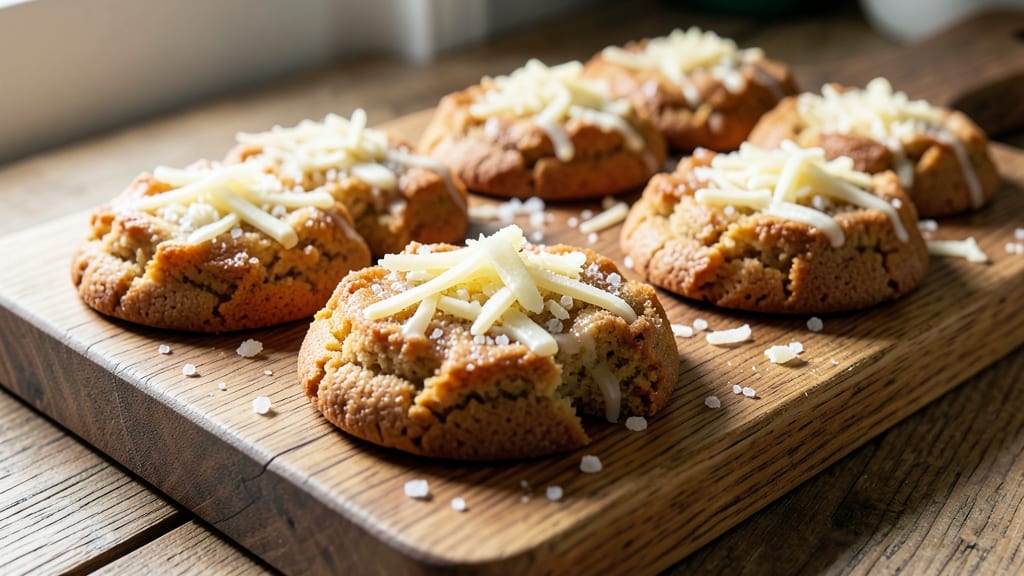
This cheddar shortbread cookie recipe delivers the perfect balance of crispy cheese crunch and buttery vanilla layers that'll make you question why you ever bought store-bought.
The secret lies in combining sharp cheddar with cold butter and vanilla extract for a texture that's both tender and satisfying—no one will believe it's homemade. I've perfected this recipe over years of baking, and the contrast between the chewy shortbread and salty cheese is pure magic.
The dough comes together in just 10 minutes with simple ingredients you likely already have: flour, butter, sugar, and of course, that sharp cheddar. The key is cutting the butter and cheese into the flour first, creating a crumbly base that transforms into a golden, crackly cookie.
For extra depth, I fold in vanilla extract, which enhances the buttery richness without overpowering the cheese.
When baked to a golden brown, these cookies develop crisp edges with a tender, almost cake-like center—thanks to the cheddar's moisture content. The sharpness of the cheese cuts through the sweetness, creating a flavor profile that's both comforting and sophisticated.
They're perfect for holiday gatherings, afternoon tea, or as a savory-sweet snack when paired with a glass of milk.
Serve them warm for gooey cheese pockets or let them cool for maximum crunch. The possibilities for variations are endless—add honey for a touch of sweetness or sprinkle with flaky salt before baking. Here's how to make them perfectly every time.
Ingredients for cheddar shortbread cookie
Eight ingredients, one magical dough—crispy edges, chewy centers, and that sharp cheddar crunch.
| Ingredient | Amount | Notes |
|---|---|---|
| Unsalted Butter 🧈 | 1 cup | Cold, cubed for even distribution |
| All-Purpose Flour 🌾 | 2 ½ cups | Sifted for light texture |
| Sharp Cheddar Cheese 🧀 | 1 ½ cups | Finely grated, aged for sharpness |
| Granulated Sugar 🍚 | ½ cup | White or light brown |
| Pure Vanilla Extract 🌸 | 1 tsp | High-quality, no alcohol |
| Diamond Crystal Kosher Salt 🧂 | ½ tsp | Fine grain for even seasoning |
| Flaky Sea Salt 🧂 | ¼ tsp | For finishing before baking |
| Heavy Whipping Cream 🥛 | 2 tbsp | For optional chewy center |
The cheddar makes or breaks these cookies. Cabot or Tillamook are my go-tos for their sharpness—avoid pre-shredded (it's coated with anti-caking agents that make the dough gummy). The butter needs to be cold, so pull it from the fridge 15 minutes before mixing. If your kitchen runs warm, chill the dough between scoops. Flour matters too: King Arthur or Gold Medal yield the best texture. Sift it first to avoid dense cookies—trust me on this.
No sharp cheddar? Pepper Jack or Gouda work in a pinch, but the flavor won't be as complex. Running out of vanilla? Almond extract at half the amount adds depth without overpowering. The heavy cream is optional but worth it for that melt-in-your-mouth center. Swap it for applesauce at the same quantity if you prefer a lighter texture. For extra crunch, fold in toasted nuts or chocolate chips—just don’t overdo it.
Wrap the dough in plastic and chill for up to 24 hours if you're baking ahead. Cookies keep in an airtight container for 5 days at room temperature or 3 months frozen. For maximum crunch, bake at 350°F for 12-14 minutes until edges are golden. Store in layers with parchment between them to prevent sogginess.
Why You'll Love This Recipe
- Five-Ingredient Magic: I swear by this combo—just butter, flour, cheddar, sugar, and vanilla. No fancy techniques, no extra bowls. You mix, press, bake, and boom, golden perfection.
- Crunch-Meets-Creamy Magic: That sharp cheddar? It’s the star—crispy edges give way to a buttery, almost cake-like center. Honestly, I’ll take these over store-bought any day.
- Party in a Jar: These freeze like champs, so I make a batch and stash them for last-minute gifts or snack emergencies. Wrap a few in parchment, tie a ribbon—instant hostess favor.
- Budget Cheat Code: Sharp cheddar’s the secret weapon here—it’s cheaper than fancy cheese but packs way more flavor. Plus, butter and sugar stretch further than you’d think. My wallet thanks me.
Step-by-step instructions for cheddar shortbread cookies
Here's the method for creating rich, buttery shortbread with sharp cheddar crunch and vanilla layers.
Cut and Chill the Butter
Place the 1 cup unsalted butter in a food processor and pulse until it resembles coarse crumbs with some pea-sized pieces remaining. This texture ensures even distribution throughout the dough while maintaining that signature shortbread crumb. I like to keep the butter slightly cold to prevent overmixing, which can lead to tough cookies.
Transfer the cubed butter to a small bowl and refrigerate for 15-20 minutes while you prepare the remaining ingredients. This chilling step is crucial—it prevents the butter from melting during mixing and helps create those signature flaky layers. If your kitchen is warm, extend the chilling time to 30 minutes for best results.
Mix Dry Ingredients and Create the Dough
In a separate large bowl, whisk together the 2.5 cups all-purpose flour, 0.5 cup granulated sugar, 0.5 tsp diamond crystal kosher salt, and 1 tsp pure vanilla extract. The sugar helps balance the sharpness of the cheese while adding just enough sweetness to complement the flavors. I use a whisk to ensure the flour is aerated, which prevents dense cookies.
Add the chilled butter to the dry ingredients and use a pastry cutter or your fingers to work it into the flour until the mixture resembles coarse crumbs with some pea-sized butter pieces remaining. This texture is perfect—it should look like wet sand with visible butter flecks. If the mixture feels too dry, add 1 tablespoon of heavy whipping cream at a time until it just comes together when pressed.
Incorporate the Cheese for Maximum Flavor
Grate the 1.5 cups sharp cheddar cheese using a box grater or food processor fitted with a grater attachment. The finer the grate, the more evenly it will distribute throughout the dough. Add the grated cheese to the butter-flour mixture and mix gently with a wooden spoon or your hands until fully combined. You want the cheese to be evenly distributed but still visible as small flecks—this ensures every bite delivers that sharp cheddar punch.
Press the dough together into a cohesive mass. If it feels too crumbly, add the remaining 1 tablespoon heavy whipping cream (if needed). Divide the dough into two equal discs, flatten slightly, wrap in plastic wrap, and refrigerate for at least 1 hour or up to 24 hours. This resting period relaxes the gluten and allows the flavors to meld, resulting in more flavorful, tender cookies.
Roll, Cut, and Bake to Golden Perfection
Preheat your oven to 325°F and line two baking sheets with parchment paper. Remove one disc of dough from the refrigerator and roll it out on a lightly floured surface to about ¼-inch thickness. Use a 2½-inch round cutter to cut out cookies, gently re-rolling the scraps and cutting additional cookies as needed. Place the cutouts on the prepared baking sheets, spacing them about 1 inch apart—they won't spread much, but this ensures even baking.
Bake for 12-15 minutes until the edges are light golden brown and the centers look just slightly underbaked. The cookies should be firm to the touch but still soft in the middle. Remove them from the oven and immediately sprinkle each cookie with a pinch of flaky sea salt while they're still warm. This finishing touch enhances the cheddar flavor and adds a delightful contrast to the buttery sweetness.
Cool and Enjoy for Maximum Texture
Allow the cookies to cool on the baking sheets for 5 minutes before transferring them to a wire rack to cool completely. This brief cooling period prevents them from becoming soggy, while the rack ensures they crisp up properly. The cookies should be tender with a slight crunch around the edges and a melt-in-your-mouth center.
Serve the cheddar shortbread warm for the ultimate experience—the contrast of the warm, buttery cookies with the sharp cheddar is unbeatable. Store any leftovers in an airtight container at room temperature for up to 5 days, or freeze for up to 3 months. These cookies are best enjoyed fresh, but they'll keep well for a few days if stored properly.
Pro Tips For Making Cheddar Shortbread Cookie
- Chill the Dough: DESCRIPTION: I learned this the hard way—rolling out warm dough makes it sticky and uneven. Pop the dough between two sheets of parchment in the fridge for at least 30 minutes before cutting. Cold dough holds its shape, and the edges stay crisp instead of melting into a sad, greasy mess.
- Grate the Cheese Fine: DESCRIPTION: Sharp cheddar has a texture that fights back. Use a box grater (not a food processor) for a powdery consistency—no chunks, no surprises. If you’re lazy, pulse it in bursts, but stop before it turns into crumbs. You want it to melt smoothly, not clump like a cheese ball gone wrong.
- Bake Till Golden, Not Pale: DESCRIPTION: These cookies look done at 12 minutes, but that’s when they’re still soft inside. Pull them when the edges are deep golden (almost brown) and the center feels just firm to the touch. Underbaking is forgivable; overbaking ruins the melt-in-your-mouth magic.
- Cut with a Hot Knife: DESCRIPTION: Sounds weird, but it works—run your cookie cutter or knife under hot water, dry it, then cut the dough. The heat seals the edges so they don’t crumble when baking. (Yes, even if you’re impatient like me.) Clean cuts = cleaner cookies.
Pro cooking tips for this dish
Butter Temperature Control
The butter's temperature is everything—too soft and your cookies turn out greasy, too cold and they won't bake evenly. I always use cold butter straight from the fridge (or frozen for 15-20 minutes) before cutting it into pea-sized pieces with a food processor.
This creates the perfect crumbly texture while ensuring those signature flaky layers. If your kitchen is warm, chill the dough between scoops to prevent the butter from melting prematurely. 🧈
Flour Aeration Matters
Don't skip sifting the flour—this is where many home bakers go wrong. I whisk the 2.5 cups all-purpose flour with the sugar and salt before adding the butter, creating tiny air pockets that prevent dense cookies.
For best results, use King Arthur or Gold Medal flour—their protein content is ideal for shortbread texture. If your flour is old or humid, sift it again before mixing to maintain lightness.
Cheese Grating Technique
The finer you grate the 1.5 cups sharp cheddar, the more evenly it distributes and the better the flavor in every bite. I use a box grater for consistency, avoiding pre-shredded cheese (the anti-caking agents make the dough gummy).
For extra sharpness, use Cabot or Tillamook—their aged cheddar adds depth. Fold the grated cheese into the dough gently to maintain those visible flecks that create the signature texture contrast.
Dough Resting is Non-Negotiable
Never skip the 1-hour (or up to 24-hour) chilling of the dough discs. This resting period relaxes the gluten and allows the flavors to meld, resulting in more tender cookies. I wrap the dough tightly in plastic and refrigerate it between layers of parchment to prevent sticking.
Pro tip: If you're short on time, freeze the dough discs for 30 minutes—it works in a pinch but chilling is ideal.
Precision Cutting for Even Baking
Use a 2½-inch round cutter for uniform cookies that bake evenly. Press straight down without twisting to maintain shape, and re-roll scraps just once to avoid overworking the dough. Space cookies 1 inch apart on parchment-lined sheets—they won't spread much, but this ensures even browning.
For extra flair, use a fluted cutter to create decorative edges while keeping the thickness consistent at ¼-inch.
Baking Time and Salt Finish
Bake at 325°F for 12-15 minutes until edges are light golden brown—the centers should still look slightly underbaked. Immediately sprinkle with flaky sea salt while warm to enhance the cheddar flavor. This finishing touch is crucial—it adds a delightful contrast to the buttery sweetness.
For maximum crunch, let cookies cool completely on the baking sheet before transferring to a rack (they'll firm up as they cool).
Nutrition facts
Frequently asked questions
Can I substitute regular cheddar for sharp cheddar?
Sharp cheddar is key for that signature tangy flavor, but you can use aged cheddar or even Pepper Jack in a pinch. Avoid mild cheddar—the flavor won't be as complex. For extra depth, mix in ½ teaspoon of smoked paprika if you're using a milder cheese. The texture will still be great, but the flavor profile changes slightly.
Why did my cookies turn out greasy?
Greasy cookies usually mean the butter was too soft when mixed. Always use cold butter (straight from the fridge) and chill the dough between scoops if your kitchen is warm. If the dough feels sticky, add 1 tablespoon more flour at a time until it holds together. Overmixing can also cause greasiness—stop as soon as the dough comes together.
How do I make these cookies extra chewy?
For a chewier center, replace 1 tablespoon of butter with 1 tablespoon of heavy whipping cream or unsweetened applesauce. Chill the dough longer (24 hours) and bake at 325°F for 14-16 minutes until edges are just set. The extra moisture keeps the interior tender while the edges stay crisp.
Can I make these cookies gluten-free?
Yes! Swap the all-purpose flour for a 1:1 gluten-free baking flour blend (like Bob's Red Mill). Add ½ teaspoon xanthan gum if your blend doesn't include it. The texture will be slightly denser, but still delicious. For best results, chill the dough 2 hours and bake at 325°F for 16-18 minutes to prevent over-browning.
What's the best way to store leftovers?
Keep cookies in an airtight container with parchment paper between layers to maintain crispness. They'll stay fresh for 5 days at room temperature or 3 months frozen. For extra crunch, reheat frozen cookies at 300°F for 3-5 minutes. Avoid storing in the fridge—it causes condensation and makes them soft.