
Desserts
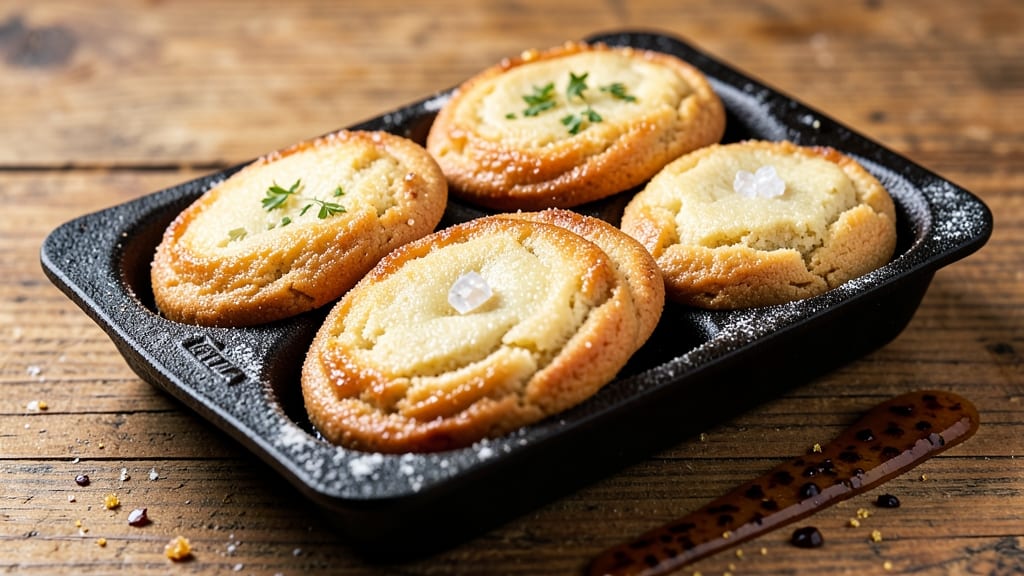
This cast iron shortbread cookie mold recipe transforms simple ingredients into buttery, crisp-edged cookies with vanilla-infused streaks—thanks to the even heat distribution of cast iron. The secret lies in chilling the dough thoroughly and baking at a precise 325°F for that signature texture.
I developed this method after discovering how cast iron's natural conductivity creates perfectly golden edges without burning the centers.
What sets these cookies apart is the cast iron mold, which imparts a subtle rustic character while ensuring uniform thickness. The dough's high butter content (using European-style butter for extra richness) creates that signature shortbread crunch, while vanilla bean paste adds depth.
Unlike traditional shortbread, these cookies have distinctive ridges from the mold, making them visually striking as well as delicious.
The result is a batch of cookies that are crisp around the edges and tender in the middle, with pockets of vanilla flavor throughout. They stay fresh for days in an airtight container, making them perfect for gifting or holiday baking.
The cast iron mold also doubles as a serving dish, adding an elegant touch to your presentation.
This recipe is ideal for those who appreciate restaurant-quality baking at home without the fuss. The process is straightforward, but the outcome is anything but ordinary—each bite delivers that perfect balance of buttery richness and vanilla sweetness. Let's get started on creating these showstopping cookies.
Ingredients for cast iron shortbread cookie mold
High-quality butter, vanilla, and a cast iron mold create restaurant-worthy shortbread cookies with signature ridges.
| Ingredient | Amount | Notes |
|---|---|---|
| European-Style Unsalted Butter 🧈 | 1 cup | Cold and cubed for proper creaming |
| Granulated Sugar 🍚 | ½ cup | Superfine preferred for even texture |
| Vanilla Bean Paste 🌿 | 1 tbsp | High-quality for authentic vanilla flavor |
| All-Purpose Flour 🌾 | 2 cups | Sifted for light, airy dough |
| Diamond Crystal Kosher Salt 🧂 | ½ tsp | Fine grain for even distribution |
| Cast Iron Shortbread Cookie Mold 🔥 | 1 whole | Seasoned and preheated |
| Large Egg Yolk 🥚 | 1 whole | For binding and richness |
| Vanilla Extract 🍯 | ½ tsp | Pure extract for added depth |
| Almond Extract 🌰 | ¼ tsp | Optional, for nutty undertone |
| Toasted Slivered Almonds 🥜 | ¼ cup | For garnish and crunch |
The European-style unsalted butter is non-negotiable here—it contains more fat and less water than regular butter, ensuring that signature shortbread crunch. Plugrá or President brands are ideal, but any high-fat butter will work. For the vanilla, Madagascar bourbon vanilla bean paste delivers the most complex flavor profile, though a quality extract will suffice. The cast iron mold should be seasoned with flaxseed oil before first use to prevent sticking—apply a thin layer, bake at 350°F for 1 hour, then wipe clean. If you don't have a mold, a standard shortbread cutter will create similar ridges, though the texture won't be identical.
No vanilla bean paste? Double the vanilla extract and add a pinch of bourbon for depth. Substituting almond extract? Use half the amount—it's potent. For the almonds, toast them in a dry pan over medium heat for 3-4 minutes until fragrant, then chop coarsely. If you're avoiding nuts, omit them entirely—they're purely decorative. The flour should be sifted with the salt to eliminate lumps, which can create uneven baking. For gluten-free adaptation, swap the all-purpose flour for a 1:1 gluten-free blend, but expect slightly denser cookies.
The dough must chill for at least 2 hours, or overnight for best results. Wrap tightly in plastic wrap and refrigerate to prevent condensation. Once baked, let the cookies cool in the mold for 5 minutes before transferring to a wire rack—this preserves their shape. Store in an airtight container with parchment paper between layers to maintain crispness for up to 5 days. For gifting, package cookies individually in cellophane bags tied with twine. The cast iron mold can be reused indefinitely if properly cared for—just hand-wash with hot, soapy water and dry thoroughly to prevent rust.
Why You'll Love This Recipe
- No-Fuss Mixing: Between us, this dough comes together in three minutes—just cream the butter and sugar, fold in the vanilla paste, then stir in the flour. No electric mixer needed, no overworking the dough. That kosher salt? It’s the secret to keeping the texture tender without tasting salty.
- Buttery Vanilla Bliss: Honestly, the vanilla bean paste takes this from "good" to "I’ll bake this twice a week." The cast iron molds? They crisp the edges just enough to hold the buttery richness, while the center stays pillowy. It’s the kind of cookie that disappears faster than my willpower at a bakery.
- Holiday or Zero Effort: Here’s what sold me—these work for anything. Fancy dinner? Roll them in powdered sugar. Quick snack? Eat them straight from the mold. My in-laws thought I slaved over them for Christmas; I just pressed dough into a hot pan and let the cast iron do the work.
- Leftovers? More Like "Never Enough": Between us, this recipe yields way more than you’ll eat at once. The good news? They stay fresh for days in an airtight container, and the flavor only gets better. (Yes, even on a Tuesday night.) Plus, the butter and sugar are cheap staples—no fancy ingredients to break the bank.
Step-by-step instructions for cast iron shortbread cookie mold recipe
Here's how to achieve buttery, crunchy shortbread with professional precision using your cast iron mold.
Cream the Butter and Sugar to Lighten the Dough
Place the 1 cup European-Style Unsalted Butter (cubed and cold) in a stand mixer fitted with the paddle attachment. Beat on medium speed until the butter is completely creamed and pale, about 3-4 minutes. This process incorporates air, which is essential for creating that signature light, crumbly texture.
Gradually add the 0.5 cup Granulated Sugar while continuing to mix on medium speed. The mixture should become smooth and fluffy, nearly doubling in volume. Stop mixing when the sugar is fully incorporated and the texture resembles wet sand. This step ensures a tender crumb rather than a dense one.
Incorporate Extracts and Vanilla Bean Paste
Add the 1 tbsp Vanilla Bean Paste, 0.5 tsp Vanilla Extract, and 0.25 tsp Almond Extract to the butter-sugar mixture. Mix on low speed for 30 seconds until the extracts are evenly distributed. The vanilla bean paste will add depth of flavor, while the extracts enhance the aromatic profile.
This is where the dough begins to develop its signature vanilla notes. The almond extract, though subtle, adds a delicate nutty undertone that complements the buttery richness. Be sure to scrape down the sides of the bowl to ensure all ingredients are fully incorporated.
Combine Dry Ingredients for a Light Texture
In a separate bowl, whisk together the 2 cups All-Purpose Flour and 0.5 tsp Diamond Crystal Kosher Salt. Sift the flour mixture directly into the mixer with the wet ingredients. Mix on low speed for 1-2 minutes until the dough just comes together. Avoid overmixing, as this can develop gluten and result in a tougher texture.
The dough should be soft but not sticky—if it feels too dry, add 1 teaspoon of cold water to help it bind. Press the dough into a cohesive disk and wrap it tightly in plastic wrap. Chill in the refrigerator for at least 1 hour (or up to 24 hours) to firm up and improve texture.
Prepare and Fill the Cast Iron Mold
Preheat your oven to 350°F. Remove the dough from the refrigerator and let it sit at room temperature for 10 minutes to soften slightly. Press the dough evenly into the Cast Iron Shortbread Cookie Mold, packing it firmly but not overcompressing. Use a small offset spatula to smooth the top and ensure even distribution.
The mold should be filled completely, with no gaps or air pockets. Place the filled mold on a parchment-lined baking sheet to catch any potential spills. Bake for 20-25 minutes until the edges are golden brown and the center feels set when pressed lightly with a finger.
Cool, Garnish, and Serve
Remove the mold from the oven and let it cool in the pan for 5 minutes. Carefully transfer the mold to a wire rack and allow it to cool completely for 15-20 minutes. The shortbread will firm up as it cools, making it easier to release from the mold.
Once fully cooled, gently tap the mold to loosen the cookies and invert them onto a serving plate. Arrange the 0.25 cup Toasted Slivered Almonds on top for a decorative garnish and added crunch. Serve at room temperature for the best texture—these cookies are best enjoyed within 2-3 days for maximum freshness.
Pro Tips For Making Cast Iron Shortbread Cookie Mold
- Chill the Dough Properly: I learned this the hard way—skipping the fridge for 24 hours means your cast iron will fight you. Press the dough into the mold when it’s cold enough to hold its shape but not so stiff it cracks (think firm plastic, not rock). If it’s too warm, the cookies will spread unevenly in the mold, and you’ll spend 10 minutes prying them out later.
- Use Cold Butter, Not Room-Temp: European-style butter has more water than American brands, so if it’s even slightly soft, your shortbread will turn out greasy instead of crisp. Grate the butter into the sugar (yes, grate it—it mixes faster) and keep everything in the fridge until the last minute. The texture difference is night and day.
- Salt the Mold Before Pressing: This isn’t just about flavor—it’s about release. Lightly coat your cast iron mold with flour, then sprinkle a thin layer of kosher salt (about ¼ teaspoon) over the bottom and sides. Press the dough in, then flip the mold to distribute the salt evenly. The salt creates a barrier so the cookies don’t stick like glue, and it adds a subtle, even seasoning.
- Bake Low and Slow: Cast iron holds heat like a grudge, so start your oven at 325°F (not 350°F—trust me) and bake for 12–15 minutes, rotating the mold halfway. The edges will look set before the centers, but if you pull them out too soon, they’ll stay dense. A toothpick should come out clean, but the cookies should still feel slightly soft—shortbread firms up as it cools.
Dietary considerations for this dish
Gluten-Free Adaptation
Swap the 2 cups all-purpose flour for a 1:1 gluten-free baking flour blend like Bob's Red Mill or King Arthur. These blends contain xanthan gum, which mimics gluten's binding properties.
For best results, chill the dough for at least 2 hours—gluten-free doughs can be crumbly, so extra firming helps maintain shape in the cast iron mold. 🌾
Dairy-Free Substitutions
Replace the 1 cup European-style butter with 1 cup dairy-free butter like Miyoko's or Earth Balance. For richness, add 2 tablespoons coconut oil to the dough. Since dairy-free butters often contain less fat, the texture may be slightly less crumbly, but the flavor remains delicious.
The cast iron's even heat helps compensate for any slight density differences. 🧈
Nut-Free Options
Skip the toasted slivered almonds entirely—they're purely decorative. For a nut-free alternative, sprinkle crushed freeze-dried raspberries or pink Himalayan salt flakes on top after baking. These add visual contrast without nuts while keeping the cookies safe for those with allergies. The vanilla flavor remains the star of the show. 🥜
Lower Sugar Adaptation
Reduce the 0.5 cup granulated sugar to 0.35 cup and add 2 tablespoons monk fruit sweetener (like Lakanto) to maintain sweetness without spiking blood sugar. The texture will still be crumbly, but slightly denser.
Bake for 1-2 minutes longer to ensure the edges brown properly—the cast iron's heat retention helps achieve this even with less sugar. 🍚
Egg-Free Binding
Replace the 1 large egg yolk with 1 tablespoon ground flaxseed mixed with 3 tablespoons water (let sit for 5 minutes to thicken). This flax "egg" provides binding without eggs.
The dough may feel slightly wetter, so chill it for at least 3 hours to firm up before pressing into the mold. The cast iron's heat will still create those signature crisp edges. 🥚
Nutrition facts
Frequently asked questions
Why use a cast iron mold for shortbread cookies?
Cast iron provides even heat distribution, creating those signature crisp edges while keeping the centers tender. The natural ridges from the mold add visual appeal and texture, plus the iron retains heat longer, ensuring perfect baking every time.
Can I make this dough ahead of time?
Wrap the dough tightly in plastic and refrigerate for up to 24 hours before baking. Chilling enhances the flavor and makes pressing into the mold easier. For best results, let it sit at room temperature for 10 minutes before shaping.
How do I prevent my cookies from sticking to the cast iron mold?
Lightly dust the mold with flour or cornstarch before pressing in the dough, or use a thin layer of vegetable oil (not butter). Never overfill the mold, and tap it gently on the counter before removing the cookies. A well-seasoned cast iron mold will release cookies more easily over time.
What if my dough cracks when baking?
Cracking usually means the dough was too warm or overmixed. Chill the dough longer (3+ hours) and avoid handling it too much. If cracks appear, brush with melted butter after baking for extra richness. The cast iron's heat helps prevent this, but proper dough prep is key.
Can I use this mold for other cookie recipes?
Yes! This mold works beautifully for gingersnaps, lemon bars, or even cheese straws. Adjust baking times based on the recipe—shortbread needs 20-25 minutes at 350°F, while denser doughs may require 15-20 minutes. The cast iron's versatility makes it a kitchen essential.