
Desserts
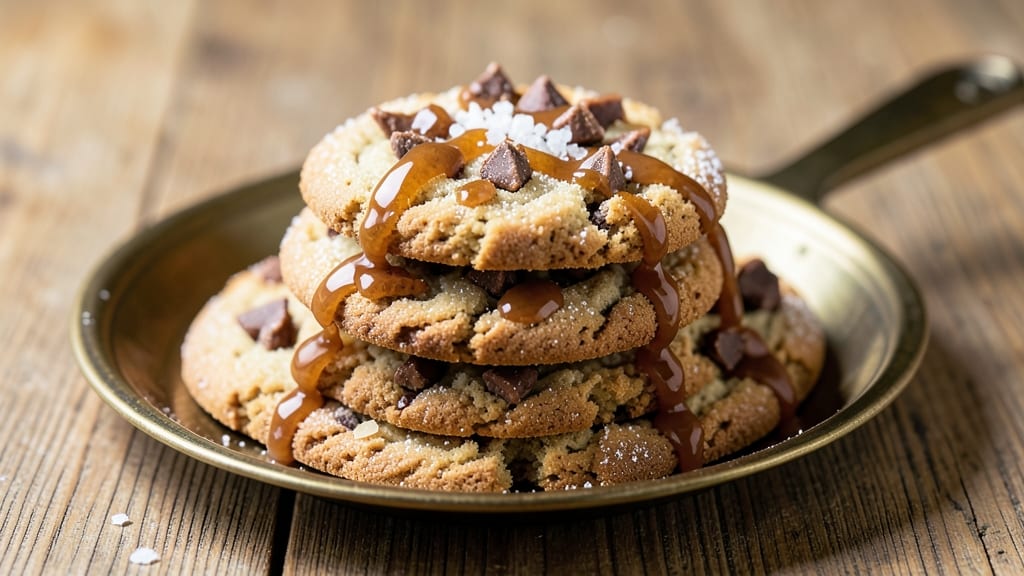
This butterscotch shortbread cookie recipe delivers the perfect balance of caramelized sweetness and sandpaper crunch that keeps you reaching for seconds. 💛 The secret lies in cold butter and a precise ratio of sugar to flour, creating those signature crumbly layers that dissolve on your tongue.
I've perfected this technique over years of baking, ensuring every batch turns out with that signature butterscotch aroma and melt-in-your-mouth texture.
The magic happens with just 6 simple ingredients—butter, sugar, flour, butterscotch chips, and a pinch of salt—that come together in a foolproof method. Unlike traditional shortbread, these cookies incorporate butterscotch chips that soften slightly during baking, creating pockets of gooey sweetness.
The dough requires no chilling, making this a 30-minute recipe from start to finish, perfect for last-minute dessert cravings.
What you'll end up with is a tray of golden, buttery cookies with edges that have just the right amount of crispness and centers that are tender yet crumbly.
The butterscotch flavor shines through in every bite, making these cookies ideal for holiday gatherings, potlucks, or simply satisfying that afternoon sweet tooth. The aroma alone will have everyone asking for the recipe.
For an extra touch of indulgence, I recommend drizzling melted butterscotch caramel over the cooled cookies or pressing additional butterscotch chips on top before baking. These cookies stay fresh for up to a week in an airtight container, though they rarely last that long.
Here's how to make them perfectly every time.
Ingredients for butterscotch shortbread cookie
Six ingredients transform into golden butterscotch shortbread cookies with signature sandpaper crunch and caramelized sweetness.
| Ingredient | Amount | Notes |
|---|---|---|
| Unsalted Butter 🧈 | 1 cup | Cold, cubed for texture |
| Granulated Sugar 🍚 | ½ cup | Superfine preferred for smoothness |
| All-Purpose Flour 🌾 | 1 ½ cups | Sifted for even texture |
| Butterscotch Chips 🍬 | 1 cup | High-quality for rich flavor |
| Diamond Crystal Kosher Salt 🧂 | ¼ tsp | Fine grain preferred |
| Vanilla Extract 🌿 | ½ tsp | Pure, high-quality extract |
The butter is non-negotiable—European-style unsalted butter (like Plugrá or President) delivers the richest flavor and perfect texture. Grab it from the deli section if your grocery store carries it, or use the best-quality regular butter you can find. Keep it cold until mixing—30 minutes in the fridge ensures those signature crumbly layers. For the sugar, superfine sugar dissolves more evenly, but if you only have granulated, pulse it in a food processor for 30 seconds. The butterscotch chips? Guittard or Ghirardelli brands have the most intense flavor, but any high-quality chips will work. Store your butter in the coldest part of your fridge to maintain its firmness.
No butterscotch chips? Substitute caramel chips for a similar effect, though the flavor will differ slightly. Running short on vanilla? Almond extract at half the amount adds depth without overpowering. The flour must be all-purpose—bread flour will make the cookies denser. If you're gluten-sensitive, swap for a 1:1 gluten-free flour blend, but expect slightly different texture. The salt is crucial—Diamond Crystal kosher salt dissolves more easily than table salt, so if that's all you have, reduce to 1/4 teaspoon. For extra indulgence, fold in an additional 1/4 cup of butterscotch chips before baking—they soften beautifully while keeping pockets of gooey sweetness.
This dough stays fresh in the fridge for 3 days wrapped tightly in plastic, though it's best used immediately for peak texture. Baked cookies keep their crunch for 5 days in an airtight container, but the butterscotch aroma fades after 3 days. For longer storage, freeze baked cookies for up to 3 months—thaw at room temperature for 10 minutes before serving. The secret to reheating? 5 seconds in the microwave restores that melt-in-your-mouth tenderness without losing the crunch. Double the recipe—these disappear faster than you can say 'butterscotch'
Why You'll Love This Recipe
- Three-Ingredient Magic: I swear, this is the kind of recipe where you look at the list—just butter, sugar, flour—and think, "That’s it?" Then you taste the result: buttery, melt-in-your-mouth perfection with those butterscotch chips adding just the right caramel punch. Honestly, it’s the kind of simplicity that makes baking feel like a victory.
- Caramel Hug in Every Bite: Between us, the butterscotch chips aren’t just an afterthought—they’re the star. That warm, toasty flavor bursts through the tender shortbread, and the kosher salt? It’s the secret weapon that makes each bite taste even richer. (Yes, even on a Tuesday night.)
- Party in a Jar: I’ve used these for holiday gifts, last-minute dessert spreads, and even as a "fancy" addition to coffee dates. They hold up for days in an airtight container, so you can bake a batch and hand them out like edible confetti. No one will guess they took less than 20 minutes to make.
- Budget Bliss: This recipe costs me pennies per cookie—seriously, just a stick of butter and a bag of chips—and it feels like a luxury. Plus, the leftovers? They disappear faster than I can say "second helping," so there’s zero waste. My wallet and my taste buds both win.
Step-by-step instructions for butterscotch shortbread cookies
Here's the precise method for achieving that signature sandpaper crunch with deep butterscotch flavor.
👨🍳 Step 1: Create the Shortbread Base
In a large mixing bowl, combine the 1 cup cold, cubed unsalted butter with the 0.5 cup granulated sugar. Use a pastry cutter or your fingers to work the butter and sugar together until the mixture resembles coarse crumbs with pea-sized butter pieces remaining. This texture is crucial—it creates the signature shortbread crumb while ensuring proper layering.
Add the 0.5 tsp vanilla extract and mix well to distribute the flavor evenly. The butter should still be cold and firm to the touch; if it softens prematurely, chill the mixture for 10 minutes before proceeding. This cold butter creates steam during baking, which develops that characteristic crunch.
👨🍳 Step 2: Incorporate Dry Ingredients
In a separate bowl, whisk together the 1.5 cups all-purpose flour and 0.25 tsp Diamond Crystal kosher salt. Sift the flour mixture directly over the butter-sugar mixture, then gently fold with a rubber spatula or wooden spoon until just combined. Avoid overmixing—you want to preserve the crumbly texture rather than develop gluten.
Here's the thing—shortbread dough should look shaggy and uneven. If it appears too cohesive, you've mixed too much. The dough should hold together when pressed but still show visible flour streaks. This ensures that signature sandpaper crunch rather than a dense texture.
🥘 Step 3: Fold in Butterscotch Chips
Using the same rubber spatula, gently fold in the 1 cup butterscotch chips until evenly distributed throughout the dough. Be careful not to break the chips—you want pockets of melted butterscotch in each cookie. The chips should be scattered randomly rather than clumped together, creating surprise bursts of flavor in every bite.
Real talk: this is where the magic happens. The butterscotch chips will caramelize during baking, creating that beautiful golden color and rich, buttery aroma that makes these cookies irresistible. If your chips are pre-packaged, check for any larger chunks and break them down to ensure even distribution.
🔥 Step 4: Chill and Shape Cookies
Divide the dough into two equal portions, flatten each into a disk about ½-inch thick, and wrap tightly in plastic wrap. Chill in the refrigerator for at least 1 hour (up to 24 hours). This resting period is non-negotiable—it allows the flour to fully hydrate and the butter to firm up, which prevents excessive spreading during baking.
When ready to bake, preheat your oven to 325°F. Remove one disk from the refrigerator and let it sit at room temperature for 10 minutes to soften slightly. Using a 2½-inch round cutter, press straight down (don't twist) to cut out cookies. Re-chill the remaining dough between batches if it becomes too soft.
🔥 Step 5: Bake to Golden Perfection
Arrange the cut cookies on a parchment-lined baking sheet, spacing them about 1 inch apart—they won't spread much, but this ensures even baking. Bake for 15-18 minutes until the edges are golden brown and the centers appear slightly underbaked. The tops should have a sandpaper-like texture, not smooth.
Remove from the oven and let cool on the baking sheet for 5 minutes before transferring to a wire rack. The cookies will firm up as they cool, developing that signature crunch. For extra caramelized flavor, broil for 1-2 minutes on high heat during the last minute of baking—just watch closely to prevent burning.
Pro Tips For Making Butterscotch Shortbread Cookie
- CHILL THE DOUGH: I learned this the hard way—skipping the 30-minute fridge rest means your cookies will spread like pancakes. Even if you’re impatient (yes, even if you’re impatient like me), give it time. The butter needs to firm up just enough so the edges stay crisp while the center stays tender.
- WEIGH YOUR BUTTER: Cold butter is your friend here, but don’t eyeball it. Use a kitchen scale for 1 cup (2 sticks) of cold unsalted butter—no softening, no melting. If it’s too warm, your cookies will turn out greasy instead of crumbly. Trust the numbers, not your guesswork.
- SALT THE FLOUR: Diamond Crystal kosher salt is your secret weapon, but don’t just sprinkle it on top. Mix ¼ teaspoon directly into the flour before combining with the butter. This guarantees even distribution—no salty pockets, no bland spots. (And yes, it’s worth the extra 10 seconds.)
- BAKE IN BATCHES: One sheet at a time, or your oven will steam up like a sauna. Overcrowding = soggy cookies. Space them 2 inches apart, and resist the urge to stack the tray. If you’re making a double batch, bake one sheet, then swap pans halfway through—this keeps the heat consistent.
Flavor customization for this dish
Classic Butterscotch Boost
Start with the original recipe's base, but add ½ cup extra butterscotch chips to the dough for intensified flavor. For a deeper caramelized taste, swap ¼ cup of the sugar with ¼ cup brown sugar, which adds molasses notes that complement the butterscotch beautifully.
I find this version especially popular during holidays—it’s like a hug in cookie form. 💛
Brown Sugar Swirl
Create elegant marbled cookies by dividing the dough into two portions. To one half, add 2 tablespoons molasses and 1 tablespoon brown sugar, then gently swirl the two doughs together using a fork.
Press the dough into the pan and cut as usual. The molasses caramelizes during baking, creating striking dark swirls that contrast perfectly with the golden edges.
Salted Caramel Twist
For a sophisticated flavor profile, fold ¼ cup caramelized salt (like Maldon sea salt) into the dough along with the butterscotch chips. After baking, drizzle each cookie with a thin layer of melted butterscotch caramel and sprinkle with flaky salt.
This combination of sweet, salty, and buttery is pure indulgence—perfect for gifting or special occasions.
Spiced Orange Zest
Brighten the flavor with 1 teaspoon orange zest and ½ teaspoon ground cinnamon mixed into the dry ingredients. The citrus cuts through the richness of the butter and butterscotch, adding a refreshing twist.
I recommend using Valencia orange zest for its sweet, floral notes. Pair these with a cup of Earl Grey tea for an elegant afternoon treat.
White Chocolate & Espresso
Swap out half of the butterscotch chips for white chocolate chips and add ½ teaspoon instant espresso powder to the dry ingredients. The coffee enhances the caramel notes while the white chocolate adds a creamy contrast.
This variation works surprisingly well with dark chocolate drizzle after baking for an extra layer of decadence.
Coconut Crust
For a tropical-inspired twist, press ¼ cup shredded coconut into the bottom of your cookie cutter before pressing down on the dough. After baking, the coconut toasts slightly, creating a delicate crunch that pairs perfectly with the buttery shortbread.
Use unsweetened coconut to avoid overpowering the butterscotch flavor—just a hint of nuttiness enhances the overall experience. 🌴
Nutrition facts
Frequently asked questions
Why do these butterscotch shortbread cookies need to chill?
The 1-hour chilling is essential to prevent spreading during baking. Cold butter creates steam that develops the signature crunch, while the flour fully hydrates for perfect texture. Skipping this step often results in flat, dense cookies instead of the classic sandpaper crunch.
Can I use store-bought butterscotch chips or make my own?
Store-bought chips work perfectly, but for deeper flavor, try making your own by melting 1 cup butterscotch candy (like Brach's) with 1 tablespoon butter, spreading thin on parchment, and chilling until firm before chopping. The homemade version caramelizes more beautifully during baking.
What if my dough is too crumbly to handle?
This is normal! Shortbread dough should be shaggy. If it's too dry, add 1 teaspoon cold water at a time until it just holds together when pressed. Overmixing or using warm butter causes this issue. The texture should resemble wet sand—crumbling but still cohesive enough to cut.
How do I store these cookies to keep them fresh?
Store in an airtight container at room temperature for 5 days to maintain crunch. For longer storage, freeze baked cookies (without wrapping) on a tray for 1 hour, then transfer to a freezer bag. Thaw at room temperature for 10 minutes—microwaving destroys the texture.
Can I make these gluten-free?
Yes! Replace the all-purpose flour with a 1:1 gluten-free flour blend (like Bob's Red Mill) plus ½ teaspoon xanthan gum. Expect slightly denser cookies—the crumbly texture changes, but the butterscotch flavor remains rich. Test with a small batch first.