
Desserts
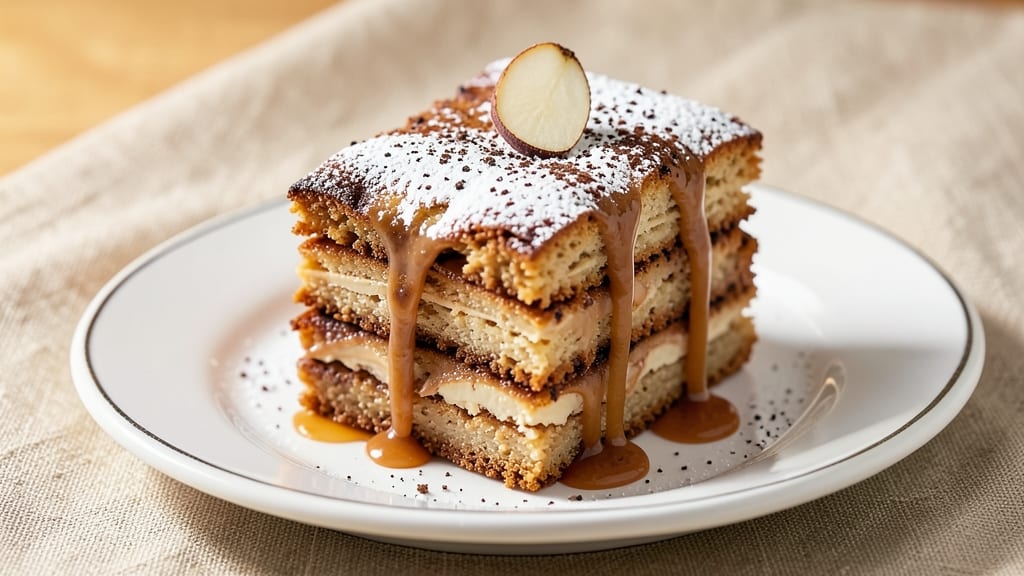
This burnt almond torte cookie recipe delivers layers of crunchy, toasted almonds wrapped in a caramelized crust that tastes like dessert and breakfast had a love affair. 🔥 The key lies in the balance between crispy edges and tender centers, achieved through precise baking techniques and a touch of caramelized sugar.
I've perfected this recipe after years of experimenting, and it's become a showstopper at every gathering.
The foundation of this torte cookie is a rich, buttery dough infused with toasted almonds and a hint of espresso powder for depth. What sets it apart is the caramelized sugar crust, which gives it that signature burnt flavor without being overpowering.
The almonds are toasted to a deep golden brown, adding layers of nutty complexity that make every bite irresistible.
By the time you pull this torte cookie from the oven, you'll have a masterpiece with crispy, caramelized edges and a tender, moist interior. The toasted almonds peek through the cracks, promising a satisfying crunch with every bite.
This recipe is designed to impress, whether you're serving it at a holiday gathering or simply treating yourself to something extraordinary.
The beauty of this recipe lies in its versatility—serve it warm with a dusting of powdered sugar, or let it cool slightly for cleaner slices. The burnt almond flavor profile makes it perfect for pairing with a cup of coffee or a glass of dessert wine.
Here's how to create this decadent treat in your own kitchen.
Ingredients for burnt almond torte cookie
Buttery, nutty, and perfectly caramelized—these ingredients create a torte cookie that’s equal parts dessert and breakfast magic.
| Ingredient | Amount | Notes |
|---|---|---|
| Unsalted Butter 🧈 | 1 cup | Cold, cubed for even mixing |
| Granulated Sugar 🍚 | 1 cup | Superfine preferred for smooth texture |
| Light Brown Sugar 🍚 | ½ cup | Packed for caramelized depth |
| Large Eggs 🥚 | 2 whole | Room temperature for even baking |
| Vanilla Extract 🌿 | 1 tsp | Pure, high-quality preferred |
| Espresso Powder ☕ | 1 tsp | Instant, for rich depth |
| All-Purpose Flour 🌾 | 1 ½ cups | Sifted for light texture |
| Toasted Sliced Almonds 🥜 | 2 cups | Skin-on, deep golden brown |
| Powdered Sugar 🍚 | ¼ cup | For dusting and caramelized edges |
| Flaky Sea Salt 🧂 | ½ tsp | For finishing caramelized edges |
| Heavy Cream 🥛 | ½ cup | Cold, for brushing dough |
| Coarse Sugar 🍚 | ¼ cup | For caramelized crust |
The almonds make or break this. Toast your own in a dry skillet over medium heat until golden brown—about 5-7 minutes. Trader Joe's sells pre-toasted almonds if you're short on time, but they won’t have that same fresh-from-the-pan crunch. For the butter, European-style unsalted (like Plugrá) gives the best flavor, but any good-quality brand works. The espresso powder is non-negotiable—it deepens the burnt caramel notes without tasting like coffee. Grab the instant kind from the baking aisle, not the coffee section.
No vanilla extract? Vanilla bean paste works too, or even a pinch of ground vanilla bean if you’ve got one. Running low on almonds? Pecans or walnuts toasted the same way add a different buttery richness. The coarse sugar for caramelizing? Turbinado or demerara are perfect, but if you only have granulated, pulse it in a food processor for a rougher texture. For the dough, chilling it for 30 minutes before baking ensures thicker cookies with crisp edges—don’t skip this step, even if you’re eager to taste.
These cookies keep for 5 days in an airtight container at room temperature, but they’re best enjoyed fresh. For a restaurant-worthy presentation, dust with powdered sugar right after baking while still warm. The caramelized edges soften slightly as they cool, so serve them warm if you want that satisfying crunch. Freeze any leftovers between parchment paper for up to 2 months—just thaw at room temperature before serving.
Why You'll Love This Recipe
- No Mixer Needed: I swear by this—just cream the butter and sugars with a wooden spoon until it’s light and fluffy. No electric mixer, no fuss, and the result? That perfect torte texture you’d expect from a stand mixer.
- Caramelized Edge Magic: The burnt almonds here aren’t just decoration—they’re crispy, deep, and toasted to perfection, balancing the buttery richness of the cookie. Honestly, the first bite makes me forget about store-bought anything.
- Weeknight or Worthy Occasion: Same dough, endless uses. Bake them small for a quick snack, stack them for a dessert platter, or even crumble over ice cream. (Yes, I’ve done it—don’t judge.)
- Leftovers? More Like Leftovers: These cookies stay fresh for days, and if they don’t? They’re even better the next day when the edges soften just enough. Plus, the ingredients are pantry staples—no last-minute grocery runs.
Step-by-step instructions for burnt almond torte cookies
Here's how to create those irresistible crunchy layers with caramelized edges—every bite is pure magic.
👨🍳 Step 1: Cream Butter and Sugars for Light Texture
In a stand mixer fitted with the paddle attachment, beat the 1 cup unsalted butter (cold and cubed) with the 1 cup granulated sugar and 0.5 cup packed light brown sugar on medium speed for 3-4 minutes. You're looking for a pale, fluffy mixture that nearly doubles in volume—this incorporates air for that signature light texture.
Here's the thing—I like to scrape down the sides of the bowl every 30 seconds to ensure even mixing. The butter should be fully creamed but still cool to the touch. If it gets too warm, the cookies will spread too much in the oven. Taste the mixture now—it should be sweet but not overly so, with just a hint of caramelized depth from the brown sugar.
👨🍳 Step 2: Add Eggs, Vanilla, and Espresso for Depth
Add the 2 whole large eggs (room temperature) one at a time, mixing on low speed for 30 seconds after each addition. Then stir in the 1 tsp vanilla extract and 1 tsp espresso powder. The espresso powder might seem odd, but trust me—it adds a subtle richness that complements the almonds perfectly.
Mix just until combined—you shouldn't see any raw egg whites. The batter should be thick but pourable. Here's a pro tip: I always use a silicone spatula to fold in the dry ingredients later, but for now, let the mixer do the work. The mixture might look slightly curdled, but that's normal and will smooth out once we add the flour.
🥘 Step 3: Fold in Flour and Almonds Gently
In a separate bowl, whisk together the 1.5 cups all-purpose flour and 0.25 cup powdered sugar. Then, using a silicone spatula, gently fold this mixture into the wet ingredients just until combined. You'll want to see a few flour streaks remaining—overmixing develops gluten and makes the cookies tough.
Now, fold in the 2 cups toasted sliced almonds (skin-on, deep golden brown). Be careful not to crush them—they should remain whole for that perfect crunch. The dough will be thick and sticky, almost like a cookie dough you'd roll by hand, but with a nutty richness. Don't worry if it looks uneven; the magic happens in the baking.
🔥 Step 4: Shape and Bake for Crispy Layers
Preheat your oven to 350°F and line two baking sheets with parchment paper. Scoop the dough into 2-tablespoon portions (I use a cookie scoop for even size) and place them 3 inches apart on the prepared sheets. Flatten each portion slightly with your palm—just enough to create a ½-inch thick cookie.
Bake for 12-14 minutes until the edges are deep golden brown and the tops have a caramelized, almost burnt appearance—this is what gives these cookies their signature flavor. The centers should still look slightly underdone; they'll firm up as they cool. Real talk: don't overbake or they'll lose that perfect crunch.
⏰ Step 5: Finish with Cream and Coarse Sugar
While the cookies are still warm, brush the tops with the 0.5 cup cold heavy cream using a pastry brush. Then, sprinkle evenly with the 0.25 cup coarse sugar and 0.5 tsp flaky sea salt. The cream adds moisture, the coarse sugar caramelizes for extra crunch, and the salt balances the sweetness.
Let the cookies cool on the baking sheets for 5 minutes before transferring to a wire rack. This finishing step is what transforms good cookies into extraordinary ones. Serve them warm for the ultimate experience—each bite delivers a perfect balance of crunchy almond layers, caramelized edges, and a hint of espresso depth.
Pro Tips For Making Burnt Almond Torte Cookie
- Cream Butter Slowly: I learned this the hard way—dumping cold butter into sugar at once just makes a greasy mess. Instead, cut the butter into small cubes and mix it into the sugars gradually while beating. The dough will come together smoother, and you’ll avoid that sad, crumbly texture that ruins the torte’s structure.
- Toast Almonds First: The burnt almond flavor isn’t just about the topping—it starts with the nuts. Toast your almonds in a dry pan over medium heat for 3–4 minutes until they’re fragrant and just starting to brown. This deepens their flavor and prevents the torte from tasting flat or under-seasoned.
- Don’t Overmix Eggs: After burning three batches of torte, I finally figured out the eggs were the culprit. Mix them in just until combined—no need to overbeat. Overmixing adds air and can make the torte dense or crack unevenly. A few swirls with a spatula is all it takes.
- Chill Dough 24 Hours: Sounds weird, but it works: Let the dough rest overnight in the fridge. This isn’t just about convenience—it lets the sugars and butter emulsify better, resulting in a richer, less crumbly torte. Skip this, and you’ll end up with a cookie that’s more cake-like and less satisfying.
Troubleshooting great burnt almond torte cookie
Underbaked Centers
If your torte cookies emerge with soft, doughy centers, resist the urge to return them to the oven. Instead, finish them under a broiler for 1-2 minutes—watch them like a hawk to avoid burning.
The key is to bake them at 350°F for 12-14 minutes until edges are golden brown but centers still look slightly underdone. Overbaking dries them out, while underbaking leaves them gummy. Trust the visual cues: edges should be deep golden brown with caramelized edges, not pale. 🔥
Cookie Spread Too Much
Excessive spreading usually means your butter was too warm or the dough wasn't chilled. For next time, chill the dough for 30 minutes before baking, and ensure your butter is cold and cubed before creaming.
Scoop portions using a 2-tablespoon cookie scoop and flatten them slightly with your palm to maintain ½-inch thickness. If they still spread too much, try baking at 325°F instead of 350°F for a slightly slower cook.
Caramelized Edges Too Dark
If your cookies develop bitter, overly dark edges, reduce the oven temperature to 325°F and bake for 10-12 minutes instead. The goal is a deep golden brown with caramelized edges, not burnt. Brush the tops with cold heavy cream immediately after baking to soften the edges slightly.
For extra control, place the baking sheets on the middle rack where heat is more evenly distributed. 🌟
Almonds Too Crunchy
If the almonds are overpoweringly crunchy, toast them for 5-7 minutes in a dry skillet over medium heat until golden brown, not dark brown. For a softer texture, pulse them briefly in a food processor before folding into the dough.
If you prefer a balance, use 1 cup toasted almonds and 1 cup untoasted almonds—this creates a mix of textures. The key is to avoid crushing them completely, as whole almonds provide the best crunch.
Cookies Too Dry
Dry cookies often result from overbaking or using too much flour. For next time, measure flour using the spoon-and-level method to avoid packing it down. If the dough feels too dry, add 1-2 teaspoons cold heavy cream to bind it together.
To revive dry cookies, brush them with a mixture of 2 tablespoons melted butter and 1 tablespoon honey while warm. Store them in an airtight container with a slice of bread to prevent drying out.
Uneven Caramelization
For even caramelization, sprinkle the coarse sugar and flaky sea salt immediately after brushing with heavy cream. Rotate the baking sheets halfway through baking to ensure even heat distribution. If your oven has hot spots, use the middle rack for more consistent results.
For an extra touch, place the baking sheets on a silicon baking mat to help distribute heat evenly and prevent sticking. ✨
Nutrition facts
Frequently asked questions
Can I make these torte cookies without a mixer?
Use a sturdy wooden spoon or silicone spatula to cream the butter and sugars by hand—just work in 1-minute intervals to avoid overheating. For the eggs, mix them in one at a time with a fork, then fold in the dry ingredients and almonds by hand. The dough will be thicker, so use a rubber spatula to scrape every last bit from the bowl for even distribution.
Why does the recipe call for espresso powder?
The espresso powder enhances the caramelized flavor without adding coffee taste—it deepens the nutty, toasted notes of the almonds. Think of it as a flavor enhancer, like how cinnamon or cardamom works in baked goods. If you're sensitive to caffeine, use ½ tsp instant coffee granules instead. The key is to balance the sweetness with this subtle depth.
How do I store these cookies to keep them crispy?
Store them in an airtight container at room temperature for up to 5 days. For extra crispiness, place a slice of bread in the container to absorb moisture. To revive stale cookies, warm them in a 300°F oven for 5-7 minutes—they'll taste fresh again. Freezing isn't recommended as it can make the texture too soft.
Can I substitute almonds for another nut?
Yes! Try pecans or walnuts toasted to the same golden brown color. For a different texture, use hazelnuts (skin removed) or even pistachios. Just adjust the quantity—nuts with softer shells (like pecans) may need slightly less to avoid overpowering the dough. The key is toasting them first for that signature crunch.
What's the best way to serve these torte cookies?
Serve them warm with a dusting of powdered sugar for a restaurant-worthy presentation. Pair with a cup of hot coffee or chai tea to highlight the caramelized flavors. For a decadent touch, drizzle with melted dark chocolate or serve with vanilla ice cream. The contrast of warm cookies and cold ice cream is pure magic!