
Desserts
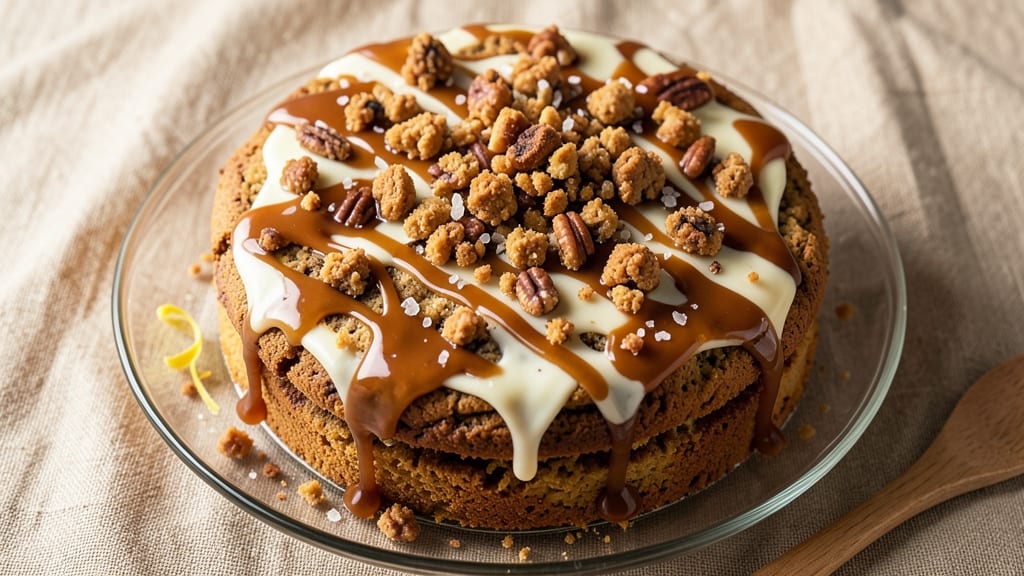
This brown butter cookie caramel crunch cake delivers layers of nutty, toasty richness with rivers of gooey caramel and crisp cookie crunch in every bite. The secret lies in perfectly caramelized butter that transforms into a deep, toasty flavor foundation, while the cookie crunch topping adds satisfying texture contrast.
I've baked this cake dozens of times, refining the technique to ensure moist layers, perfectly set caramel, and a topping that stays crisp even after slicing.
The recipe begins with tender cake layers infused with brown butter's nutty depth, then gets elevated by a caramel filling that creates those signature rivers when sliced.
What makes this cake truly special is the cookie crunch topping - it's not just decoration, but an essential textural element that adds crunch with every bite. The key to success is patience: letting the caramel cool slightly before spreading and chilling the assembled cake overnight for clean slices.
What you'll end up with is a cake that's equal parts indulgent and impressive - rich brown butter flavor, gooey caramel pockets, and crisp cookie crunch all working together in perfect harmony. The nutty depth from the brown butter shines through while the caramel adds sweetness without overpowering.
This is the kind of dessert that will disappear quickly at gatherings but also makes an elegant centerpiece for special occasions.
Perfect for holiday celebrations, birthday parties, or when you want to impress guests with a showstopping dessert. The recipe scales beautifully for larger crowds while maintaining those perfect textures. Here's how to create this decadent cake that combines all your favorite elements into one irresistible treat.
Ingredients for brown butter cookie caramel crunch cake
Twelve ingredients that transform into layers of nutty brown butter magic, rivers of caramel, and crisp cookie crunch.
| Ingredient | Amount | Notes |
|---|---|---|
| Unsalted Butter 🧈 | 2 cups | Browned to deep golden color |
| All-Purpose Flour 🌾 | 3 cups | Sifted for light texture |
| Granulated Sugar 🍚 | 2 cups | Superfine preferred for smoothness |
| Brown Sugar 🍚 | 1 cup | Packed firmly |
| Large Eggs 🥚 | 4 whole | Room temperature |
| Vanilla Extract 🌿 | 2 tsp | Pure Madagascar preferred |
| Baking Powder 🧂 | 1 tsp | Aluminum-free |
| Salt 🧂 | ½ tsp | Fine sea salt |
| Heavy Cream 🥛 | 1 cup | Cold for caramel |
| Granulated Sugar 🍚 | 2 cups | For caramel (separate batch) |
| Chocolate Chips 🍫 | 1 ½ cups | Semi-sweet or milk |
| Oreos 🍪 | 24 whole | Classic or double-stuffed |
| White Chocolate Chips 🍫 | ½ cup | For cookie crunch |
| Pecans 🌰 | ½ cup | Chopped, toasted |
The butter is non-negotiable—unsalted is a must for perfect browning. Land O'Lakes or Plugrá work beautifully, but avoid salted. Brown it to a deep golden color (almost nutty), then cool completely before mixing. The flour? King Arthur or Gold Medal for reliable texture. I always sift mine—trust me on this—it makes the cake layers light as air. For the caramel, use superfine sugar if you can find it, or pulse regular sugar in a food processor for smoother rivers. The Oreo crunch? Classic Oreos only—double-stuffed gets too soft.
No vanilla? Vanilla bean paste works too, but pure extract is ideal. Short on chocolate chips? Melted chocolate bars (same amount) work in a pinch. The cookie crunch topping is where the magic happens—Oreos, white chocolate, and pecans toasted together until golden. Pro tip: Toast the pecans in the same pan you brown the butter—they'll soak up all that nutty flavor. Need a shortcut? Crushed graham crackers can replace Oreos, but the flavor won't be the same. The caramel? Let it cool 10 minutes before spreading—it'll set properly and create those perfect rivers when sliced.
Brown butter loses its magic fast, so make it fresh day-of. Store leftover cake in an airtight container at room temp for 3 days, or in the fridge for 1 week. The crunch topping stays crisp if you chill the cake overnight—worth the wait! Freeze for 3 months if you're prepping ahead. I always make a double batch—this cake disappears faster than you can say 'holiday party'.
Why You'll Love This Recipe
- No-Fuss Mixing: I swear by this recipe’s simplicity—just cream butter, sugars, and eggs, then fold in flour. No extra bowls, no fussing with multiple steps. Honestly, the hardest part is waiting for it to bake.
- Rich, Nutty Magic: That brown butter? Everything. It adds a deep, toasty flavor that turns this cake into something special—like a cross between a cookie and caramel dream. The crunch from the cookie bits? Pure satisfaction.
- Birthday Party Ready: This cake feels fancy enough for celebrations but takes less time than ordering a dessert. I’ve used it for everything from kids’ birthdays to last-minute dinner guests. The caramel drizzle makes it look impressive with zero effort.
- Budget-Friendly Luxury: You’re using pantry staples—flour, sugar, butter—and the leftovers? Even better. It stays moist for days, so I can bake one batch and enjoy it all week. Plus, the caramel topping stretches for extra servings. Smart spending.
Step-by-step instructions for brown butter cookie caramel crunch cake
This cake delivers layers of nutty brown butter richness, gooey caramel rivers, and crunchy cookie bits in every bite.
Brown the Butter and Prepare the Cake Batter
Melt the 2 cups unsalted butter in a heavy saucepan over medium heat. Watch closely as it foams and bubbles—when it turns a deep golden brown with nutty aroma (about 5-7 minutes), immediately pour it into a heatproof bowl to cool slightly. The butter should be warm but not hot when you mix it with eggs.
In a separate large bowl, whisk together the 2 cups granulated sugar and 1 cup packed brown sugar until combined. Add the 4 room-temperature eggs one at a time, whisking vigorously after each addition. The mixture should lighten noticeably. Gently fold in the cooled brown butter, then add 2 teaspoons vanilla extract, 1 teaspoon baking powder, and ½ teaspoon salt. Mix until just combined—don't overmix or the cake will be dense.
Incorporate Dry Ingredients and Fold in Crunch Elements
Sift the 3 cups all-purpose flour into the wet mixture in three additions, gently folding after each to maintain airiness. The batter should be thick but pourable. In a separate bowl, combine the 1.5 cups chocolate chips, 24 whole Oreos (crushed into small pieces), ½ cup white chocolate chips, and ½ cup chopped toasted pecans. Fold these crunchy elements into the batter until evenly distributed—you'll see pockets of cookie and chocolate throughout.
Here's the thing—don't worry if the batter looks uneven. The crunchy bits create pockets of texture that make this cake extraordinary. The key is gentle folding to preserve the air bubbles you worked so hard to create.
Prepare the Caramel Sauce
While the batter rests, make the caramel sauce by melting the 2 cups granulated sugar in a clean saucepan over medium heat without stirring. Once it turns a deep amber color (about 5-7 minutes), carefully pour in the 1 cup cold heavy cream—it will bubble vigorously. Stir constantly until smooth, then remove from heat and let cool slightly. The caramel should be thick enough to coat the back of a spoon but still pourable.
This is where the magic happens. The caramel needs to be hot enough to set properly when poured into the cake layers, but not so hot it burns the batter. If it cools too much, reheat gently just until it flows smoothly again.
Layer and Assemble the Cake
Preheat your oven to 350°F and grease three 8-inch round cake pans. Divide the batter evenly among the pans (about 1⅓ cups each) and bake for 25-30 minutes, until a toothpick inserted comes out clean. Let the layers cool in the pans for 10 minutes, then transfer to a wire rack to cool completely.
Once cooled, level the tops if needed, then place the first layer on a cake stand or plate. Spread about ⅓ of the caramel sauce evenly over the top, then repeat with the remaining layers. The cake should have visible caramel rivers between each layer—this is what makes it special.
Decorate and Set the Caramel
Brush the top and sides of the cake with the remaining caramel sauce, then press the remaining Oreo crumbs and pecans into the sides for extra crunch. Let the cake set in the refrigerator for at least 4 hours (or overnight) to allow the caramel to fully set and the flavors to meld.
When you're ready to serve, slice through the caramel rivers for gooey pockets of sweetness in every bite. The contrast of warm cake, cool caramel, and crunchy cookie bits makes this cake unforgettable. Serve at room temperature for the best texture and flavor experience.
Pro Tips For Making Brown Butter Cookie Caramel Crunch Cake
- Brown Butter Right: Use medium-high heat and watch like a hawk—those nutty aromas turn to burnt in seconds. Once the foam subsides and the butter turns a deep golden brown (not black), immediately pour it into your cookie dough or cake batter while it’s still hot. Cold butter? Toss it and start over.
- Weigh Your Flour: Scooping flour from the bag packs it too tightly, and this cake hates dense crumb. Use a kitchen scale for the flour (and sugars) to guarantee consistency—120g for all-purpose, 200g for the brown sugar. Yes, it’s one extra step, but the texture makes it worth it.
- Don’t Overmix the Batter: This isn’t pancake batter—stop folding in the cookie dough as soon as it’s just combined. Overmixing glues the flour and kills the crunch you’re paying for. A few lumps? Doesn’t matter. A gummy, tough cake? That’s what you’ll get.
- Chill the Cake Before Slicing: Cutting into warm cake makes it sink like a sad soufflé. Let it cool completely in the pan (at least 30 minutes), then transfer to a wire rack for another 20. Patience here keeps your slices from turning into a gooey mess—especially with that caramel layer.
Common mistakes when making your brown butter cookie caramel crunch cake
Overbrowning Butter
I’ve seen this happen more times than I can count—brown butter turns dark brown and smells like toasted nuts one second, then suddenly it’s blackened and bitter the next.
The key is watching it like a hawk over medium heat (never high) and removing it immediately when it reaches a deep golden color. If you walk away for even 30 seconds, you risk burning it.
Pro tip: Use a light-colored saucepan so you can see the color changes more clearly. 🔥
Underbaked Cake Layers
Nothing’s worse than slicing into a cake that’s still gooey in the center. I’ve learned the hard way that 25-30 minutes at 350°F is the sweet spot for these layers—use a toothpick test to confirm.
If it comes out with moist crumbs but no wet batter, you’re good. Underbaking makes the cake gummy, while overbaking dries it out. Trust the thermometer, not just the time.
Caramel Too Hot
The caramel needs to be hot enough to set properly between layers, but if it’s too hot, it’ll burn the cake batter. I’ve ruined more cakes than I’d like to admit by pouring caramel that was still bubbling vigorously.
Let it cool for 5-10 minutes until it’s thick but still pourable—it should coat the back of a spoon but not drip. If it’s too thick, reheat gently over low heat with a splash of cream.
Skipping the Chill Time
This is a non-negotiable step, folks. I’ve seen people rush this cake and end up with a messy, crumbly disaster. The 4-hour (or overnight) chill lets the caramel set properly and keeps the cookie crunch topping from getting soggy.
If you’re in a hurry, at least chill it for 2 hours, but I promise you’ll regret it if you skip this step entirely. Patience pays off with clean slices and perfect texture. ⏰
Uneven Crunch Topping
Pressing the cookie crunch topping onto the sides is an art, not a science. I’ve made the mistake of just sprinkling it on, and it slides right off when you slice. Instead, gently press it into the sides of the cake while the caramel is still slightly warm but set.
Use the back of a spoon to smooth it out evenly. For extra hold, chill the cake for 10 minutes before adding the topping.
Overmixing the Batter
This is a classic cake-making mistake, and it’s easy to do when you’re excited to get baking. The second you start overmixing, you’re defeating the purpose of all that folding to keep air in the batter.
Mix just until the flour is incorporated—you’ll see streaks of white flour, and that’s okay! The crunchy bits will help disguise any unevenness, but the cake layers will be much lighter if you keep it gentle. 💫
Nutrition facts
Frequently asked questions
Can I make this cake without Oreos for the crunch topping?
If you can't find Oreos, try crushed graham crackers or shortbread cookies for a similar texture. For extra flavor, toast pecans or walnuts and mix them with white chocolate chips to create your own crunch topping. The key is to maintain that crisp contrast against the soft cake layers.
How do I store leftovers to keep the cookie crunch from getting soggy?
Store the cake in an airtight container at room temperature for up to 3 days, or refrigerate for 1 week. For longer storage, freeze the fully assembled cake (before chilling) for up to 3 months. To serve, let it sit at room temperature for 30 minutes to restore the crunch. The caramel will soften slightly when thawed, but the texture recovers beautifully.
Why did my caramel turn grainy instead of smooth?
This usually happens when the sugar overheats or water gets introduced too early. For smooth caramel, use a clean, dry saucepan and stir constantly once you add the cream. If it starts grainy, immediately whisk in 1 tablespoon water and 1 teaspoon corn syrup while stirring vigorously over low heat. The caramel should smooth out within 1-2 minutes.
Can I substitute regular butter for brown butter?
I wouldn't recommend it—the nutty depth of brown butter is essential for this recipe. However, if you're in a pinch, you can make a quick brown butter substitute by melting 2 cups unsalted butter, then adding 1 tablespoon brown sugar and ½ teaspoon vanilla extract to mimic the caramelized flavor. The texture won't be identical, but it'll work in a bind.
How do I make this cake gluten-free?
Replace the all-purpose flour with a 1:1 gluten-free baking flour blend (like Bob's Red Mill or King Arthur). For best results, add ½ teaspoon xanthan gum to the dry ingredients. You'll also need to adjust the leavening—reduce baking powder to ½ teaspoon and add ¼ teaspoon cream of tartar. The texture will be slightly denser, but still delicious.