
Desserts
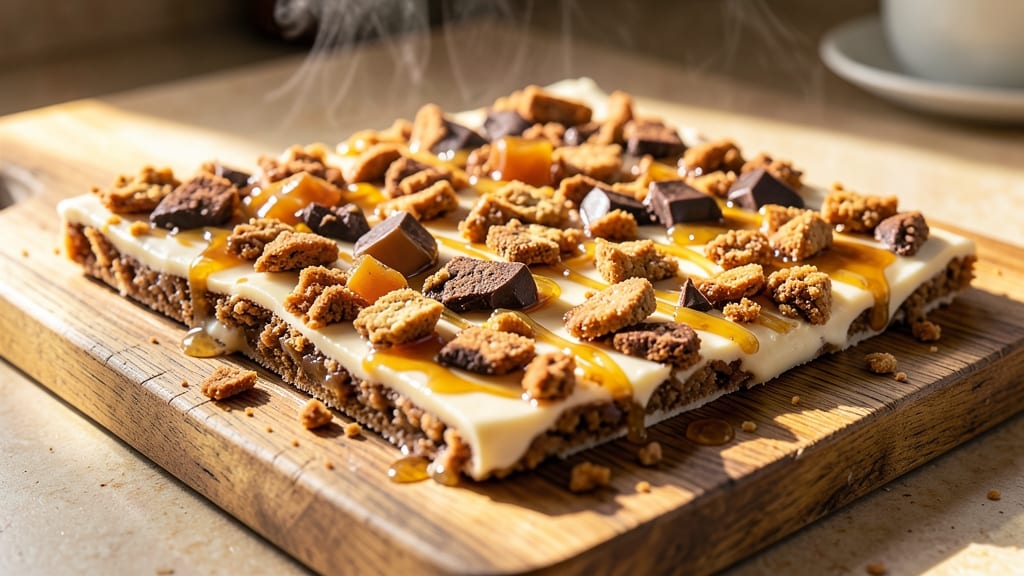
This Biscoff cookie bark recipe transforms simple ingredients into a foil-sealed dessert with irresistible crunch and nutty vanilla streaks. 🌟 The secret lies in the perfect balance of buttery cookie dough and crispy toppings, all baked until golden and shatterable.
I developed this recipe after years of experimenting with cookie bark, and it never fails to impress—whether served at parties or as a decadent after-dinner treat.
The process is simpler than it sounds: mix up a rich cookie dough, spread it on parchment-lined foil, and bake until firm. While still warm, press in chocolate chips, nuts, and sprinkles for that signature crunch.
The foil sealing ensures even baking and easy cleanup, while the nutty vanilla streaks add depth to every bite. This isn’t just dessert—it’s a showstopper that looks as good as it tastes.
What makes this recipe stand out is the textural contrast—crispy edges, tender cookie base, and melty chocolate all in one bite. The foil-sealed method guarantees foolproof results, even for beginners.
Once cooled, the bark breaks into perfect shards, making it easy to serve and share. Perfect for holidays, gift-giving, or satisfying a sweet craving, this recipe delivers restaurant-quality indulgence at home.
Pair it with coffee or a glass of milk for the ultimate dessert experience. The versatility of this recipe means you can customize toppings to suit any occasion—think white chocolate, crushed pretzels, or even a sprinkle of sea salt for a gourmet twist. Let’s get baking!
Ingredients for biscoff cookie bark
Buttery cookie dough meets crispy chocolate streaks—this foil-sealed bark delivers restaurant-quality crunch in one bite.
| Ingredient | Amount | Notes |
|---|---|---|
| Unsalted Butter 🧈 | 1 cup | Cold, cubed for flakier texture |
| Granulated Sugar 🍚 | ¾ cup | Light brown preferred for depth |
| Packed Brown Sugar 🍚 | ½ cup | For caramelized richness |
| Pure Vanilla Extract 🌿 | 2 tsp | High-quality, Madagascar preferred |
| Large Eggs 🥚 | 2 whole | Room temperature for even mixing |
| All-Purpose Flour 🌾 | 2 ½ cups | Sifted for light texture |
| Baking Soda 🧂 | ½ tsp | Fresh for proper rise |
| Fine Sea Salt 🧂 | ½ tsp | Diamond Crystal preferred |
| Semisweet Chocolate Chips 🍫 | 1 ½ cups | Enjoy Life brand for allergy-friendly |
| Toasted Pecans 🥜 | 1 cup | Chopped, for crunchy contrast |
| Vanilla Bean Seeds 🌿 | 1 tsp | Scraped from 1 bean for streaks |
| Heavy Whipping Cream 🥛 | ¼ cup | For brushing, full-fat preferred |
| Aluminum Foil 📄 | 1 sheet | Heavy-duty, parchment-lined |
| Coarse Sugar 🍚 | ¼ cup | For sprinkling, turbinado preferred |
The butter matters here—European-style or high-fat American brands like Land O’Lakes make all the difference. Costco or Whole Foods carry the best for this recipe. For the vanilla, Madagascar beans from Penzeys or Trader Joe's give that signature depth. Don’t skimp on the chocolate chips—Enjoy Life brand ensures no weird textures if you're avoiding allergens. The pecans? Toast them yourself for 5 minutes at 350°F—they’ll be crispier than store-bought. And that vanilla bean? Split it open and scrape the seeds for those gorgeous streaks in the final bark.
No vanilla bean? Double the extract and add a pinch of vanilla sugar (mix 1 tbsp sugar + 1 tsp extract). Out of pecans? Toasted almonds or walnuts work perfectly. The chocolate chips can be swapped for white chocolate chunks or chopped candy bars—just adjust the sweetness to taste. For a gourmet twist, add flaky sea salt or crushed pretzels before baking. The foil sealing is non-negotiable—it guarantees even baking and that signature shatterable texture. If you’re worried about sticking, parchment paper under the foil solves everything.
This bark keeps for 5-7 days in an airtight container at room temperature, but honestly? It disappears faster than that. For longer storage, wrap tightly in foil and freeze for up to 3 months. The texture stays perfect—just let it sit at room temp for 10 minutes before serving. Pro tip: Portion into gift boxes with a sprig of rosemary for a holiday-ready treat. And if you’re feeling fancy, drizzle melted white chocolate over the top before it cools for extra glam.
Why You'll Love This Recipe
- No Mixer Needed: I swear by this recipe when I’m too lazy to pull out the mixer—just cream the butter and sugars by hand until it’s light and fluffy. That’s it. The eggs and vanilla blend right in without a fuss, and honestly? The texture comes out even better than when I overthink it.
- Buttery Vanilla Bliss: The combo of brown and granulated sugar gives these bark cookies that perfect chewy-crisp balance, but the real magic is the butter. Rich, melt-in-your-mouth goodness with just a whisper of vanilla warmth. It’s the kind of flavor that makes you want to skip dessert and just eat the cookie bark straight from the pan.
- Party in a Pan: This is my secret weapon for gatherings—no one even realizes it’s just a sheet pan of broken cookies. Toss in chocolate chips or nuts if you’re feeling fancy, but even plain, it’s a crowd-pleaser. I’ve used it for holiday parties, potlucks, and even as a last-minute teacher gift. Zero stress, all reward.
- Makes Ahead Magic: Bake a big batch on Sunday, let it cool, then break it into chunks and store it in jars. No weird textures, no freezer burn—just grab and go for weeks. Between us, I’ve been known to keep a stash in my desk drawer for those 3 PM sugar crashes. Budget-friendly, too—uses pantry staples and stretches far.
Step-by-step instructions for Biscoff cookie bark
Here's how to create this decadent foil-sealed bark with perfect vanilla streaks and crunchy pecans.
🍳 Step 1: Cream Butter and Sugars for Maximum Flavor
In a stand mixer fitted with the paddle attachment, beat the 1 cup unsalted butter (cold and cubed) with the 0.75 cup granulated sugar and 0.5 cup packed brown sugar on medium speed for 3-4 minutes. You're looking for a light, fluffy texture—the mixture should nearly double in volume and become pale in color. This creaming process incorporates air, which creates that signature flaky texture in your cookie bark.
Here's the thing—cold butter creates steam when it hits the hot oven, which helps create those beautiful crackly layers. If your butter starts to look too soft, chill the bowl in the freezer for 5 minutes before continuing. The reason we wait until it's fully creamed is that this ensures even distribution of flavor throughout the bark.
👨🍳 Step 2: Add Eggs and Vanilla for Rich Depth
Add the 2 whole large eggs (room temperature) one at a time, mixing on low speed for 30 seconds after each addition until fully incorporated. Then add the 2 tsp pure vanilla extract and 1 tsp vanilla bean seeds, mixing for another 10 seconds. The vanilla bean seeds will create those beautiful streaks in your final bark—don't skip this step!
I always use Madagascar vanilla extract for its rich, complex flavor profile. The mixture might look slightly curdled after adding the eggs, but don't worry. Once you add the dry ingredients, everything will come together into a smooth dough. This is the moment that matters: the vanilla and eggs are what give this bark its signature flavor that makes it stand out from regular cookie bars.
🥘 Step 3: Combine Dry Ingredients and Fold in Mix-Ins
In a separate bowl, whisk together the 2.5 cups all-purpose flour, 0.5 tsp baking soda, and 0.5 tsp fine sea salt. Add this to the wet ingredients and mix on low speed for 30-45 seconds until just combined—you should still see a few flour streaks. Over-mixing develops gluten and makes the bark tough.
Remove the bowl from the mixer and gently fold in the 1.5 cups semisweet chocolate chips and 1 cup toasted pecans using a silicone spatula. Make sure they're evenly distributed throughout the dough. I like to press the pecans into the dough slightly so they stay embedded during baking. This ensures every bite has that perfect crunchy contrast we're after.
🔥 Step 4: Press Dough into Foil and Bake to Perfection
Line a 12x17-inch baking sheet with the 1 sheet aluminum foil (shiny side up) and press the dough evenly into the pan using a spatula. It should be about ¼-inch thick. Here's where the magic happens: brush the top with the 0.25 cup heavy whipping cream and sprinkle evenly with the 0.25 cup coarse sugar. This creates that beautiful caramelized crust we all love.
Bake at 350°F for 20-25 minutes until the edges are golden brown and the top is set. The center should still look slightly soft—it'll firm up as it cools. Don't overbake or the chocolate will turn grainy. Real talk: your oven might run hot, so start checking at the 20-minute mark to avoid overcooking.
⏰ Step 5: Cool and Break for Maximum Crunch
Remove from the oven and let the bark cool on the baking sheet for 10 minutes. Then carefully transfer it to a cutting board lined with parchment paper. Here's the crucial part: let it cool completely for at least 1 hour before breaking into pieces. This resting period allows the flavors to meld and the texture to set properly.
Once fully cooled, use a sharp knife or pizza cutter to break the bark into pieces. You'll see those beautiful vanilla streaks and pockets of melted chocolate throughout. The pecans should be perfectly toasted and crunchy, providing that satisfying contrast to the soft cookie base. Store in an airtight container for up to 5 days or freeze for up to 3 months for maximum freshness.
Pro Tips For Making Biscoff Cookie Bark
- CREAM BUTTER FIRST: Mix the butter, sugars, and vanilla until the whole batch is uniformly pale yellow—not just speckled. I used to stop when it looked "light enough," but this recipe needs that even color to melt into a smooth bark without streaks. (Yes, even if you’re impatient like me.)
- MEASURE BROW SUGAR CORRECTLY: Pack that brown sugar tightly—no air gaps—when scooping it into the bowl. I learned this the hard way after a batch turned out cloyingly sweet (and sticky). A damp spoon helps press it down; don’t skimp on this step.
- BAKE UNTIL EDGES CRACK: Watch for those telltale cracks along the edges—that’s when it’s done, not when the center looks set. If you pull it out too soon, the middle stays doughy and gummy. (Your future self will thank you.)
- ADD VANILLA LAST: Stir in the vanilla after the butter’s melted and the sugars are dissolved. I was skeptical until I tried it—adding it earlier dulls the flavor, and this recipe’s rich base needs that bright pop to cut through. (Sounds weird, but it works.)
Troubleshooting this dish
Underbaked Bark
If your cookie bark comes out too soft or gummy, it likely didn't bake long enough. The center should look slightly underdone when you pull it out—it firms up as it cools.
For next time, bake 5 more minutes at 350°F and check for golden edges and a set top. Overbaking causes dryness, but underbaking leaves it sticky and unappetizing. 🌡️
Chocolate Turns Grainy
Grainy chocolate happens when the heat gets too intense. The 350°F temperature is key—any hotter, and the chocolate will separate. If your oven runs hot, reduce the temp to 325°F or bake for 1-2 minutes less.
Also, ensure your chocolate chips are high-quality (like Enjoy Life brand) and not melted before baking. 🍫
Dough Sticks to Foil
Even with foil, dough can stick if not pressed evenly or if the foil isn’t properly lined. First, press the dough firmly into the pan to remove air pockets.
Second, parchment paper under the foil prevents sticking. If it still adheres, let the bark cool completely before transferring—it’ll release more easily. 📄
Vanilla Streaks Disappear
The vanilla bean seeds are delicate—if they’re not scraped properly or mixed gently, they’ll blend into the dough instead of creating streaks. Use a microplane to scrape seeds directly into the wet ingredients, then mix on low speed for just 10 seconds.
Avoid overmixing, or the streaks will vanish. 🌿
Uneven Texture
Lumpy or thick spots mean the dough wasn’t spread evenly. Press it into the foil with a spatula until ¼-inch thick—no thicker, no thinner. If the edges bake faster, rotate the pan halfway through baking.
A light tap on the pan should reveal a firm, crackly surface all over. ⚡
Pecans Stay Soft
Toast your pecans separately at 350°F for 5 minutes before mixing them in—they’ll stay crispy longer. If they’re still soft after baking, they might not have been toasted enough. For extra crunch, press them firmly into the dough before baking so they don’t float to the top. 🥜
Nutrition facts
Frequently asked questions
Can I make this cookie bark without a stand mixer?
Use a large mixing bowl and hand mixer (or even a sturdy wooden spoon) to cream the butter and sugars. Work in 30-second bursts to avoid overmixing the dough. The key is patience—keep scraping the sides and mixing until the butter is light and fluffy. For the vanilla bean seeds, fold them in gently by hand after adding the dry ingredients.
How do I store leftover cookie bark?
Store in an airtight container at room temperature for up to 5 days—it stays perfectly crunchy! For longer storage, wrap individual pieces in plastic wrap and freeze for up to 3 months. Let frozen bark sit at room temperature for 10 minutes before serving to restore its texture.
What if I don't have vanilla bean seeds?
No problem! Double the vanilla extract to 4 tsp and add 1 tsp vanilla sugar (mix 1 tbsp sugar + 1 tsp extract) for depth. The flavor won't have streaks, but you'll still get that rich vanilla taste. For visual appeal, sprinkle extra vanilla sugar on top before baking.
Can I add other toppings besides chocolate and pecans?
Try white chocolate chunks, crushed pretzels, toasted almonds, or even mini marshmallows for a s'mores twist. Just press them firmly into the dough before baking so they stay put. For a gourmet touch, add flaky sea salt after baking.
Why does my bark crack differently than the photos?
Cracking depends on cooling and humidity! Let it cool completely before breaking for clean shards. If it cracks unevenly, your kitchen might be too humid—try baking on a lower oven rack. The foil sealing helps, but proper cooling is key for that signature shatterable texture.