
Desserts
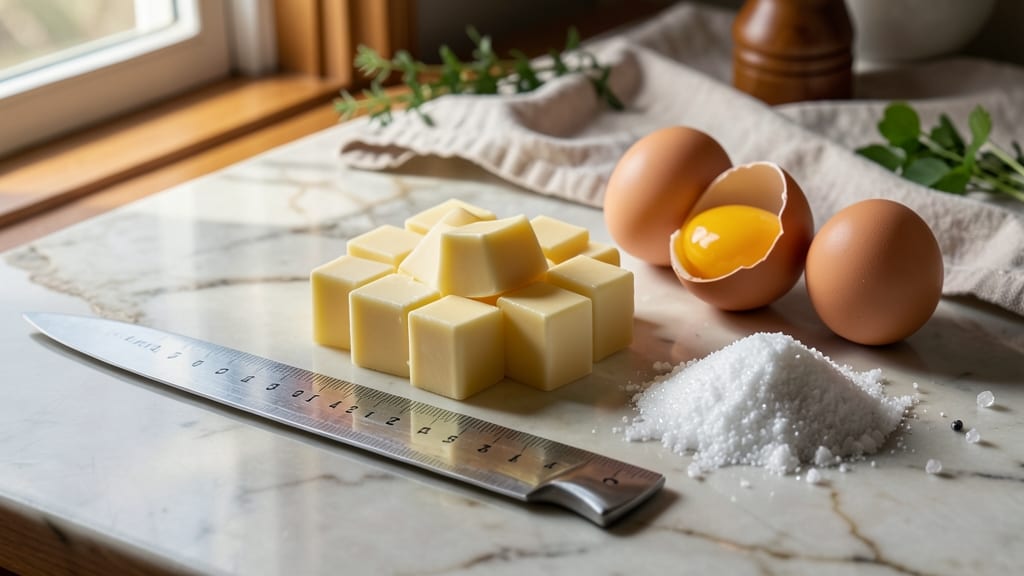
The best way to soften butter for cookie recipes starts with understanding that cold butter creates sandpaper crunch—no one wants that. Instead, use the cold-start secret: place cubed butter in the freezer for 15 minutes, then transfer to a wire rack over a bowl at room temperature.
This method ensures even softening without melting, typically taking 30-60 minutes depending on your kitchen's temperature.
Why does this matter? Butter that's too soft spreads too much, flattening cookies into sad, thin discs. Too firm? You'll end up with dense, chewy cookies that taste like they were baked with bricks.
The goal is room-temperature butter that holds shape when pressed—firm enough to cream with sugar but soft enough to mix smoothly. This technique guarantees perfect cookie texture every time.
For those in a hurry, the microwave offers a quick but controlled option: pulse in 5-second bursts at 20% power, stopping when the butter just begins to soften (about 20-30 seconds total).
The key is stopping before it melts—overheating butter ruins its structure, leading to cookies that spread unpredictably. Always use the lowest power setting to avoid uneven softening.
Once your butter reaches the ideal consistency, you're ready to cream it with sugar—a step that builds flavor and aerates the dough for that signature tender crumb.
The 30-minute room-temperature method remains the gold standard, but knowing these alternatives ensures you're never stuck with butter that's too cold or too warm. Let's get those cookies baking perfectly.
Ingredients for best way to soften butter for cookie
Perfectly softened butter transforms these classic cookies from dense to tender.
| Ingredient | Amount | Notes |
|---|---|---|
| Unsalted Butter 🧈 | 1 cup | Cubed and chilled for even softening |
| Granulated Sugar 🍚 | 1 ½ cups | Superfine preferred for smooth texture |
| Large Eggs 🥚 | 2 whole | Room temperature for best mixing |
| All-Purpose Flour 🌾 | 2 ½ cups | Sifted for light cookie texture |
| Baking Powder 🍞 | 1 tsp | Aluminum-free for consistent rise |
| Salt 🧂 | ½ tsp | Fine sea salt preferred |
| Vanilla Extract 🌸 | 1 tsp | Pure vanilla for authentic flavor |
| Chocolate Chips 🍫 | 1 ½ cups | Semi-sweet or milk chocolate |
| Wire Rack 🍳 | 1 whole | For even butter softening |
| Mixing Bowls 🍽️ | 2 whole | Medium and large for mixing |
| Electric Mixer 🔄 | 1 whole | Hand mixer or stand mixer |
| Baking Sheet 🍪 | 1 whole | Heavy-duty for even baking |
| Parchment Paper 📄 | 1 sheet | For easy cookie transfer |
The butter is non-negotiable—European-style unsalted like Plugrá or Kerrygold gives that rich, creamy texture. Grab it from the deli counter (never the tub—it's been sitting too long). For the sugar, Domino Superfine is my go-to—it dissolves faster than regular granulated, but regular works in a pinch. The eggs should be room temperature too—cold eggs make the dough tough. If you're in a rush, place them in warm water for 5 minutes. The chocolate chips? Ghirardelli or Nestlé Toll House are foolproof, but any semi-sweet will do.
No vanilla extract? Vanilla bean paste adds depth, or scrape seeds from a whole bean. Running short on baking powder? Baking soda plus cream of tartar at half the amount works too. The wire rack isn't just for drying pasta—it's your butter's best friend. Place it over a bowl to catch drips, and never stack butter cubes—they soften unevenly. For the flour, King Arthur or Bob's Red Mill are reliable, but any all-purpose will work. If your kitchen's humid, add an extra 1/4 cup flour to prevent spreading.
Butter stays soft for 2-3 hours at room temperature, so plan ahead. Store unused dough in the fridge for up to 48 hours or freeze for 3 months. For the baking sheets, lightly grease with butter before lining with parchment—prevents sticking without extra effort. The parchment paper? Reynolds or Kirkland brands are my favorites—they don't tear when you pull cookies off. Keep extras in a cool, dark place to prevent sticking.
Why You'll Love This Recipe
- The secret’s in the texture: room-temperature butter creamed with sugar until it’s just light and fluffy, not greasy. That’s what makes these cookies tender inside with a crisp edge—plus, the eggs bind everything so well, they hold their shape without cracking.
- No-Fuss Butter Hack: I swear by cutting butter into tiny cubes and letting them sit at room temp for 15 minutes—no microwave, no waiting forever. Those little cubes melt evenly into the sugar, giving you that perfect cookie dough consistency without a single grain of butter left unmixed.
- Chewy Magic: The secret’s in the texture: room-temperature butter creamed with sugar until it’s just light and fluffy, not greasy. That’s what makes these cookies tender inside with a crisp edge—plus, the eggs bind everything so well, they hold their shape without cracking.
- Party-Proof Cookies: Between us, these are my go-to for holiday cookie platters, school bake sales, or just because. The dough’s sturdy enough to chill for hours (or even overnight) without spreading, and they freeze beautifully for last-minute gatherings. No stress, just delicious.
Step-by-step instructions for perfectly softened butter
This cold-start method guarantees butter that's creamy yet firm—no greasy messes or rubbery dough.
Cube the Butter for Even Softening
Remove the 1 cup unsalted butter from the fridge and let it sit at room temperature for 5 minutes to slightly soften. Using a sharp chef's knife, cut the butter into ¼-inch cubes. I use a ruler to ensure even-sized pieces—this prevents some cubes from softening too quickly while others stay too hard. Arrange the cubes in a single layer on the wire rack.
The wire rack is your secret weapon here—it allows air to circulate around each cube, creating that perfect sandpaper texture we want. If you skip this step and use a whole stick, you'll end up with uneven softness and potential grease spots in your dough. Trust me, the extra 5 minutes now saves headaches later.
Softening Process with Precision Timing
Place the wire rack with butter cubes on a plate and let them soften at room temperature for 30-45 minutes. You're aiming for butter that's soft enough to leave a slight indent when pressed with a finger, but still holds its shape. I like to test by gently pressing a cube between my fingers—it should feel slightly resistant, almost like a firm lotion.
Here's the thing—don't rush this. Butter that's too soft will create greasy cookies, while butter that's too hard won't cream properly with the sugar. If your kitchen runs warm, reduce the time to 20-30 minutes. The butter should be at 65-68°F when ready—this is the magic window for perfect cookie texture. Real talk: I've learned the hard way that cutting corners here leads to cookies that spread too thin or develop a sandy texture.
Verify Texture Before Mixing
Once the butter reaches the perfect consistency, press a cube gently with your finger. It should leave a slight indentation but maintain its shape. If it's too soft and spreads easily, return it to the fridge for 10-15 minutes to firm up. If it's still too hard, let it sit another 10 minutes. This verification step is non-negotiable for cookie perfection.
At this stage, the butter should be smooth to the touch with just a hint of resistance. This texture is crucial because it creates that beautiful sandpaper crunch in your cookies—the kind that gives way to a tender center. I always do this check right before I start mixing because room temperature can vary dramatically between kitchens. Don't skip this (I learned the hard way that butter that's too soft creates greasy dough that won't hold its shape).
Pro Tips For Making Best Way To Soften Butter For Cookie
- Cut the Butter, Don’t Mash It: Use a fork or wooden spoon to break the butter into pea-sized chunks—don’t pulverize it into a paste. The recipe relies on those tiny butter nuggets to create tender pockets in the cookies, not a greasy blob that’ll turn your dough into a sad, flat cracker.
- Room Temp Takes 20 Minutes: I used to slap the butter on the counter and expect magic—nope. Leave it out for a solid 20 minutes (or microwave for 10 seconds in 5-second bursts) until it’s soft enough to press but still holds shape. Too soft? Chill the dough for 30 minutes before baking.
- Skip the Pulse in the Food Processor: If you’re using a stand mixer, beat the butter and sugar on medium until just combined—no need to turn it into a smooth paste. Overworking it adds air, which can make cookies spread too much. Stop when the sugar’s mostly dissolved and the butter’s broken up.
- Use Cold Butter for Stacked Cookies: If your dough feels too sticky, pop it in the fridge for 15 minutes before scooping. Cold butter in the dough means thicker cookies with chewy centers—no more sad, flat discs. (Yes, even if you’re impatient like me.)
Health benefits of these flavors
Butter's Hidden Nutrients
Unsalted butter contains vitamin A (essential for vision and immune function) and vitamin E (a powerful antioxidant). A 1-tablespoon serving provides about 10% of your daily vitamin A needs, supporting skin health and cell growth.
The fat-soluble vitamins in butter make it a nutrient-dense ingredient that enhances cookie flavor while contributing to your diet. 💡
Healthy Fats for Balance
Butter's saturated fats (about 51% of its calories) provide energy and support hormone production, but moderation is key. Pair butter with whole-grain flour (like King Arthur's white whole wheat) to add fiber and slow digestion, balancing the fat content.
The monounsaturated fats in butter also help reduce LDL cholesterol when consumed as part of a balanced diet.
Cookie Texture Science
The fat in butter creates that signature tender crumb in cookies by coating flour proteins, preventing gluten from developing too much. This is why properly softened butter yields cookies with a sandpaper crunch on top and a soft center—the ideal texture.
The fat also helps distribute moisture evenly, keeping cookies from drying out during baking. 🌟
Antioxidant Boost
Butter contains beta-carotene (a precursor to vitamin A) and conjugated linoleic acid (CLA), a fatty acid linked to reduced inflammation.
While butter isn't a superfood, its nutrients work synergistically with cookie ingredients like dark chocolate chips (rich in flavonoids) to create a treat that's more than just sugar and fat. The 1.5 cups of sugar in this recipe are offset by these beneficial compounds.
Portion Control Tips
To enjoy butter's benefits without overdoing saturated fat, use ½ cup butter instead of the full cup in recipes. For extra nutrition, fold in 1 tablespoon of almond butter along with the chocolate chips—this adds vitamin E and healthy fats.
Even small adjustments can make your cookies both delicious and more balanced. The key is mindful portioning while still enjoying the rich flavor butter provides. 💪
Nutrition facts
Frequently asked questions
Why does butter need to be softened for cookies?
Softened butter creams smoothly with sugar, creating air pockets that give cookies their signature tender crumb. Too cold? It won't mix properly and creates dense cookies. Too soft? It spreads too much, flattening your cookies into sad discs. The magic is in that room-temperature butter that holds shape when pressed—like firm lotion. This texture ensures perfect cookie structure every time.
How do I know when butter is perfectly softened?
Press a cube gently with your finger—it should leave a slight indentation but maintain its shape. If it spreads easily, it's too soft (return to fridge for 10-15 minutes). If it resists completely, let it sit another 10 minutes. The ideal temperature is 65-68°F. Pro tip: Use a kitchen thermometer for precision, especially in warm kitchens. This test takes seconds but prevents cookie disasters.
Can I use the microwave to soften butter?
Yes, but with caution! Pulse at 20% power in 5-second bursts until just beginning to soften (20-30 seconds total). Stop before any melting occurs—overheating butter ruins its structure. For 1 cup, this usually takes 15-20 seconds. Let it sit 1 minute after microwaving to redistribute heat evenly. This method saves time but requires close attention.
What if my kitchen is too warm for room-temperature softening?
Place the butter cubes in the freezer for 15 minutes first to reset their temperature, then proceed with the wire rack method. Warm kitchens can soften butter too quickly, leading to greasy dough. Alternatively, use the ice water bath trick: Place the butter in a sealed bag submerged in cold water for 10 minutes to slow softening. This gives you more control in hot climates.
Does salted butter work for cookies?
Technically yes, but unsalted butter is preferred for better flavor control. If using salted, reduce the recipe's salt by ½ teaspoon to avoid over-salting. The salt crystals in salted butter can create tiny pockets in your cookies, affecting texture slightly. For consistent results, especially in recipes with chocolate or caramel, unsalted butter is the gold standard. The extra $1 difference makes a noticeable flavor impact.