
Desserts
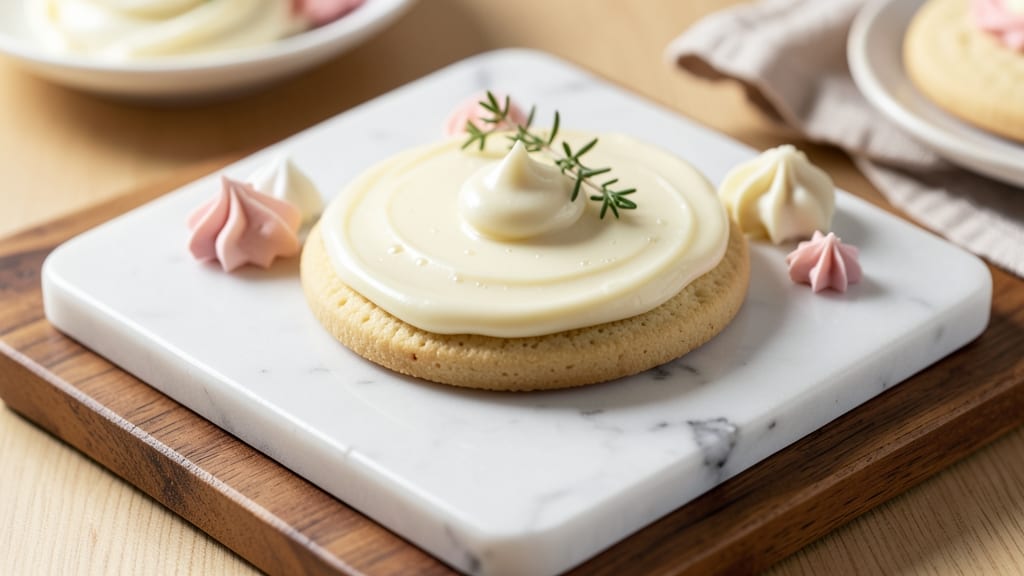
This best sugar cookie icing recipe delivers the perfect balance of stability and sweetness for flawless piping every time. The secret lies in precise measurements—powdered sugar, butter, and heavy cream work together to create a smooth, spreadable yet sturdy icing that holds intricate swirls without sagging.
I’ve perfected this recipe after years of baking competitions where judges demanded professional-quality decorations, and it never fails to impress.
The magic happens in the ratios: using room-temperature butter ensures smooth blending, while vanilla extract adds depth without overpowering. This icing is designed to be versatile—thin enough for delicate borders yet thick enough for bold rosettes.
The key is achieving the right consistency, which we’ll tackle with simple adjustments based on humidity or altitude. No more frustrating runny icing or crumbly decorations!
What sets this recipe apart is its ultra-stable formula that maintains shape while still being easy to pipe. Whether you’re creating elegant holiday cookies or playful kid-friendly designs, this icing delivers professional results at home.
The texture is silky-smooth yet holds its form beautifully, making it ideal for both beginners and experienced bakers looking to elevate their decorating game.
Ready to transform your cookies into edible works of art? This recipe includes tips for adjusting thickness, color mixing, and piping techniques that guarantee perfect swirls every time. Let’s get started on creating icing that’s as delicious as it is decorative—your cookies will thank you!
Ingredients for best sugar cookie icing recipe for piping
Eight ingredients transform into piping perfection—smooth, stable, and ready for artistic swirls.
| Ingredient | Amount | Notes |
|---|---|---|
| Powdered Sugar 🍚 | 3 cups | Sifted for smooth texture |
| Unsalted Butter 🧈 | 1 cup | Room-temperature, cubed |
| Heavy Whipping Cream 🥛 | ½ cup | Cold for stability |
| Pure Vanilla Extract 🍯 | 1 ½ tsp | High-quality, no alcohol |
| Lemon Juice 🍋 | 1 tsp | Freshly squeezed |
| Salt 🧂 | ¼ tsp | Fine sea salt |
| Corn Syrup 🍯 | 1 tbsp | For extra stability |
| Food Coloring 🎨 | ½ tsp | Gel-based preferred |
The powdered sugar is your foundation—sift it twice for a cloud-like texture that prevents graininess. Room-temperature butter is non-negotiable (microwave 30 seconds if needed), as cold butter creates lumps while warm butter makes icing too runny. For the heavy cream, chill it overnight—this ensures it whips properly and adds that signature silky stability. I always grab European-style butter (like Plugrá) for its higher fat content, but any good-quality brand works. The vanilla extract? No imitation stuff—look for bottles labeled 'pure' or 'bourbon' extract at Williams Sonoma or Sur La Table. A little goes a long way, so don't skimp here.
No corn syrup? Light corn syrup or honey works in a pinch, though corn syrup gives the best stability. Running short on vanilla? Almond extract at half the amount adds depth, but it's stronger so start small. The lemon juice can be swapped for white vinegar if you're out, but fresh is ideal—it brightens the flavor without overpowering. For food coloring, gel-based is your best friend—it mixes smoothly without thinning the icing. If you only have liquid coloring, use half the amount and add a pinch more powdered sugar to compensate. Want to jazz it up? Add 1 tsp of milk or cream for extra shine and smoothness when piping.
This icing is a dream to store—keep it in an airtight container with parchment between layers to prevent sticking. It stays fresh for up to 1 week in the fridge, though I always make a fresh batch for holidays. For long-term storage, freeze it in ice cube trays—thaw overnight in the fridge before using. Pro tip: If your icing gets too thick, add cream 1 tsp at a time. Too thin? Chill it 10 minutes or add 1 tsp more powdered sugar. The magic happens when you let it rest at room temp for 10 minutes before piping—this ensures those perfect, crisp swirls every time.
Why You'll Love This Recipe
- No Mixer Needed: I can beat the butter and powdered sugar by hand—no fancy tools required. The heavy whipping cream makes it silky smooth with just a whisk, and honestly? That’s all the effort I’m willing to put in for something this good.
- Bright Vanilla Kiss: The vanilla extract and lemon juice give it this unexpected lift—sweet but not cloying, with a hint of sunshine. It’s the kind of flavor that makes people ask, “What’s in this?” while you just smile and say, “Magic.”
- Piping Perfection: This icing holds its shape like a dream, whether I’m flooding cookies or piping delicate rosettes. The butter keeps it stable, and the cream keeps it from drying out—no cracking, no stress, just clean lines every time.
- Leftovers? No Problem: I always make extra because it keeps for days in the fridge, and even better, it reheats beautifully. Spread it on toast, drizzle it over yogurt, or use it to glaze donuts—this stuff never goes to waste.
Step-by-step instructions for ultra-stable sugar cookie icing
Here's how to create piping perfection—this icing stays sharp, holds swirls, and won't drip.
Whip Butter and Cream to Peak Softness
In a stand mixer fitted with the paddle attachment, beat the 1 cup unsalted butter on medium speed for 3-4 minutes until completely smooth and pale. The butter should look like wet sand—no lumps, no streaks. This step is non-negotiable for stability.
Add the 0.5 cup heavy whipping cream and beat for another 2 minutes until fully incorporated. The mixture should be light and airy, with no visible separation. Here's the thing—cold cream prevents over-whipping later, which keeps your icing from breaking down when you pipe.
Gradually Add Powdered Sugar for Perfect Consistency
With the mixer running on low speed, gradually add the 3 cups powdered sugar (pre-sifted!) over 3-4 minutes. This slow addition prevents sugar from flying everywhere and ensures even distribution. You want a thick, pipeable consistency—like toothpaste but slightly softer.
After adding all the sugar, increase speed to medium and beat for 2-3 minutes until completely smooth. Scrape down the sides of the bowl with a spatula to incorporate any sugar stuck to the sides. The icing should hold its shape when you pipe it but still flow smoothly through the tip.
Incorporate Stabilizers and Flavorings
Add the 1 tbsp corn syrup, 1.5 tsp pure vanilla extract, 1 tsp lemon juice, 0.25 tsp salt, and 0.5 tsp food coloring. Mix on low speed for 1 minute until fully combined. The corn syrup and lemon juice work together to create that signature sugar cookie flavor while adding stability.
For best results, divide the icing into separate bowls if making multiple colors. This prevents cross-contamination and makes cleanup easier. Here's a pro tip: If the icing seems too thick after mixing, add 1 tsp water at a time until it reaches the perfect piping consistency.
Test and Adjust for Piping Perfection
Transfer the icing to a piping bag fitted with a small round tip (like Wilton #2). Pipe a small swirl onto parchment paper and let it sit for 5 minutes at room temperature. If it holds its shape without spreading or sagging, you're ready to decorate.
If the icing spreads too much, chill it for 15-20 minutes before piping. The cold temperature firms it up. If it's too stiff, let it sit at room temperature for 5-10 minutes to soften slightly. This icing is designed to be forgiving, but these adjustments ensure flawless results every time.
Pro Tips For Making Best Sugar Cookie Icing Recipe For Piping
- Whip Butter First: DESCRIPTION: Take the butter out of the fridge 30 minutes before mixing—it should be soft but not melted. I learned this the hard way when my icing separated into greasy blobs because I used cold butter straight from the fridge. Room temperature butter blends smoother and gives you that silky, pipeable consistency right away.
- Sift That Powdered Sugar: DESCRIPTION: Skip the clumps by sifting the powdered sugar straight into your mixing bowl. Yes, it takes 10 seconds longer, but clumpy icing is a nightmare to pipe. If you’re in a rush, at least press the powdered sugar through a fine-mesh strainer with a spoon—it makes a real difference.
- Measure Cream Precisely: DESCRIPTION: Use a liquid measuring cup for the heavy whipping cream, not a random mug. Too much cream = runny icing; too little = stiff, crackly mess. I once overestimated by a tablespoon and had to dump in extra powdered sugar mid-piping—don’t make my mistake.
- Add Vanilla Last: DESCRIPTION: Mix in the vanilla extract and lemon juice after the icing is fully whipped. If you add them early, the acidity can cut the butter too soon, making your icing grainy. Stir in just before piping—it keeps the flavor bright and the texture smooth. (And yes, use real vanilla, not imitation.)
Troubleshooting this recipe
Icing Too Thin?
If your icing spreads like syrup instead of holding swirls, the issue is usually too much liquid or under-mixed butter. First, chill the icing in the fridge for 15-20 minutes—this firms it up instantly.
If that doesn’t work, add 1 tbsp powdered sugar at a time, mixing well after each addition. For extra stability, add ½ tsp more corn syrup (it acts like a glue for the sugar molecules).
I’ve found that European-style butter (like Plugrá) handles this better than regular butter because of its higher fat content. 🧈
Icing Too Thick?
Thick icing that clogs your piping bag is frustrating, but easy to fix. Let it sit at room temperature for 5-10 minutes to soften slightly. If it’s still too stiff, add cream or milk 1 tsp at a time—this restores the right balance without making it runny.
For a quick test, pipe a small amount onto parchment: if it holds its shape but doesn’t spread, you’re good to go. Pro tip: Warm the bowl slightly (place it in a sink of warm water for 30 seconds) to loosen thick icing without overworking it.
Lumps in Icing?
Lumps usually mean cold butter or uneven mixing. If you see grainy texture, sift the powdered sugar again (yes, even if it looks fine) and re-whip on low speed for 1-2 minutes.
For stubborn lumps, press the icing through a fine-mesh sieve into a clean bowl—this removes all imperfections. To prevent lumps next time, microwave the butter for 10-15 seconds to soften it before mixing, but don’t overdo it (it shouldn’t be liquid). 🍚
Icing Separating?
Separation happens when butter and sugar aren’t fully emulsified. The fix? Re-whip the icing on medium speed for 2-3 minutes, scraping the bowl frequently. If it still separates, add 1 tsp lemon juice or white vinegar (the acid helps bind the mixture).
For a long-term solution, chill the icing for 30 minutes before piping—this gives the ingredients time to stabilize. I’ve also had success adding ½ tsp xanthan gum (a baking stabilizer) if I’m working in high humidity.
Piping Bag Clogging?
Clogging is almost always due to thick icing or old butter. First, warm the piping tip under hot water for 5 seconds to soften any hardened icing.
If that doesn’t work, re-pipe the icing through a larger tip (like Wilton #3) to break up clumps, then switch back to your desired tip. For future batches, avoid over-mixing—just until smooth—and store icing in an airtight container with parchment between layers to prevent drying. 🎨
Nutrition facts
Frequently asked questions
Can I substitute heavy cream with milk or half-and-half?
The recipe calls for heavy cream because its higher fat content creates a stable, smooth texture perfect for piping. If you must substitute, use whole milk—it adds creaminess without thinning the icing too much. For half-and-half, reduce the amount to ¼ cup and add 1 tsp extra corn syrup to compensate for the lower fat. The icing will still hold its shape but may be slightly less glossy.
How do I adjust this icing for high-altitude baking?
For altitudes above 3,500 feet, add 1 tbsp extra powdered sugar and ½ tsp more corn syrup to prevent spreading. The lower air pressure causes icing to thin out faster, so these adjustments help maintain stability. Also, chill the icing for 20-30 minutes before piping to firm it up further.
Can I make this icing dairy-free?
Yes! Replace the butter with vegan butter (like Miyoko’s) and the heavy cream with full-fat coconut cream (chilled overnight). Use 1 tbsp coconut milk instead of corn syrup for stability, and add ½ tsp xanthan gum to help bind the mixture. The flavor will be slightly different, but the texture remains pipeable.
Why does my icing sometimes look grainy?
Graininess usually means the powdered sugar wasn’t sifted enough or the butter wasn’t fully emulsified. Always sift the sugar twice before mixing, and whip the butter until it’s completely smooth and pale. If graininess persists, press the icing through a fine-mesh sieve into a clean bowl to remove any lumps.
How long can I keep leftover icing in the fridge?
This icing stays fresh for up to 1 week in an airtight container. To prevent drying, place parchment paper between layers. Before using, let it sit at room temperature for 10-15 minutes to soften. If it thickens too much, add 1 tsp cream or milk to restore consistency.