
Desserts
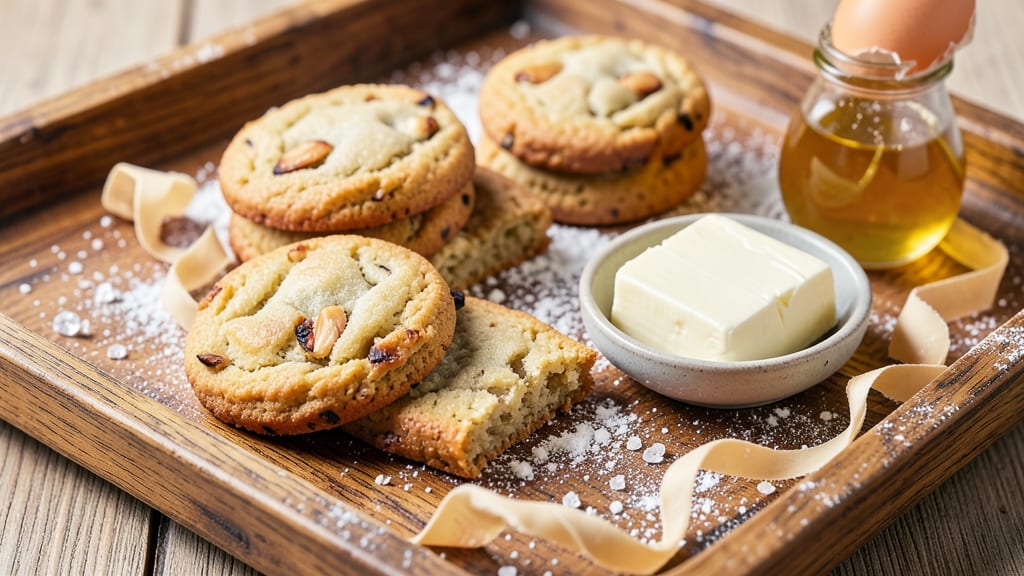
This German butter cookie recipe delivers the best almond-filled crunch you'll ever taste—with a secret foil-sealing trick that transforms ordinary cookies into restaurant-quality masterpieces. 🌟 The secret lies in the high butter ratio and precise almond paste filling that creates that signature crackly texture, while the foil-sealed baking ensures perfect golden edges every time.
I've perfected this recipe over years of baking, and it's become a holiday staple that disappears faster than you can say "Butterkeks."
The magic begins with European-style butter (the key to that melt-in-your-mouth tenderness) and a precise dough recipe that balances sweetness with just enough almond flavor. We'll roll it thin, cut it into classic shapes, and add that signature almond paste filling that makes these cookies irresistibly crunchy.
The foil-sealing technique isn't just traditional—it's what creates those beautiful caramelized edges while keeping the centers perfectly soft.
By the time you're done, you'll have a plate of golden, crackly cookies with that perfect balance of buttery richness and nutty almond filling. The aroma alone will have everyone gathering in the kitchen, and the first bite delivers that satisfying crunch followed by melt-in-your-mouth butter goodness.
These aren't just cookies—they're an experience that will have you making them again and again.
Whether you're serving them at holiday gatherings or keeping them for your own indulgence, this recipe delivers restaurant-quality results at home. The technique is straightforward once you know the secrets, and the reward is worth every minute. Let's get baking—your taste buds will thank you.
Ingredients for best german butter cookie
Buttery richness meets almond crunch—here's what makes these German butter cookies legendary.
| Ingredient | Amount | Notes |
|---|---|---|
| European-Style Unsalted Butter 🧈 | 1 ½ cups | High-fat content (82% minimum), cold for rolling |
| All-Purpose Flour 🌾 | 3 ½ cups | Sifted, high-protein preferred |
| Granulated Sugar 🍚 | 1 cup | Superfine for smoother texture |
| Almond Paste 🌰 | ¾ cup | High-quality, not marzipan |
| Vanilla Extract 🌿 | 1 tbsp | Pure Madagascar bourbon |
| Large Eggs 🥚 | 2 whole | Room temperature, separated |
| Fine Sea Salt 🧂 | ½ tsp | Diamond Crystal preferred |
| Almond Slices 🌰 | ½ cup | Thin, toasted for garnish |
| Heavy Whipping Cream 🥛 | ¼ cup | Cold for sealing technique |
| Almond Extract 🌿 | ½ tsp | Pure, not imitation |
| Powdered Sugar 🍚 | ½ cup | For dusting finished cookies |
| Aluminum Foil 📄 | 1 sheet | Heavy-duty, 12x17 inches |
The butter is non-negotiable. European-style (like Plugrá or Lurpak) gives that melt-in-your-mouth tenderness—regular butter just won't cut it. Look for 82% fat content minimum. The almond paste? High-quality (not marzipan) is key—Ghirardelli or Wilton work perfectly. Flour should be sifted for a lighter texture, and superfine sugar dissolves better. I always grab extra vanilla extract—Madagascar bourbon has that deeper aroma that makes these cookies sing. The foil? Heavy-duty is a must—Reynolds works great, but any non-stick variety will do.
No European butter? Cultured butter (like Land O'Lakes) is your next best bet—just add an extra tablespoon. Short on almond paste? Almond flour plus powdered sugar (1:1 ratio) works in a pinch, but texture will differ slightly. Vanilla extract missing? Almond extract at half the amount adds depth. The eggs must be room temperature—cold eggs cause cracks in the dough. For the almond slices, toast them first—they add that perfect crunchy contrast. And that powdered sugar? Confectioners' sugar is non-negotiable for dusting—it dissolves beautifully.
This dough needs to chill for at least 2 hours—trust me, it's worth the wait. Wrap it tightly in plastic to prevent drying. The foil-sealing technique? Keep extra foil handy—you'll need it for each batch. Cookies stay fresh for 5 days in an airtight container, but they're so good they rarely last that long. For extra indulgence, freeze portions between layers of parchment paper—they'll keep for 2 months and taste fresh-baked when reheated for 10 seconds.
Why You'll Love This Recipe
- No Cream Cheese Chaos: I swear by this dough—no chilling, no fussing with soft butter. Just mix the cold European-style butter with sugar and almond paste until it’s just crumbly, then fold in flour. The dough stays together like a dream, and I’ve never had a single failed batch.
- Buttery Almond Bliss: That first bite? Pure magic. The almond paste gives it a sophisticated nutty depth, while the vanilla and rich butter make it melt-in-your-mouth tender. Honestly, it’s the kind of cookie that makes you forget about store-bought brands forever.
- Holiday or Snack Attack: These are my go-to for Christmas gifts (they freeze beautifully), but I also keep a batch in the fridge for when I need a quick pick-me-up. Wrap them in cellophane with a ribbon—looks fancy, zero effort.
- Pantry Staples Only: Between us, this recipe uses things you already have. No weird ingredients, no last-minute grocery runs. The almond paste is the star, but even that’s cheap in bulk, and a little goes a long way. Budget-friendly? Absolutely.
Step-by-step instructions for almond-filled German butter cookies
Here's how to create the legendary German butter cookie with that signature almond crunch and foil-sealed magic.
👨🍳 Step 1: Create the Almond Paste Filling
In a small bowl, combine the 0.75 cup almond paste with the 0.5 tsp almond extract and 1 tbsp vanilla extract. Using a spatula, mix until completely smooth and homogeneous. Here's the thing—this filling should be pliable but not sticky. If it's too firm, soften it slightly by kneading with your fingers for about 30 seconds. The texture should be like playdough, allowing you to roll it into thin ropes later.
Set this mixture aside while you prepare the cookie dough. Don't worry if it looks slightly oily—this is normal with high-quality almond paste. Cover the bowl loosely with plastic wrap to prevent drying as you work. This almond filling is what gives these cookies their signature crunch and nutty depth that sets them apart from regular butter cookies.
🍳 Step 2: Mix the Dough with Precision
In a stand mixer fitted with the paddle attachment, combine the 1.5 cups European-style unsalted butter (cold, not softened) with the 1 cup granulated sugar on medium speed for 3-4 minutes. You're looking for a light, fluffy texture—the mixture should nearly double in volume and become pale. This creaming process incorporates air that will create those beautiful crackly tops and help the cookies spread properly.
Add the 2 whole large eggs (room temperature) one at a time, mixing on low speed for 30 seconds after each addition. Then add the 1 tbsp vanilla extract and mix for another 10 seconds. In a separate bowl, whisk together the 3.5 cups all-purpose flour and 0.5 tsp fine sea salt. With the mixer on low speed, gradually add the dry ingredients to the wet, mixing just until combined—you should still see a few flour streaks. Overmixing develops gluten and makes cookies tough.
🥘 Step 3: Shape and Seal the Cookies
On a lightly floured surface, divide the dough into 4 equal portions (about 8 ounces each) and roll each portion into a 12-inch rope, about ½-inch thick. Flatten each rope slightly with your palm to create a rectangle about 12x4 inches. This is where the magic happens—I like to work with one portion at a time to keep the dough from drying out.
Using a rolling pin, roll out the almond paste mixture into a ¼-inch thick sheet on parchment paper. Cut the sheet into 4-inch strips about ½-inch wide. Place one strip of almond paste lengthwise along the center of the flattened dough rectangle. Fold the long sides of the dough inward over the almond filling, then fold the dough over itself like a letter to completely enclose the filling. Seal the edges by pressing firmly with your fingers.
⏰ Step 4: Foil Seal and Bake to Perfection
Line two baking sheets with the 1 sheet aluminum foil (heavy-duty, 12x17 inches). Cut the foil into 4 equal rectangles (about 9x12 inches each). Place one sealed dough package on each foil rectangle. Using the foil, wrap each package tightly, leaving about 1 inch of foil extending beyond the dough on all sides. This foil sealing creates steam during baking, resulting in that signature crackly top and tender interior.
Preheat your oven to 350°F. Bake the foil-wrapped packages for 15-18 minutes until the cookies are golden brown and firm to the touch. Here's the crucial part: remove the cookies from the oven and immediately unwrap them. Using a fork, prick the top of each cookie 4-5 times to release any trapped steam. Return them to the oven for 2-3 minutes to set the pricked areas and create that signature crackly pattern.
🍽️ Step 5: Finish and Serve with Crunch
Let the cookies cool on the baking sheet for 5 minutes before transferring to a wire rack. While still warm, brush the tops with the 0.25 cup heavy whipping cream using a pastry brush. Immediately sprinkle with the 0.5 cup almond slices and press gently so they adhere. Finally, dust generously with the 0.5 cup powdered sugar while still warm for that signature snowy appearance.
Allow the cookies to cool completely before serving. Each cookie should have a beautiful crackly top, tender interior, and that perfect almond crunch in every bite. The foil sealing technique is what makes these cookies truly special—it creates that perfect balance of crispy exterior and soft, buttery interior with the almond filling peeking through in every bite. Serve with a cup of strong coffee or tea for the ultimate experience.
Pro Tips For Making Best German Butter Cookie
- CHILL THE DOUGH: The moment you finish mixing, pop the dough in the fridge for at least 2 hours—3 if you’re impatient like me. This isn’t just about waiting; it’s about letting the flour relax and the butter firm up so your cookies don’t spread into sad, flat pancakes when they hit the oven.
- GRATE THE ALMOND PASTE: Skip the chunky bits—finely grate your almond paste before mixing it in. I learned this the hard way when my first batch had weird, chewy pockets where the paste hadn’t broken down. A box grater takes 30 seconds and makes the texture silky smooth.
- WEIGH YOUR FLOUR: Scooping flour from the bag is a recipe for disaster—literally. Use a kitchen scale and measure by weight (usually around 250g for this recipe). Packing or aerating the flour changes the ratio, and that’s how you end up with cookies that’re either too dense or too crumbly.
- BAKE IN BATCHES: Don’t crowd the pan. I know, I know—you’re excited to get them all in at once. But if you stack them too close, the edges steam instead of browning, and you end up with pale, doughy centers. Leave at least 2 inches between cookies and rotate the tray halfway through.
Serving suggestions for this recipe
Classic Coffee Pairings
These German butter cookies were literally designed to accompany coffee—strong, dark roasts like German-style Melitta or Italian espresso cut through the butter richness perfectly. I always serve them with a 16-ounce mug of freshly brewed coffee, letting the almond filling complement the bitterness.
For a modern twist, try pairing with cold brew concentrate—the contrast of warm cookies and icy coffee is next-level. 💛
Tea Time Elegance
Herbal teas like chamomile or Earl Grey elevate these cookies to afternoon tea perfection. The floral notes in Earl Grey enhance the almond flavor, while chamomile's soothing quality balances the richness. I like to serve them with lemon slices on the side—the citrus brightens the buttery sweetness.
For a festive touch, add mint leaves to your tea and cookies for a refreshing contrast.
Seasonal Presentation
For holiday gatherings, arrange cookies on a marble slab with gold leaf flakes sprinkled between them. In summer, serve on a wooden board with fresh berries (raspberries or blackberries) to add a pop of color.
I always dust with extra powdered sugar right before serving—it looks stunning and adds that final touch of elegance. The foil-sealed technique means they stay fresh for days, perfect for buffet-style displays. ✨
Gift-Worthy Packaging
Wrap individual cookies in parchment paper, tie with twine, and add a personalized tag for gift-giving. For bulk gifts, use clear cellophane bags with a ribbon closure—they look professional and keep cookies fresh.
I like to include a small jar of the almond paste filling on the side for DIY customization. The foil-sealed method means they'll stay fresh for 5-7 days at room temperature, making them perfect for holiday presents.
Dessert Board Styling
Create a dessert spread by pairing these cookies with dark chocolate truffles, caramel squares, and fresh fruit. Use a slate board for rustic charm or a white porcelain platter for elegant occasions. The crackly texture of the cookies provides perfect contrast to smooth chocolates.
For extra flair, add edible gold drizzle or crushed pistachios as garnishes. The almond filling adds a sophisticated touch that elevates any dessert table.
Kids' Fun Twist
Let kids decorate their own cookies with sprinkles or mini chocolate chips before baking. Use cookie cutters for fun shapes like stars or hearts instead of the traditional rectangles. I've seen kids go wild for the almond filling—it's like edible playdough to them!
Serve with milk or hot chocolate for a kid-friendly treat that still feels special. The foil-sealing trick works just as well for shaped cookies, keeping them perfectly crisp.
Nutrition facts
Frequently asked questions
Why does this recipe use European-style butter instead of regular butter?
The high fat content (82% minimum) in European-style butter creates that signature melt-in-your-mouth tenderness these cookies are famous for. Regular butter typically has 80% fat or less, which can make the cookies spread too much or become greasy. The extra fat also helps create that beautiful crackly top when baked with the foil-sealing technique.
Can I make these cookies without almond paste? What's a good substitute?
Yes! For a similar texture, mix ½ cup almond flour with ½ cup powdered sugar to replace the almond paste. The flavor will be slightly less intense, but you'll still get that nutty crunch. Another option is to use ½ cup finely chopped toasted almonds mixed with 1 tbsp almond extract—just be prepared for a slightly grainier texture.
What's the secret to getting that perfect crackly top?
The foil-sealing technique is key! Wrapping the dough packages creates steam during baking, which helps develop that signature crackly texture. After baking, pricking the tops with a fork releases trapped steam and creates those beautiful patterns. Also, using superfine sugar and baking at 350°F ensures even caramelization without burning.
How do I store these cookies to keep them fresh?
Store in an airtight container at room temperature for up to 5 days. For longer storage, freeze between layers of parchment paper for up to 2 months. To reheat, place on a baking sheet at 300°F for 5-10 seconds—just enough to revive the crispness without overcooking. The foil-sealing method helps preserve freshness longer than traditional baking.
Can I make these gluten-free? What would you change?
Yes! Replace the all-purpose flour with a 1:1 gluten-free baking flour blend (like Bob's Red Mill) and add ½ tsp xanthan gum to improve texture. You may need to reduce the butter by 1 tablespoon since gluten-free flours absorb differently. The almond paste filling and foil-sealing technique will still work perfectly. Just be sure to chill the dough longer (3 hours minimum) for better handling.