
Desserts
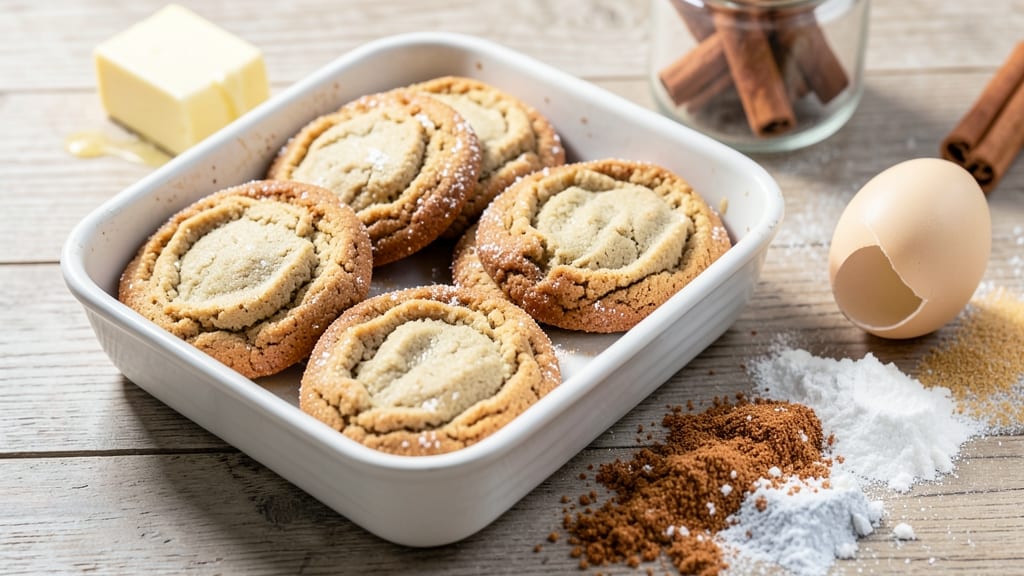
This basic snickerdoodle cookie recipe delivers the perfect balance of pillowy softness and cinnamon-sugar crunch—a timeless treat that always disappears too quickly. The secret lies in cream of tartar, which creates that signature chewy texture while keeping edges tender.
I've baked these for holiday gatherings and family dinners, and they never fail to impress.
What makes these snickerdoodles special is the foolproof technique that ensures consistent results every time. We'll mix a simple dough with butter, sugar, and eggs, then roll each cookie in cinnamon-sugar before baking.
The dough rests just long enough to develop flavor without overworking, while high heat creates that signature crackly top.
By the time they emerge from the oven, you'll have cookies with golden-brown centers, crisp edges, and a dusting of cinnamon-sugar that melts slightly with each bite. The aroma alone fills the kitchen with warmth, and the contrast of soft dough with sweet-spiced crunch makes them impossible to resist.
These cookies work equally well as an after-dinner treat or holiday gift. Double the batch for parties—they freeze beautifully and taste even better the next day. Let's get baking!
Ingredients for basic snickerdoodle cookie
Pantry staples plus two secret ingredients for that signature snickerdoodle magic.
| Ingredient | Amount | Notes |
|---|---|---|
| Unsalted Butter 🧈 | 1 cup | Cold, cubed for even mixing |
| Granulated Sugar 🍚 | 1 ½ cups | White or raw for neutral sweetness |
| Light Brown Sugar 🍚 | ½ cup | Packed, for moisture |
| Large Eggs 🥚 | 2 whole | Room temperature for smooth dough |
| All-Purpose Flour 🌾 | 3 ½ cups | Spooning and leveling for accuracy |
| Cream of Tartar 🧂 | 1 ½ tsp | Essential for chewy texture |
| Baking Soda 🧂 | 1 ½ tsp | Freshly measured |
| Ground Cinnamon 🌿 | 1 ½ tbsp | True Ceylon for authentic flavor |
| Diamond Crystal Kosher Salt 🧂 | ½ tsp | Fine grain preferred |
| Granulated Sugar 🍚 | 1 cup | For cinnamon-sugar coating |
| Ground Cinnamon 🌿 | 2 tbsp | Extra for coating |
The butter matters here—Plugrá or Land O'Lakes unsalted work best since they're high-fat and cold properly. I always buy butter in the packaging section at Whole Foods to avoid melting. For the sugars, white granulated gives that classic snickerdoodle color while brown adds moisture. The cream of tartar? Don't skip this—it's what gives snickerdoodles their signature chewy texture. If you're in a pinch, you can use lemon juice at half the amount, but it won't be quite the same. The flour should be measured by scooping and leveling—spooning directly from the bag packs it too tightly. For cinnamon, McCormick True Ceylon has the best flavor, but any good quality ground cinnamon works.
No cream of tartar? Lemon juice or white vinegar at half the amount will work, though the texture won't be quite as perfect. Using cake flour instead of all-purpose? Add 1 tbsp cornstarch to the mix. For a gluten-free version, swap the flour for a 1:1 gluten-free baking flour like Bob's Red Mill. The cinnamon-sugar coating can be adjusted—add cardamom or nutmeg for a festive twist. If you're making these for a party, double the batch and freeze half—they taste even better the next day. For extra flavor, I sometimes add a pinch of vanilla extract to the dough, but it's totally optional.
Store dough in an airtight container for up to 3 days—it actually improves with resting. Baked cookies keep at room temperature for 5 days in an airtight container, though they won't stay crisp. For longer storage, freeze baked cookies in a single layer before bagging—they'll keep for 3 months. To reheat, microwave for 10-15 seconds to restore that fresh-from-oven crunch. These cookies also freeze beautifully before baking—portion dough into balls, freeze on a tray, then transfer to a bag. Bake straight from frozen, adding 2 minutes to the time.
Why You'll Love This Recipe
- No Fuss Setup: I swear by this recipe because it’s the kind of cookie that doesn’t demand perfection—just softened butter, a quick cream, and a sprinkle of cinnamon-sugar. No chilling dough, no fancy tools, and no stress if the shape isn’t picture-perfect.
- Cinnamon-Sugar Magic: That buttery dough wrapped in cinnamon-sugar? It’s the kind of flavor combo that makes you pause mid-bite. The brown sugar keeps them chewy, while the sugar crust gives a satisfying crunch—like a warm hug for your taste buds.
- Party in a Jar: Between us, these are my go-to for holiday gifts, teacher treats, or just because. They freeze beautifully, so I bake a double batch and stash them for when life gets busy. (Yes, even on a Tuesday night.)
- Budget-Friendly Staples: Honestly, the ingredient list won’t break the bank—flour, butter, sugar, eggs—stuff you already have. And one batch stretches to feed a crowd or last me all week with a single cookie for breakfast. (No judgment.)
Step-by-step instructions for snickerdoodle cookies
Here's how to make pillowy, cinnamon-kissed cookies with a perfect crunchy coating every time.
Cream Butter and Sugars Together
In a stand mixer fitted with the paddle attachment, combine the 1 cup unsalted butter (cold, cubed) with the 1.5 cups granulated sugar and 0.5 cup light brown sugar. Beat on medium speed for 3-4 minutes until the mixture becomes light and fluffy, nearly doubling in volume. You'll see the color lighten as air incorporates—this creates that signature tender texture.
I like to scrape down the sides every 30 seconds to ensure even mixing. The butter should look like pale, creamy ribbon when you lift the paddle. If it still looks grainy, beat for another 30 seconds. This step is non-negotiable for achieving that perfect snickerdoodle texture—don't rush it.
Add Eggs and Dry Ingredients
Add the 2 whole large eggs (room temperature) one at a time, mixing on low speed for 30 seconds after each addition. Then add 1.5 teaspoons cream of tartar, 1.5 teaspoons baking soda, 1.5 tablespoons ground cinnamon, and 0.5 teaspoon Diamond Crystal kosher salt. Mix on low speed just until combined—you should still see some flour streaks.
Here's the thing—overmixing develops gluten, which makes cookies tough. Stop mixing as soon as the dry ingredients disappear. The dough should be soft but manageable. If it feels too sticky, add 1 tablespoon more all-purpose flour until it holds together when pressed.
Mix in the Flour
Add the 3.5 cups all-purpose flour and mix on low speed for 20-30 seconds until just combined. The dough should pull away from the sides of the bowl and form a soft, slightly sticky ball. If it's too dry, add 1 tablespoon milk to help bind it.
Divide the dough in half and flatten each half into a 4-inch disk. Wrap each disk tightly in plastic wrap and refrigerate for at least 1 hour (or up to 24 hours). Chilling is crucial—it prevents excessive spreading and allows the flour to fully hydrate, resulting in that perfect chewy center.
Roll and Coat in Cinnamon-Sugar
Preheat your oven to 375°F and line two baking sheets with parchment paper. In a shallow bowl, combine the 1 cup granulated sugar and 2 tablespoons ground cinnamon for the coating. On a lightly floured surface, roll one dough disk into a ¼-inch thick circle, about 10 inches in diameter.
Transfer the rolled dough to a plate, then roll it in the cinnamon-sugar mixture, pressing gently to adhere. Use a 2½-inch round cutter (or a glass) to cut out cookies, rerolling scraps as needed. Place cookies 2 inches apart on the prepared baking sheets—they'll spread slightly.
Bake to Golden Perfection
Bake for 9-11 minutes until the edges are golden brown but the centers still look slightly underdone. The tops should be cracked but not flat. Rotate the baking sheets halfway through for even baking.
Let cookies cool on the baking sheets for 5 minutes before transferring to a wire rack. They'll firm up as they cool, developing that perfect balance of crispy edges and soft, pillowy centers. Enjoy them warm with a glass of milk—trust me, they're even better that way.
Pro Tips For Making Basic Snickerdoodle Cookie
- USE COLD BUTTER: I learned this the hard way—soft butter makes snickerdoodles spread like pancakes. Scoop the butter straight from the fridge, cut it into chunks, and let the mixer do the work. The dough will hold its shape, and you’ll get those perfect, thick cookies.
- WEIGH YOUR FLOUR: No more guessing. Spooning flour into the bowl leads to inconsistent cookies. Use a kitchen scale and measure by weight (about 250g for most recipes). Packed flour adds density, and this keeps every batch identical—no more lumpy or dry dough surprises.
- DON’T OVERMIX THE DOUGH: Once the flour hits the mixer, stop after just 30 seconds. Overworking the dough develops gluten, turning your tender snickerdoodles into tough, chewy crackers. The second the flour disappears, pull the bowl away—even if it looks uneven.
- BAKE AT 375°F: Too low, and they’ll spread into flat pancakes. Too high, and they’ll burn before the edges brown. Stick to 375°F and bake for 9–11 minutes—until the edges are set but still soft. If your oven runs hot, start checking at 8 minutes.
Storing and reheating this dish
Room Temp Storage
Keep freshly baked snickerdoodles at room temperature in an airtight container with parchment paper between layers. They'll stay soft and delicious for up to 5 days, though the cinnamon-sugar coating loses its crunch after 2 days.
I like using glass containers with silicone lids from Pyrex—they keep cookies fresher longer than plastic. Store them in a cool, dark place away from sunlight to prevent drying. 🌟
Fridge Preservation
For longer freshness, refrigerate baked cookies in the same airtight container for up to 7 days. The cold temperature helps maintain their soft texture, though they may develop a slight firmness. Let them sit at room temperature for 5-10 minutes before eating to restore some of that warm-from-the-oven appeal.
I often make a double batch and refrigerate half for later—perfect for quick snacks or gifts. 🧊
Freezing Fresh Dough
Freeze unbaked dough balls on a parchment-lined tray for 1 hour before transferring to a freezer bag (squeeze out excess air). This method preserves texture beautifully—just bake straight from frozen, adding 2 extra minutes to the 9-11 minute time.
I like using quart-sized freezer bags from Ziploc for portion control. Thaw dough balls for 15 minutes at room temperature before rolling and baking. 🥶
Freezing Baked Cookies
For maximum freshness, freeze baked cookies in a single layer on a tray for 1 hour, then transfer to a freezer bag with parchment between layers. They'll keep for 3 months without losing their signature chewiness.
To reheat, microwave for 10-15 seconds to restore the cinnamon-sugar crunch. I always freeze extras after holiday baking—they taste just as good as day one! ❄️
Reheating Secrets
Revive stale cookies by placing them on a baking sheet and warming in a 350°F oven for 3-5 minutes until edges crisp again. For microwave reheating, cover with a damp paper towel and heat for 10 seconds—this prevents drying while restoring warmth.
A quick 30-second broil also works wonders for that golden-brown finish. My secret? Always reheat in small batches to avoid sogginess. 🔥
Gift-Worthy Packaging
For sharing, package cookies in cellophane bags tied with twine and a cinnamon stick for a festive touch. Add a handwritten note about the recipe's secret ingredients (cream of tartar!) for a personal touch.
I like using clear cellophane from Amazon—it shows off the cookies beautifully while keeping them protected. Store in a cool place until ready to give—these cookies make thoughtful gifts any time of year. 🎁
Nutrition facts
Frequently asked questions
Why do snickerdoodles need cream of tartar?
Cream of tartar is the secret ingredient that creates those signature chewy centers! It stabilizes egg whites and prevents cookies from spreading too much, while also adding a subtle tang that balances the sweetness. Without it, your cookies might turn out flat and cakey.
Can I make snickerdoodles without a stand mixer?
Use a sturdy wooden spoon or hand mixer to cream the butter and sugars. Just work in 30-second bursts to avoid overworking. The key is to get that light, fluffy texture—it takes a bit more elbow grease but works perfectly.
How do I get the perfect cinnamon-sugar coating?
Press the rolled dough balls gently into the cinnamon-sugar mixture so it sticks evenly. For extra crunch, chill the coated dough balls for 10 minutes before baking. This helps the coating set better. Pro tip: Use a fine-mesh sieve to dust extra cinnamon-sugar on top after baking for that restaurant-style finish.
Why did my snickerdoodles spread too much?
Overmixing the dough develops gluten, causing excessive spreading. Stop mixing as soon as the flour disappears. Also, make sure your butter is cold and you're using the right amount of flour. Chilling the dough for at least 1 hour helps too—this prevents spreading while baking.
Can I make these cookies gluten-free?
Yes! Replace the all-purpose flour with a 1:1 gluten-free baking flour (like Bob's Red Mill) and add 1 teaspoon xanthan gum if your blend doesn't contain it. Keep all other measurements the same. The texture will be slightly different but still delicious.