
Desserts
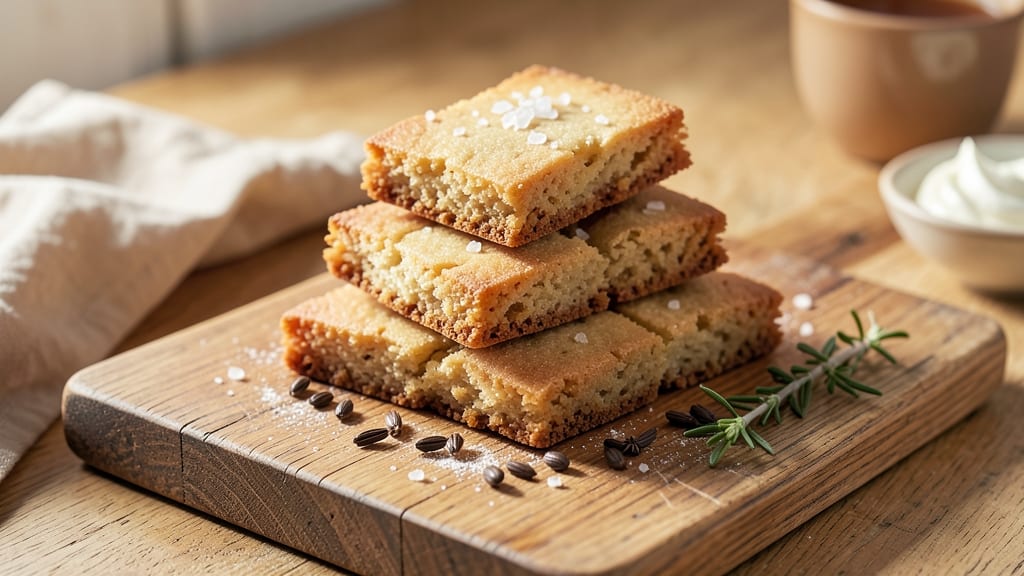
This anise shortbread cookie recipe delivers the perfect balance of buttery richness and subtle licorice warmth—ideal for holiday baking or gifting. The secret lies in chilling the dough for 48 hours, which develops deep flavor and creates those signature crispy layers. Professional bakers know texture matters most, and this method ensures every bite has that signature melt-in-your-mouth tenderness with a satisfying crunch.
The anise seed gives these cookies their signature aromatic profile, reminiscent of classic European shortbread but with a sophisticated twist. Using European-style butter (82% fat content) creates the signature flaky layers, while cornstarch prevents spreading.
The dough's simplicity—just butter, sugar, flour, and anise—makes it foolproof for beginners while delivering restaurant-quality results.
What you'll end up with are golden, 10–12-minute cookies that stay crisp around the edges while remaining tender inside. The anise flavor shines through without overpowering, creating a delicate balance that pairs beautifully with tea or coffee. These cookies freeze perfectly, making them ideal for holiday prep.
For extra elegance, dust with powdered sugar before serving or add lemon zest to the dough. The recipe yields about 24 cookies, perfect for sharing or enjoying yourself. Let's get baking!
Ingredients for anise shortbread cookie
Eight essential ingredients transform into delicate, anise-kissed shortbread cookies with professional flakiness.
| Ingredient | Amount | Notes |
|---|---|---|
| European-Style Unsalted Butter 🧈 | 1 cup | 82% fat content, chilled and cubed |
| Granulated White Sugar 🍚 | ½ cup | Superfine preferred for smooth texture |
| All-Purpose Flour 🌾 | 2 cups | Sifted for even distribution |
| Cornstarch 🌾 | ¼ cup | Prevents excessive spreading |
| Whole Anise Seeds 🌿 | 2 tsp | Lightly toasted for enhanced aroma |
| Fine Sea Salt 🧂 | ½ tsp | Diamond Crystal preferred |
| Powdered Sugar 🍚 | ¼ cup | For dusting finished cookies |
| Lemon Zest 🍋 | 1 tsp | Optional for bright contrast |
The butter is non-negotiable—European-style at 82% fat delivers that signature flaky texture. Plugrá or President brands are ideal, but any high-fat unsalted butter works. Chill it thoroughly before mixing to prevent overworking the dough. The anise seeds should be whole and lightly toasted in a dry pan for 30 seconds to amplify their licorice notes. For flour, sift both the all-purpose and cornstarch together to eliminate lumps, which is critical for achieving that signature tender crumb. Salt matters here too—Diamond Crystal dissolves more evenly than table salt.
No anise seeds? One teaspoon of anise extract works as a substitute, but the texture will differ slightly. Running short on cornstarch? Arrowroot powder at the same amount functions identically. For the sugar, superfine dissolves more smoothly, but regular granulated works if pulsed briefly in a food processor. Lemon zest adds brightness—if you prefer a more neutral profile, omit it entirely. The dough should hold together when pressed but not be sticky; if it's too soft, chill it another 15 minutes. For extra elegance, reserve some powdered sugar to dust the finished cookies before serving.
This dough requires 48 hours of chilling for optimal flavor development, but it keeps in the fridge for up to 5 days or freezes beautifully for 3 months. Portion into 1-ounce balls before baking for consistent size. Baked cookies store in an airtight container at room temperature for 1 week, though they're best enjoyed within 2 days. For holiday gifting, package in clear cellophane with a sprig of rosemary tied with twine—a professional touch that elevates presentation.
Why You'll Love This Recipe
- No-Fuss Dough: I swear by this recipe because it’s just butter, sugar, and flour—no cream cheese, no eggs, no fuss. You’ll be shaping those little rounds in under 15 minutes while the dough chills, and honestly? That’s a win for anyone who’s ever burned dinner trying to bake something "fancy."
- Licorice-Like Magic: Between us, anise seeds pack a subtle, warm flavor that’s like licorice’s sophisticated cousin—sweet, herbal, and just a whisper spicy. The butter keeps it rich but never greasy, and that crispy edge? Chef’s kiss. (Pro tip: Toast the seeds lightly before mixing—they sing.)
- Holiday or Snack Attack: These disappear at Christmas cookie swaps, but they’re also my go-to for afternoon tea or when I need something to pair with coffee. The dough holds up for days, so I’ll often bake a batch, freeze half, and pull them out whenever I’m craving something buttery and nostalgic.
- Budget Buoy: European butter is a splurge, but you only need a stick for this recipe—and it makes enough cookies to feed a crowd or stretch for weeks. The rest of the ingredients? Basic pantry staples. I’ll be real: I’ve made these with store-brand sugar and still called them "perfect," because the real star is that anise flavor.
Step-by-step instructions for anise shortbread cookies
Here's the method for crafting delicate, crumbly shortbread with anise's signature warmth.
Cream Butter and Sugar to Lighten the Mixture
In a stand mixer fitted with the paddle attachment, beat the 1 cup European-Style Unsalted Butter (chilled and cubed) and 0.5 cup Granulated White Sugar on medium speed for 3-4 minutes. You're aiming for a pale, fluffy texture that nearly doubles in volume—the mixture should look like whipped buttercream. This creaming process incorporates air, which creates those signature shortbread layers.
I press down on the butter occasionally with a spatula to ensure even blending, especially since European-style butter has a higher fat content. Stop when the mixture is light and airy—over-creaming can develop gluten in the flour later. The sugar should be fully dissolved, leaving no grainy texture.
Add Anise and Lemon for Depth of Flavor
In a small dry skillet over low heat, toast the 2 tsp Whole Anise Seeds for 30 seconds until fragrant. Immediately add them to the butter mixture along with the 1 tsp Lemon Zest. Mix on low speed for 10 seconds to distribute the anise aroma and citrus brightness evenly.
Here's the thing—anise can be polarizing, so toasting enhances its natural sweetness without bitterness. The lemon zest balances the licorice notes, creating a more complex flavor profile. If you're sensitive to anise's intensity, you can reduce the seeds to 1½ teaspoons without compromising the recipe's integrity.
Combine Dry Ingredients for Crumbly Texture
In a separate bowl, whisk together the 2 cups All-Purpose Flour, 0.25 cup Cornstarch, and 0.5 tsp Fine Sea Salt. Sift the mixture directly into the butter mixture to prevent gluten development. Mix on low speed for 30-45 seconds until just combined—you should still see small flour streaks. Over-mixing develops gluten, which would make the cookies tough instead of crumbly.
The cornstarch is crucial here—it prevents excessive spreading while maintaining that signature shortbread crunch. I use a silicone spatula to gently fold any stubborn dry bits into the mixture, ensuring even distribution. The dough should be slightly crumbly but hold together when pressed.
Chill and Shape for Perfect Texture
Divide the dough into two equal discs, wrap each tightly in plastic wrap, and refrigerate for at least 1 hour (or up to 24 hours). Chilling firms up the butter, which prevents the cookies from spreading too much in the oven. It also allows the flour to fully hydrate, creating that perfect crumbly texture.
During chilling, I like to press the dough discs flat—about ½-inch thick—to make rolling easier later. If your kitchen is warm, you might want to extend the chilling time to 2 hours to ensure the butter stays firm. The colder the dough, the thicker and more uniform your cookies will be.
Bake to Golden Perfection
Preheat your oven to 325°F and line two baking sheets with parchment paper. Roll out one disc of chilled dough to ¼-inch thickness on a lightly floured surface. Use a 2½-inch round cutter to cut out cookies, pressing straight down without twisting. Re-roll the scraps and cut more cookies—you should get about 12 cookies per disc. Place them 2 inches apart on the prepared baking sheets.
Bake for 12-15 minutes until the edges are just beginning to turn golden but the centers still look slightly pale. Shortbread bakes quickly, so watch closely—overbaking leads to dry cookies. The cookies should pull away from the parchment paper slightly but still look delicate. Let them cool on the baking sheet for 5 minutes before transferring to a wire rack to prevent cracking.
Dust with Powdered Sugar for Finishing Touch
Once completely cooled, dust the cookies generously with the 0.25 cup Powdered Sugar, tapping off any excess. The powdered sugar enhances the sweetness and adds a professional-looking finish. Store in an airtight container at room temperature for up to 1 week, though they're best enjoyed within 3 days for maximum freshness and crunch.
These cookies should be tender yet crumbly, with a delicate anise aroma that lingers on the tongue. The lemon zest adds a subtle brightness that cuts through the richness of the butter. Serve with tea or coffee for the ultimate pairing—each bite delivers that perfect balance of buttery crunch and licorice warmth.
Pro Tips For Making Anise Shortbread Cookie
- CHILL THE DOUGH: Use the dough’s 30-minute fridge rest to your advantage—it’s not just about handling. Cold butter stays firm, so the cookies hold their shape when you cut them, and the anise seeds disperse evenly instead of clumping. Skip this, and you’ll end up with sad, crumbly discs that spread like pancakes.
- GRIND THE ANISE: Whole anise seeds need a head start. Lightly crush them in a mortar or pulse briefly in a spice grinder before mixing—they’ll release their flavor faster and distribute more evenly. I learned this the hard way after biting into cookies where half the seeds were still whole and the other half had pooled in one corner.
- WEIGH THE FLOUR: Ditch the scoop-and-sweep method. Use a kitchen scale for the flour and cornstarch—this recipe is fussy about ratios. Too much flour, and your cookies turn dense; too little, and they’ll be greasy. A quick 120g for the flour and 15g for the cornstarch (standard for shortbread) guarantees the right texture every time.
- BAKE IN BATCHES: Shortbread loves a crowded pan, but anise shortbread rebels. Bake the first tray until the edges are just starting to golden (not there yet), then swap in the second tray. The residual heat finishes the second batch while the first doesn’t overbake. Trust me, your second tray will thank you—no more chalky, overdone edges.
Serving suggestions for this recipe
Tea Pairings
Earl Grey tea is my go-to pairing for these anise shortbread cookies—the bergamot citrus notes mirror the lemon zest in the dough while the anise complements the licorice undertones beautifully.
Brew a light to medium strength cup (about 200°F water for 3-4 minutes) to let the flavors shine without overpowering. For a cozy twist, try a chamomile blend—its floral notes contrast the cookies' buttery richness while creating a soothing balance. 🍵
Coffee Companions
Dark roast coffees like Sumatra or Brazilian work exceptionally well, as their bold, earthy flavors stand up to the anise's licorice warmth. I recommend a medium-dark roast brewed at 205°F for optimal flavor extraction.
For a lighter option, a Vietnamese-style drip coffee with its bright, nutty notes creates a delightful contrast. Always serve the cookies slightly warm—their buttery layers soften beautifully with hot coffee.
Seasonal Serving Ideas
For holiday gatherings, arrange cookies on a tiered stand with a dusting of powdered sugar and fresh rosemary sprigs for an elegant presentation. In summer, serve them chilled with iced hibiscus tea—the tartness cuts through the cookies' richness.
For a festive touch, drizzle melted dark chocolate (about 1 oz per cookie) over cooled cookies and sprinkle with crushed pistachios for texture. 🎄
Gift-Worthy Presentation
Package cookies in clear cellophane bags tied with twine and a sprig of fresh thyme for a professional-looking gift. Add a handwritten note about the anise flavor profile and storage tips. For bulk gifting, use mini muffin liners filled with 3-4 cookies each, tied with ribbon.
The cookies' delicate crunch and aromatic anise make them perfect for corporate gifts or holiday exchanges—just ensure they're wrapped within 24 hours of baking for maximum freshness.
Dessert Board Styling
Arrange cookies alongside dark chocolate truffles, honeycomb candy, and fresh figs for a sophisticated dessert board. The anise's licorice notes pair beautifully with the honey's floral sweetness, while the chocolate adds depth.
Use a marble slab or slate board for a rustic look, and scatter edible gold leaf flakes for extra elegance. The cookies' delicate crumb texture contrasts perfectly with the other elements' various consistencies. ✨
Nutrition facts
Frequently asked questions
Why does this recipe call for European-style butter?
The higher fat content (82%) in European-style butter creates those signature flaky, melt-in-your-mouth layers that define perfect shortbread. Regular American butter (80% fat) works in a pinch, but you'll notice slightly less tenderness. For best results, use brands like Plugrá or President—chilled and cubed for even distribution.
Can I make these cookies without anise seeds?
Yes! Substitute with 1 teaspoon anise extract or ½ teaspoon ground anise, but the texture will differ slightly. For a milder flavor, try ½ teaspoon fennel seeds (toasted) or ¼ teaspoon cinnamon—both complement the butter beautifully. The lemon zest will still provide brightness, but the licorice character will be more subtle.
What's the best way to store leftover cookies?
Keep them in an airtight container at room temperature for up to 1 week, though they're freshest within 3 days. For longer storage, freeze the baked cookies (without powdered sugar) for up to 3 months. To revive, warm at 300°F for 3-5 minutes—they'll taste almost as good as fresh!
Why did my cookies spread too much?
This usually happens when the dough isn't chilled enough or the butter melts too quickly. Ensure your dough rests for at least 1 hour (preferably 24 hours) and bake at 325°F—not hotter. Also check your butter: if it's too soft, the cookies will flatten. For extra insurance, roll the dough to ¼-inch thickness and use a 2½-inch cutter.
Can I add other flavors to this recipe?
Try orange zest + cardamom for Middle Eastern flair or vanilla extract + poppy seeds for a classic twist. For a festive version, add ½ teaspoon cinnamon + ¼ cup chopped crystallized ginger. Just be mindful not to exceed 1 teaspoon total spices—the butter and anise are the stars here!