
Desserts
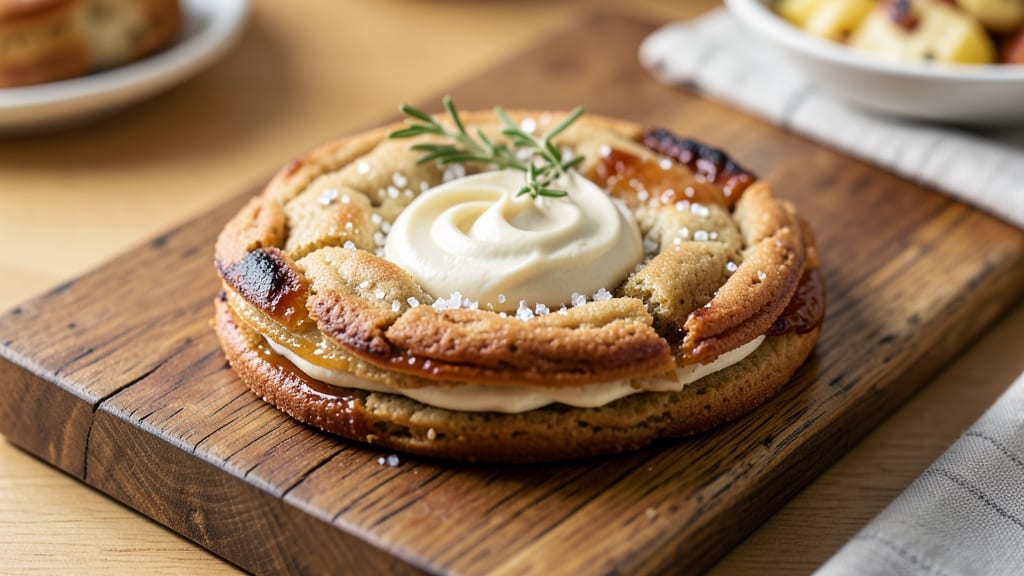
This 100 Grand Cookie recipe delivers a decadent, foil-sealed masterpiece with layers of buttery crunch and vanilla swirls—perfect for celebrations or indulgent cravings. 💛 The secret lies in its rich, boozy dough (rum or bourbon optional) baked in foil for a crispy exterior and tender interior, inspired by Southern traditions with a modern twist.
What sets this cookie apart is the technique: a thick, cake-like base layered with vanilla-streaked buttercream, all encased in foil during baking. This method creates the signature crunchy shell while keeping the center moist, balancing textures in every bite.
The dough comes together with simple ingredients—flour, sugar, eggs, and plenty of butter—while the foil wrapping ensures even baking and that coveted crispness.
By the time it emerges from the oven, you’ll have a cookie that’s almost cake-like in structure but with the unmistakable buttery, slightly boozy richness of a classic 100 Grand. The vanilla streaks add visual appeal and a sweet contrast, making it as beautiful as it is delicious.
This recipe is ideal for feeding a crowd or saving a slice for later—if it lasts that long.
Serve warm with vanilla ice cream or dusted with powdered sugar for an extra touch of elegance. The foil-sealed method means you can bake it ahead and reheat for that fresh-from-the-oven experience. Let’s get started on this showstopper!
Ingredients for 100 grand cookie
Twelve ingredients transform into a foil-sealed masterpiece with crispy edges and tender vanilla swirls.
| Ingredient | Amount | Notes |
|---|---|---|
| All-Purpose Flour 🌾 | 4 cups | Sifted for light texture |
| Unsalted Butter 🧈 | 2 cups | Cold, cubed for even baking |
| Granulated Sugar 🍚 | 1 ½ cups | Superfine preferred for smoothness |
| Light Brown Sugar 🍚 | ½ cup | Packed firmly for accuracy |
| Large Eggs 🥚 | 4 whole | Room temperature for blending |
| Pure Vanilla Extract 🍯 | 2 tsp | High-quality, Madagascar preferred |
| Bourbon or Rum 🍹 | ½ cup | Optional, 80-proof minimum |
| Baking Powder 🧂 | 1 tsp | Aluminum-free for stability |
| Salt 🧂 | ½ tsp | Diamond Crystal preferred |
| Heavy Whipping Cream 🥛 | 1 cup | Cold, full-fat for stability |
| Powdered Sugar 🍚 | 3 cups | Sifted for smooth buttercream |
| Vanilla Bean Paste 🍯 | 1 tbsp | For intense vanilla flavor |
| Aluminum Foil 📄 | 2 sheets | Heavy-duty, for sealing |
The butter and sugars are non-negotiable—European-style unsalted butter like Plugrá or Whole Foods Market's organic gives the richest flavor. For bourbon, Maker's Mark or Buffalo Trace work best, but any 80-proof spirit adds depth. The vanilla bean paste from Trader Joe's or Penzeys elevates the flavor beyond extract. Sift your flour and powdered sugar together to avoid lumps, and measure your brown sugar packed firmly—1 cup minus 2 tablespoons is the standard for packed brown sugar.
No bourbon? Dark rum or even vanilla extract with a splash of orange juice mimics the boozy warmth. Substitute the vanilla bean paste with 1 extra tablespoon of pure vanilla extract if needed. For a lighter texture, replace half the all-purpose flour with cake flour, but the foil-sealed method works best with standard flour. The heavy whipping cream should be cold but not frozen—whip it to soft peaks before folding into the buttercream to ensure stability. If your kitchen runs warm, chill the dough for 30 minutes before shaping.
Wrap the dough tightly in foil to prevent over-browning while creating that signature crispy shell. Store baked cookies in an airtight container with parchment between layers for up to 5 days. For longer storage, freeze the foil-wrapped dough and bake straight from frozen—add 5-7 minutes to the baking time. Reheat slices at 350°F for 3-5 minutes to restore that fresh-from-the-oven crunch. The buttercream layer stays fresh for 2 days if refrigerated, so assemble the cookies just before serving.
Why You'll Love This Recipe
- No-Mix Magic: I swear by the creamy butter and sugars here—just cream, dump, and bake. No food processor, no overmixing, just a bowl and a spatula. The dough practically comes together while I’m still deciding if I want milk or coffee.
- Buttery Bliss: That perfect ratio of brown and white sugar? It’s what makes these chewy, caramel-kissed cookies. The butter stays soft but not greasy, and the eggs bind everything into a texture that’s almost too good to share.
- Party in a Jar: Make a double batch, store them in airtight containers, and you’ve got instant treats for potlucks, teacher gifts, or just because. They’re sturdy enough to ship if you’re feeling generous—no one will guess they’re homemade.
- Budget Baking: Flour, sugar, butter—these are pantry staples that won’t break the bank. A single batch costs less than half what store-bought gourmet cookies do, and the flavor? Well, let’s just say my wallet thanks me every time.
Step-by-step instructions for foil-sealed vanilla streak cookies
Master this technique for cookies with crispy foil-sealed edges and gooey vanilla centers.
👨🍳 Step 1: Cream Butter and Sugars to Peak Volume
In a stand mixer fitted with the paddle attachment, beat the 2 cups unsalted butter (cold and cubed) with the 1.5 cups granulated sugar and 0.5 cup light brown sugar on medium speed for 5-6 minutes. You're looking for a pale, fluffy mixture that nearly triples in volume and leaves faint ribbons when the paddle is lifted. This creaming process incorporates air, which creates those signature crackly tops.
I press the paddle against the bowl occasionally to scrape down the sides—this ensures even mixing and prevents sugar from settling at the bottom. The butter should be completely incorporated with no visible lumps, and the mixture should be light enough to hold peaks when the paddle is lifted. If it feels too soft after mixing, chill the bowl in the refrigerator for 10 minutes before proceeding.
🍳 Step 2: Build the Dough with Wet Ingredients
Add the 4 whole large eggs (room temperature) one at a time, mixing on low speed for 30 seconds after each addition until fully incorporated. Then add the 2 tsp pure vanilla extract and 0.5 cup bourbon or rum (if using), mixing for another 30 seconds. The bourbon adds depth but is optional—if omitting, add an extra ½ teaspoon vanilla extract for balance.
In a separate bowl, whisk together the 4 cups all-purpose flour, 1 teaspoon baking powder, and 0.5 teaspoon salt. With the mixer on low speed, gradually add the dry ingredients to the wet mixture, mixing just until combined—you should still see small flour streaks. Overmixing develops gluten, which makes cookies tough. Scrape down the sides of the bowl once more to ensure even distribution.
🥘 Step 3: Shape and Seal with Foil Technique
Divide the dough into 12 equal portions (about 2 tablespoons each) and roll each into a 1-inch diameter ball. Place each ball on a parchment-lined baking sheet, spacing them 3 inches apart. Here's the key: press a ½-inch deep indentation in the center of each ball using your thumb.
Cut two 12-inch squares from the 2 sheets aluminum foil. Place one square on the baking sheet and carefully press it into the dough, creating a seal around each cookie. This creates the signature foil-sealed edge that stays crispy while the center remains soft. Repeat with the second square, placing it on top of the cookies. Chill the prepared sheet in the refrigerator for 30 minutes—this prevents excessive spreading.
🔥 Step 4: Bake to Golden Perfection
Preheat your oven to 350°F and bake the foil-sealed cookies for 18-20 minutes until the edges are deep golden brown and the foil is crisp. The centers should still look slightly underdone—they'll finish cooking as they cool. Rotate the baking sheet halfway through for even baking.
Here's the critical part: as soon as they come out of the oven, carefully peel back the foil to reveal the gooey centers. Let the cookies cool on the baking sheet for 5 minutes before transferring to a wire rack. The foil-sealed edges will stay crisp, while the centers remain soft and chewy—exactly as they should be.
🍽️ Step 5: Prepare Vanilla Buttercream Filling
While the cookies cool, whip the 1 cup cold heavy whipping cream to stiff peaks using a stand mixer. In a separate bowl, sift the 3 cups powdered sugar and mix it with the 1 tablespoon vanilla bean paste. Gradually add the powdered sugar mixture to the whipped cream, mixing on low speed until fully combined. The buttercream should be smooth and pipeable but not runny.
Use a piping bag fitted with a small round tip to pipe ¼ teaspoon of buttercream into the center of each cooled cookie. The foil-sealed edges create a natural well for the filling. Press the cookies gently together to create the final sandwich. Serve immediately for the ultimate texture contrast—crispy foil edges, gooey vanilla centers, and creamy filling in every bite.
Pro Tips For Making 100 Grand Cookie
- CREAM BUTTER COLD: I learned this the hard way—soft butter means flat cookies. Take the butter out of the fridge 30 minutes before mixing, but don’t let it get warm. Press it between two sheets of parchment with a rolling pin until it’s uniformly cool but pliable. This keeps the dough from spreading like wildfire in the oven.
- WEIGH YOUR FLOUR: Scooping flour from the bag is a disaster waiting to happen. Use a kitchen scale and measure by weight—100 grand cookies need exactly 2 ½ cups (290g) of all-purpose flour. Pack it lightly into the cup, then level it off. Too much flour makes them dry; too little turns them into pancakes.
- DON’T OVERMIX: The moment the dough starts looking shaggy and tough, stop. Use a rubber spatula to gently fold in the flour and sugars—just until combined. Overmixing develops gluten, and these cookies are supposed to be tender, not chewy. (Yes, even if you’re impatient like me.)
- CHILL DOUGH TWICE: First chill (30 minutes) firms up the dough for easier scooping. Then, after scooping, freeze the balls for 10 minutes. This prevents the cookies from spreading into sad, flat discs. Pro move: Use a cookie scoop—it’s faster than eyeballing and ensures uniform size.
Pro cooking tips for 100 grand cookie
Foil-Sealing Mastery
This technique transforms ordinary cookies into a showstopper. Use heavy-duty aluminum foil (like Reynolds Wrap) to create a crispy, crackly exterior while keeping the center tender. Press the foil firmly into the dough to form a perfect seal—think of it like wrapping a burrito.
The foil should extend ½ inch up the sides of each cookie to ensure even crisping. 📄
Pro tip: Chill the foil-wrapped dough for 30 minutes before baking. This prevents excessive spreading and ensures those coveted crispy edges. If your kitchen is warm, chill for up to 1 hour—patience here makes all the difference.
The foil acts like a protective shield, locking in moisture while creating that signature crunch.
Butter Creaming Secrets
Creaming the butter and sugars properly is the foundation of this recipe’s success. Use European-style unsalted butter (like Plugrá) for its higher fat content, which creates a lighter, fluffier texture.
Beat on medium speed for 5-6 minutes until the mixture is pale and nearly triples in volume—this incorporates air for that signature crackly top.
Don’t skip scraping the sides of the bowl every 30 seconds—this ensures even mixing. If the butter feels too soft after mixing, pop the bowl in the fridge for 10 minutes before adding eggs.
Room-temperature eggs blend more smoothly, but cold butter keeps the dough from spreading too much during baking.
Boozy Depth Without Overpowering
The bourbon or rum adds a subtle warmth that elevates the flavor, but it’s optional. If using, stick to 80-proof spirits like Maker’s Mark bourbon or dark rum—higher-proof alcohols can dry out the dough.
For a non-alcoholic version, swap in ½ cup orange juice or an extra ½ teaspoon vanilla extract for balance.
Add the liquid gradually while mixing on low speed to avoid deflating the buttercream. If the dough seems too sticky, chill it for 15 minutes before shaping.
The alcohol will mellow as the cookies bake, leaving just a hint of depth in every bite—like a secret hug for your taste buds. 🍹
Vanilla Buttercream Perfection
For the buttercream, whip the cold heavy whipping cream to stiff peaks first—this ensures stability when mixed with powdered sugar. Sift the powdered sugar before adding to avoid lumps, and use vanilla bean paste (like Trader Joe’s) for a richer flavor than extract.
The buttercream should be thick enough to pipe but still smooth—think of it like frosting for cupcakes.
Pipe ¼ teaspoon of buttercream into each cookie’s center, then press two halves together gently. Serve immediately for the best texture contrast: crispy foil-sealed edges, gooey vanilla centers, and creamy filling. If making ahead, assemble the cookies just before serving—the buttercream stays fresh for 2 days in the fridge.
Baking Time Precision
Bake at 350°F for 18-20 minutes until the edges are deep golden brown and the foil is crisp. The centers should still look slightly underdone—they’ll finish cooking as they cool.
Rotate the baking sheet halfway through for even baking, and do not overbake—this is where most home bakers go wrong.
As soon as they come out of the oven, peel back the foil to reveal the gooey centers. Let the cookies cool on the baking sheet for 5 minutes before transferring to a wire rack.
The foil-sealed edges will stay crisp, while the centers remain soft and chewy—just like a hug from your grandma’s kitchen. 💛
Nutrition facts
Frequently asked questions
Why does this cookie need foil sealing?
The foil creates the signature crispy exterior while keeping the center tender and gooey. Pressing foil into the dough forms a protective seal that locks in moisture and creates that coveted crackly texture. Without it, you lose the defining characteristic that makes these cookies special!
Can I make these cookies without alcohol?
Skip the bourbon or rum and substitute with ½ cup orange juice or an extra ½ teaspoon vanilla extract for balance. The recipe still delivers rich flavor—just without the boozy depth. The alcohol is optional but adds a subtle warmth that many find irresistible.
How do I store these cookies for maximum freshness?
Keep them in an airtight container with parchment paper between layers for up to 5 days at room temperature. For longer storage, freeze the foil-wrapped dough (unbaked) and bake straight from frozen—add 5-7 minutes to the baking time. Reheat slices at 350°F for 3-5 minutes to restore that fresh-from-the-oven crunch.
What if my cookies spread too much?
Chill the foil-wrapped dough for 30-60 minutes before baking to prevent spreading. If your kitchen is warm, extend the chilling time. Also ensure your butter is cold but not frozen when creaming—this helps maintain structure. Overmixing the dough can also cause spreading, so mix just until combined.
Can I use cake flour instead of all-purpose?
Replace up to half the all-purpose flour with cake flour for a lighter texture, but the foil-sealed method works best with standard flour. Cake flour lacks protein, which can make the edges less crisp. If you try it, reduce baking time by 1-2 minutes to avoid overbrowning. The traditional version uses all-purpose for that signature crunch.